Skip to content

A Mission No Soldier Should Have to Take
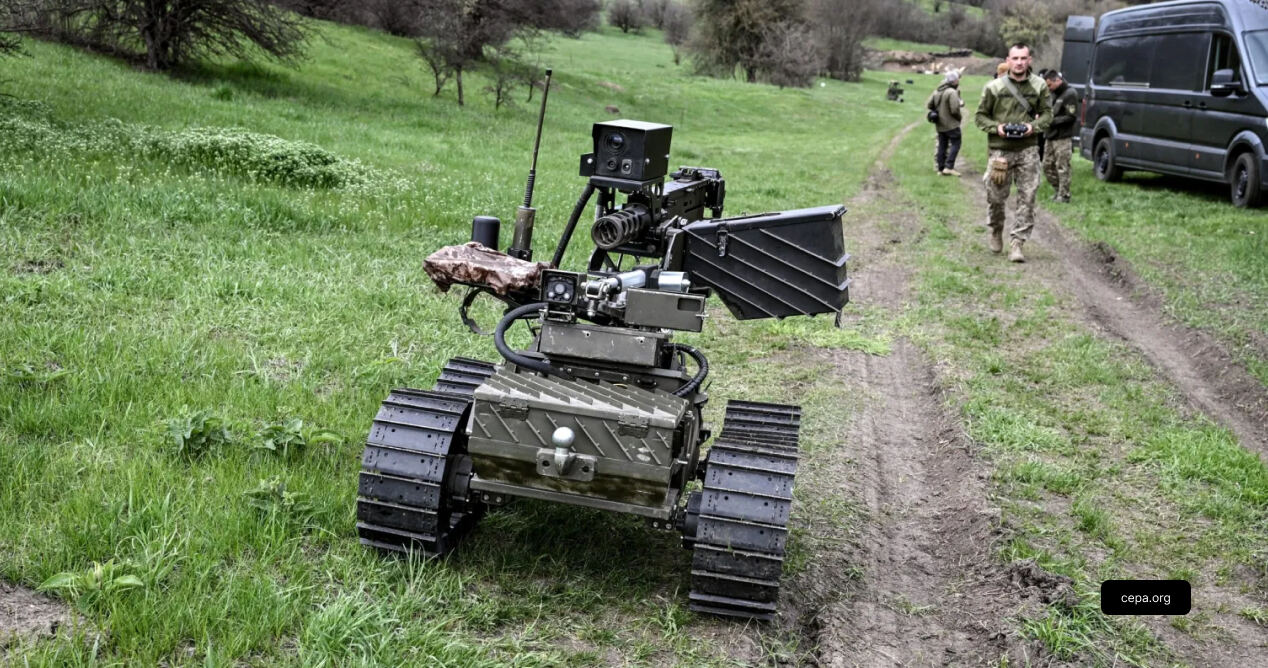
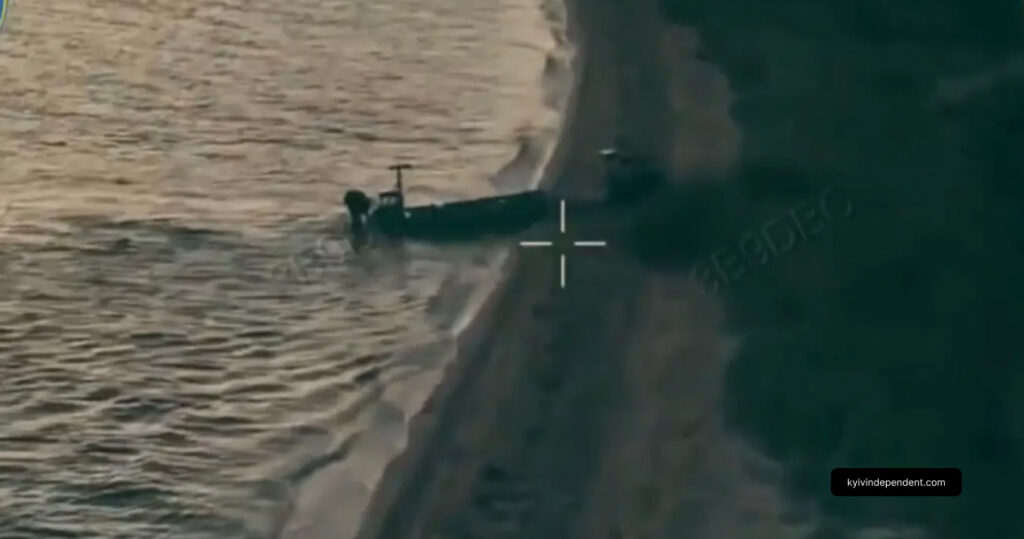
On July 13, 2026, Ukraine’s 123rd Territorial Defense Brigade announced something that had never been done before: a sea drone navigated to Russian-held territory on the Kinburn Spit and deposited a ground robot directly onto the enemy shore. The ground robot then carried out a combat mission without a single Ukrainian defender setting foot on that ground.
“This is a new approach to combat, where the most dangerous tasks are performed by a machine,” the brigade said in its announcement.
It was a demonstration of where Ukraine’s unmanned technology is heading, and it encapsulates one of the most significant shifts in modern defense: unmanned systems integration, the coordination of multiple robotic platforms across air, ground, and sea into a single operational network.
What Unmanned Systems Integration Means
For most of the conflict’s early years, unmanned aerial vehicles – FPV drones, reconnaissance UAVs, bomber drones – operated largely as standalone tools. A team of operators would fly a drone; another team might drive a ground robot. The domains stayed separate.
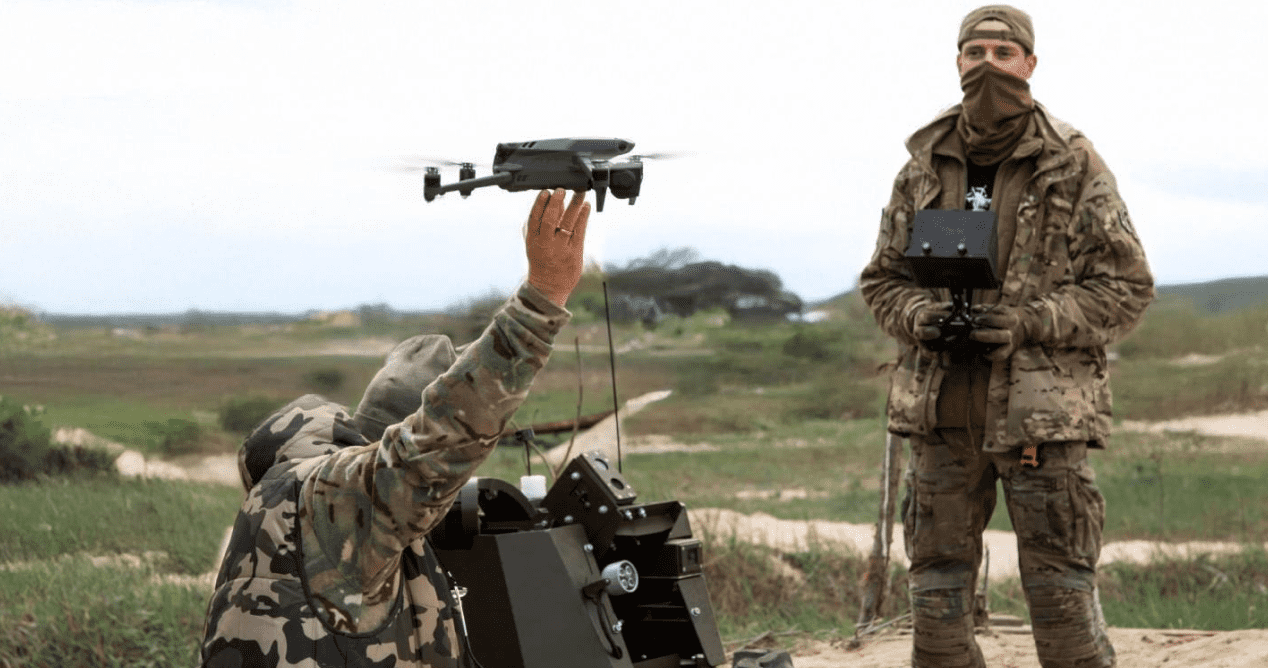
Unmanned systems integration is the convergence of those domains: a sea drone delivering a ground robot; a ground robot launching FPV drones from a forward position; aerial drones providing targeting data to robot ground units; robotic systems coordinating across three domains without direct infantry involvement.
Ukraine’s analysts and defense technology experts describe this shift as a natural next step. In 2023–2024, aerial and sea unmanned systems reshaped how Ukrainian defenders operated on the front lines. In 2025 and into 2026, ground robotics began catching up, and the domains started talking to each other.
More than 280 Ukrainian companies are now developing ground robots. The UGV market grew 488% in 2025 alone, according to a study by the KSE Institute, Brave1, and Defense Builder – numbers that reflect not just production capacity but a fundamentally new approach to how Ukraine’s defense ecosystem operates.
Sea Drone Delivers Ground Robot to Enemy Shore
The Kinburn Spit is a narrow, 40-kilometer peninsula at the point where the Dnipro-Buh Estuary meets the Black Sea – strategically vital, and until recently, difficult to reach without significant risk to personnel. Russian forces had controlled parts of the spit since March 2022.
On July 13, 2026, Ukraine’s 123rd Territorial Defense Brigade used an unmanned sea platform to transport a ground robotic complex to the occupied shoreline. The ground robot then conducted its mission. The entire operation involved no Ukrainian personnel crossing into the operational area.
This represented what the brigade described as the first known combat mission of its type – a multi-domain unmanned operation where the sea drone served not as a weapon itself, but as a delivery vehicle enabling a ground robot to operate in territory otherwise inaccessible without human risk.
It was also a demonstration of modularity: the sea drone did not need to be redesigned. The ground robot did not need special adaptations. The integration was an innovation.
Ground Robot Becomes a Mobile FPV Launch Platform
The Kinburn operation is striking for its novelty, but a parallel development has been unfolding in workshops across Ukraine since mid-2025: the conversion of ground robots into forward launch platforms for FPV drones.
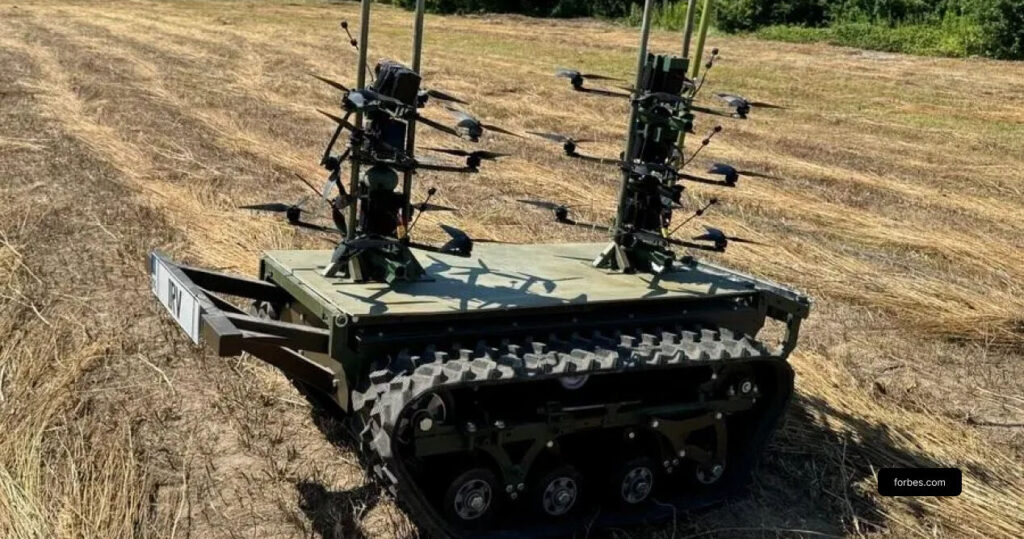
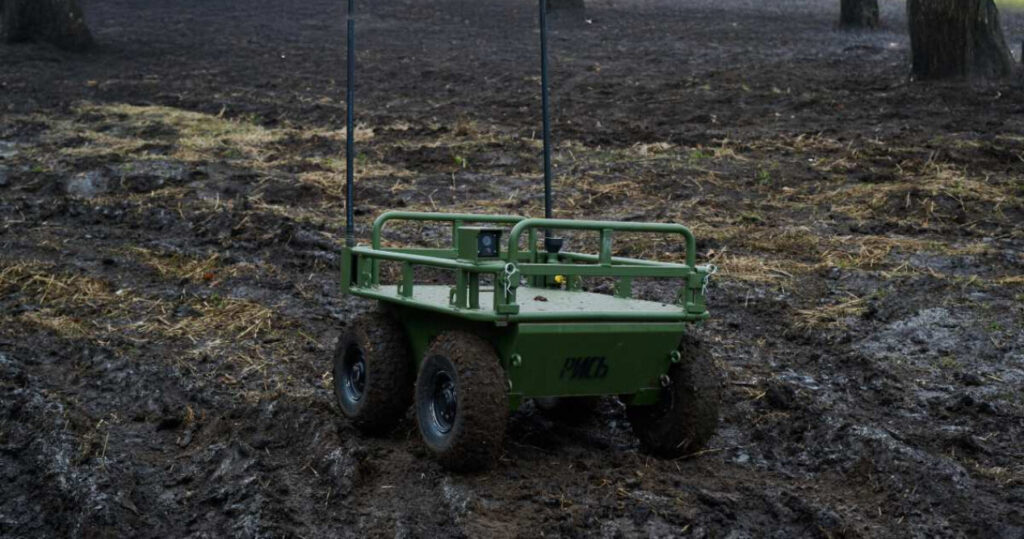
Ukrainian company IRV unveiled its Karakurt system – nicknamed “Black Widow” – at the IRON DEMO 2025 defense exhibition in Lviv in August 2025. The Karakurt mounts six FPV drones on two launch rails, fitted onto the tracked ground robot Vepryk (“Little Boar”). The ground robot can be driven up to four kilometers forward from the operator’s position, positioned in a high-threat area, and placed on standby – activating to launch drones when targets are detected.
The system extends the effective strike range further: an aerial relay drone, launched from the Karakurt itself, pushes FPV reach out to 30 kilometers from the platform’s position. Combined with the platform’s own forward deployment range, the system can engage targets that would be entirely inaccessible from a fixed rear position.
One unusual operational feature: the system can launch two FPV drones simultaneously, with the second drone automatically tracking and following the first. If the lead drone’s strike doesn’t eliminate the target, the second can conduct an immediate follow-up attack.
The full Karakurt system – ground control unit, two Vepryk carriers, and twelve FPV drones — costs under $50,000. That is roughly one-quarter the price of a single Javelin anti-tank missile.
Separately, Ratel Robotics has been developing UGVs as mobile launch points specifically for fiber-optic FPV drones – a configuration that makes the launch platform nearly invisible to electronic detection and the drones themselves resistant to jamming.
Naval Drone Launches FPV Strikes at Sea
The integration principle is not limited to ground operations. Ukraine’s sea drones – already credited with reshaping access to the Black Sea – have also been adapted to carry and deploy aerial drones from the water.
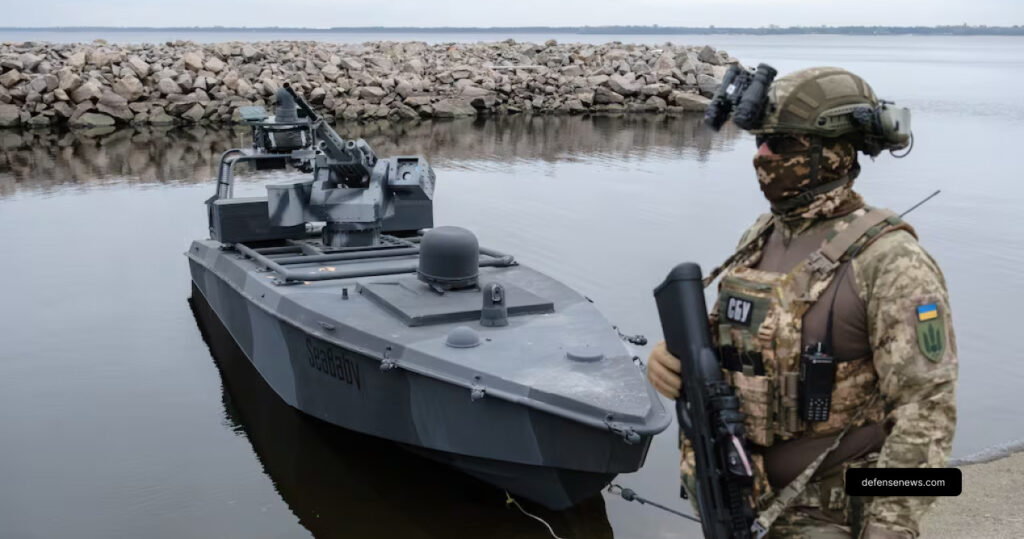
Ukraine’s Sea Baby, developed and operated by Ukraine’s Security Service (SBU), has been upgraded to carry six to eight FPV drones inside compartments that open during an approach. This allows the naval platform to move significantly closer to Russian positions than land-based operators could safely operate, then release its aerial payload for the final engagement.
The Sea Baby also carries AI-assisted targeting and navigation systems designed to continue operating under electronic warfare conditions – the Black Sea environment being one of the world’s most contested electronic spaces.
In June 2026, U.S. Special Forces conducted the first use of the Ukrainian Magura naval drone – a separate sea drone family built by force for Ukraine’s military intelligence directorate – in the Indo-Pacific, at the Balikatan 2026 exercise off the Philippines. This represented the first operational deployment of Ukrainian sea drone technology outside the European theater.
Why Integration Changes Everything for Civilian Protection
The humanitarian logic behind unmanned systems integration is straightforward: machines in dangerous places mean fewer people in dangerous places. But the implications extend further.
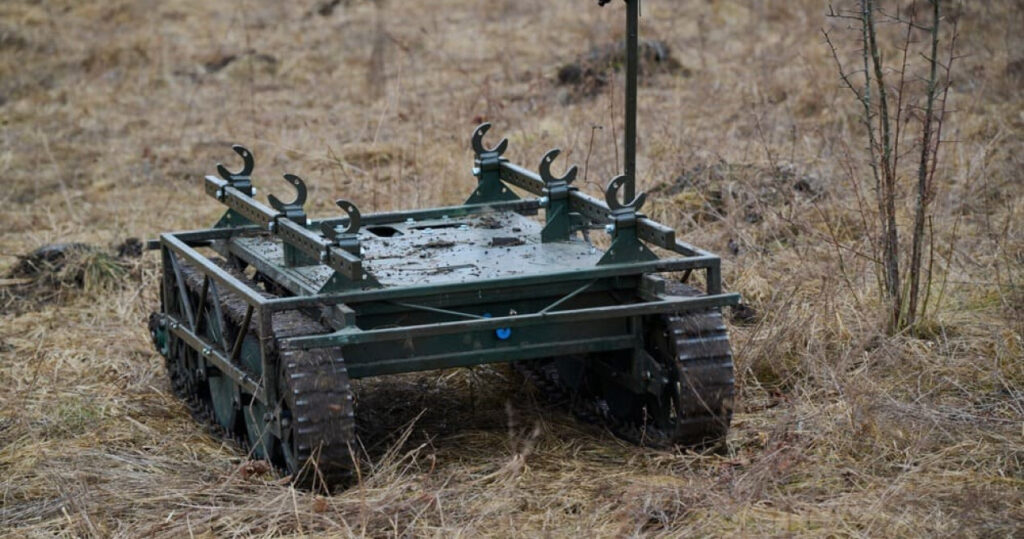
Ground robots that deliver medical supplies to cut-off positions, evacuate wounded defenders under fire, and conduct reconnaissance in drone-saturated kill zones are performing missions that previously required personnel to enter areas with very high risk of injury. Ukrainian UGVs conducted more than 24,500 missions in the first quarter of 2026 – the overwhelming majority of them logistical, moving supplies and evacuating casualties.
Multi-domain integration extends that protective logic to otherwise inaccessible terrain. A sea drone can reach a shoreline no supply boat or medevac team could safely approach. A ground robot launched from a sea platform can operate in territory that would require a dangerous amphibious insertion of personnel. Integration creates options that no single platform could provide alone.
There is also a second civilian dimension: the same technology ecosystem that uses UGVs for evacuation and sea drones for coastal reconnaissance is the foundation for protecting Ukrainian cities from aerial threats. The coordination of aerial, ground, and electronic systems that defines unmanned systems integration in a combat context is directly analogous to the multi-layer approach required to defend against Shahed drone attacks – the mission at the heart of Dignitas Ukraine’s Freedom Sky program.
Ukraine’s Innovation Advantage and How Training Scales It
Ukraine’s ability to move from concept to combat deployment in unmanned systems integration rests on two foundations: a private defense technology sector that iterates directly with frontline units, and a trained community of operators who can execute complex multi-system missions.
The Karakurt system’s developers noted that they deliberately work outside formal procurement processes specifically to maintain the speed needed to respond to changing battlefield conditions. Changes to frequency, payload configuration, and software updates happen in direct dialogue with the units using the systems a feedback loop that no traditional defense procurement cycle can match.
Lyuba Shipovich, co-founder of Dignitas Ukraine, has noted that Ukrainian engineers are building approaches to unmanned warfare that carry implications for defense thinking globally.
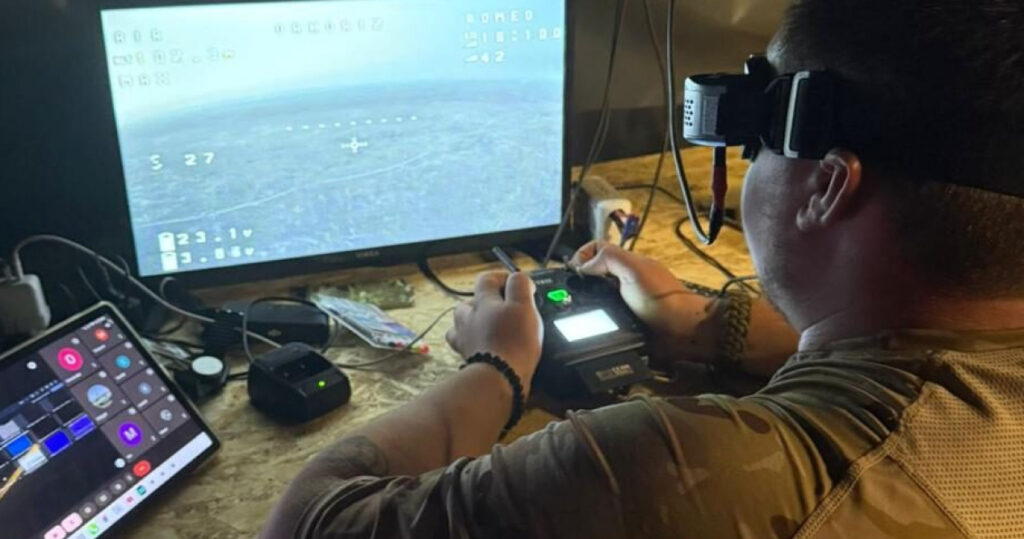
But technology without trained operators is infrastructure. The ability to conduct the Kinburn Spit operation, to deploy a Karakurt system, or to coordinate a drone-assault unit depends on personnel who can operate ground robotic platforms under pressure, adapt to system failures in the field, and integrate their actions with operators handling other domains.
This is why operator training is the ecosystem’s foundation. Dignitas Ukraine’s Victory Robots program has trained 2,023 ground robotics specialists, building exactly this foundation: the human capacity that allows Ukraine’s technological innovation to translate into operational reality on the frontline.
FAQ
What is unmanned systems integration in the context of Ukraine’s defense?
Unmanned systems integration refers to the coordinated use of multiple robotic platforms — aerial drones, ground robots (UGVs), and sea drones — working together as a single operational network rather than as independent tools. In Ukraine’s case, this includes operations like sea drones delivering ground robots to contested shorelines, UGVs launching FPV drones from forward positions, and combined drone-robot assault formations.
What was the Kinburn Spit operation?
On July 13, 2026, Ukraine’s 123rd Territorial Defense Brigade announced what it described as the first known combat mission of its type: an unmanned sea platform transported a ground robotic complex to Russian-held territory on the Kinburn Spit, where the ground robot conducted its mission. No Ukrainian personnel entered the operational area.
What is the Karakurt/Black Widow system?
The Karakurt — nicknamed “Black Widow” — is a Ukrainian ground robot developed by company IRV that carries six FPV drones on launch rails. The robot can be deployed four kilometers forward of an operator’s position, where it waits and launches drones on demand. With an aerial relay drone, its effective strike range extends to 30 kilometers. The full system costs under $50,000.
How do UGVs protect Ukrainian defenders?
Ground robots take on the most exposed parts of frontline missions: crossing open ground under drone observation, carrying supplies to cut-off positions, evacuating wounded personnel, and approaching enemy positions for reconnaissance or strike. By substituting for human movement in drone-saturated kill zones, UGVs reduce the exposure of Ukrainian personnel. Ukraine’s Defense Ministry reported that robots had substituted for human personnel in dangerous situations more than 22,000 times as of April 2026.
How is Ukraine’s approach to ground robotics different from other countries?
Ukraine’s UGV development is driven by direct collaboration between private companies and frontline units, with rapid iteration cycles. Systems are tested in live operational conditions and upgraded in response to real-time feedback — a process that no peacetime equivalent can replicate. The Jamestown Foundation noted in early 2026 that no other military has Ukraine’s level of real combat experience with unmanned ground vehicles.
How does operator training connect to unmanned systems integration?
Technology and training are inseparable. Coordinating multiple unmanned systems across domains requires operators who understand both the capabilities and limitations of their platforms and can adapt under pressure. Dignitas Ukraine’s Victory Robots program trains ground robotics specialists who form the human foundation of Ukraine’s UGV ecosystem.
What does Dignitas Ukraine do in this area?
Dignitas Ukraine’s Victory Robots program trains ground robotics operators and specialists. As of 2025, the program had trained 2,023 individuals in UGV operations — contributing to the skilled workforce that makes Ukraine’s unmanned systems integration possible. The Freedom Sky program trains interceptor drone operators, addressing the aerial component of the broader unmanned systems ecosystem.