Skip to content


On June 16, Yulia O’Connell, Director of Development, and Iryna Kavun, Manager of Operations, represented Dignitas Ukraine at one of Washington’s most consequential defense gatherings: the Defense One Tech Summit in Arlington, Virginia.
The annual summit brings together senior Pentagon officials, defense innovators, policymakers, and technologists to define the future of U.S. and allied security capabilities. This year’s agenda centered on artificial intelligence, robotics, autonomy, counter-drone systems, space, and critical supply chains with a dedicated session titled “All Wars Are Robot Wars: Lessons from the Ukrainian Front.”
For Dignitas Ukraine, participation wasn’t symbolic. It was strategic.
Why Ukraine’s Frontline Experience Matters to Global Defense
The battlefield in Ukraine has become the world’s most consequential laboratory for modern defense technology. For more than three years, Ukrainian defenders have been testing, adapting, and deploying drone systems, electronic warfare tools, and autonomous platforms at a pace and scale that no peacetime exercise can replicate.
This adaptive expertise is precisely what the Defense One Tech Summit convened global leaders to understand.
The Summit’s Core Themes and Ukraine’s Role in Each
Autonomy and Robotics
Ground-based robotics have already demonstrated life-saving potential on the Ukrainian battlefield. Dignitas Ukraine’s Victory Robots program has trained 2,023 individuals in the operation of unmanned ground systems — robots used for supply transport, evacuation of the wounded, and demining. These are not theoretical capabilities. They are active, deployed tools that are already reducing casualties and keeping defenders alive.
The story behind these numbers puts the stakes in relief: during one documented mission, a ground robot guided by a 19-year-old operator on her very first deployment — across more than 30 kilometers of terrain, through snow and freezing temperatures, over the course of six hours — evacuated a severely wounded soldier who would not otherwise have survived.
That is what robotics integration means in practice.
Counter-Drone Systems
The proliferation of low-cost attack drones has fundamentally changed how modern conflicts unfold. Ukraine has built unique expertise in detecting, tracking, and neutralizing aerial threats — expertise born from the urgent need to protect civilians, hospitals, power stations, and water infrastructure from relentless drone attacks.
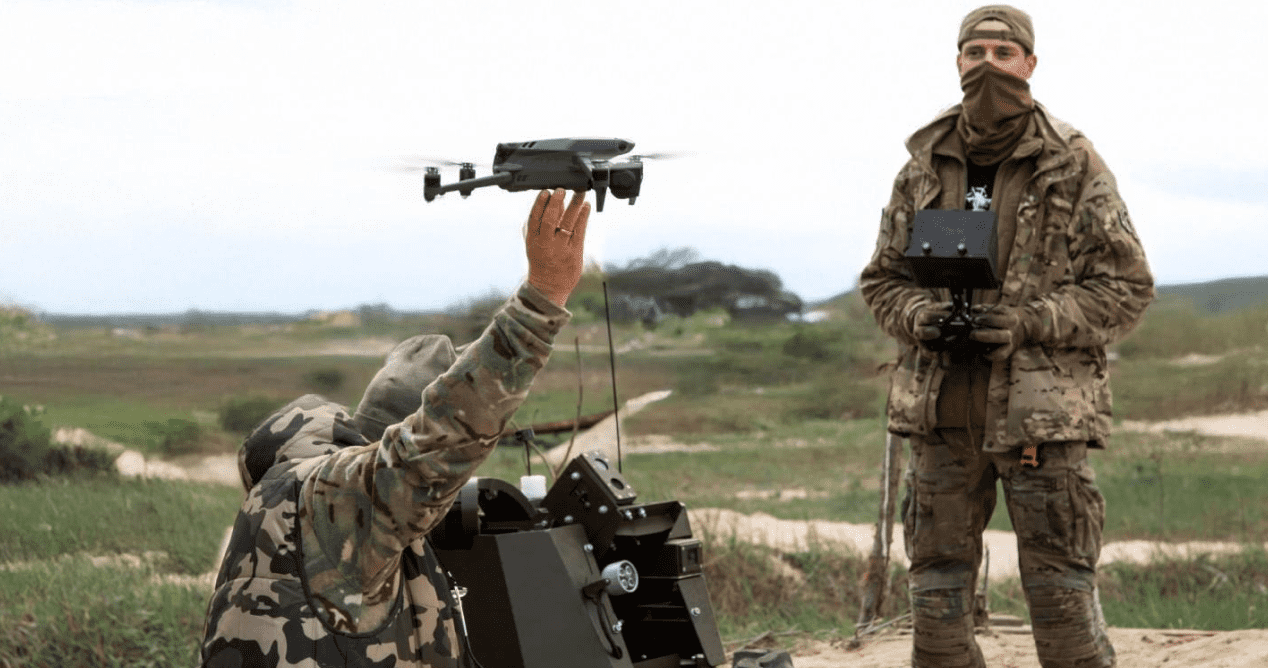
Through the Freedom Sky program, Dignitas Ukraine has trained 1000 interceptor operators who are actively defending Ukrainian cities and critical infrastructure from these attacks. The skills these operators have developed — and the technology they work with — are increasingly relevant far beyond Ukraine’s borders.
Space and Satellites
Satellite connectivity has proven essential to Ukraine’s defense operations. The integration of commercial satellite systems into battlefield communications and drone coordination has been a defining feature of how Ukraine sustains operational awareness across a dynamic and wide-ranging front.
Rare Earth Materials
The supply chain behind defense technology — including the materials that power batteries, drones, and electronic systems — is increasingly recognized as a strategic vulnerability for Western nations. Ukraine’s experience underscores both the importance of technological self-sufficiency and the value of strong allied partnerships in sustaining defense industrial capacity.
Ukraine’s Knowledge Is Already Reshaping Allied Defense Architecture
“Ukraine’s real-world experience is shaping global defense innovation, and it was invaluable to share our insights, connect with investors and U.S. government voices, and build partnerships that strengthen Ukraine’s technological sovereignty and defense capabilities,” said Yulia O’Connell following the summit.
That framing reflects something the broader defense community is rapidly absorbing. Arnold’s CEPA analysis notes that Ukraine has effectively served as a live laboratory for air defense concepts that NATO theorized for decades but never tested at scale against a peer-level threat. Several Eastern European allies have already accelerated investments in layered air defense systems following lessons drawn directly from Ukraine’s experience. Germany has expanded its IRIS-T production. The concept of integrated, multi-tier air defense is now central to NATO’s eastern flank planning in a way it simply was not before 2022.
Ukraine is not only defending itself. It is generating an empirical knowledge base that will shape European and global security planning for years to come.