Skip to content

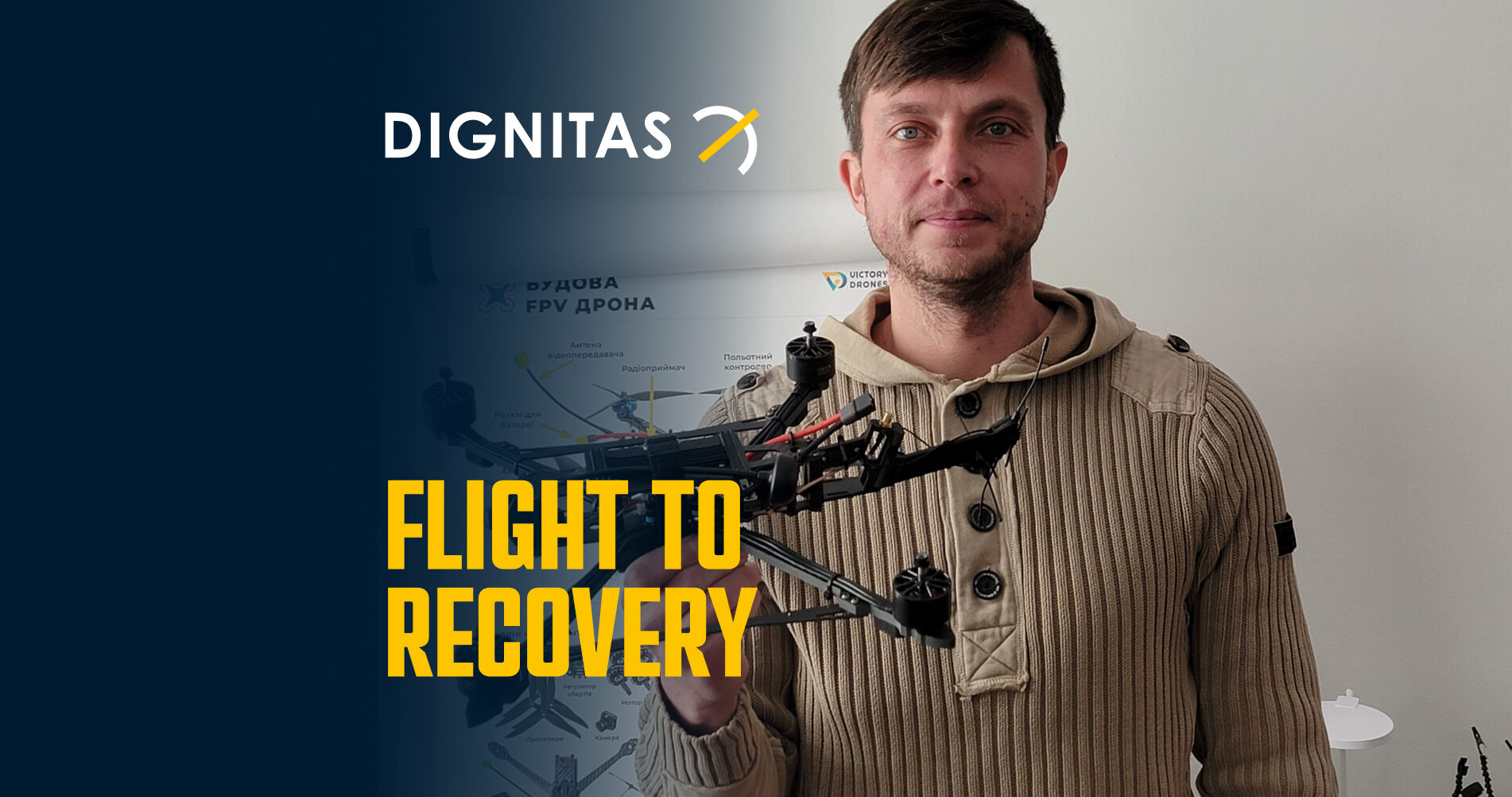
Ukrainian veteran Serhii spent nearly two and a half years in russian captivity before returning home in February 2025. After his release, he faced the challenge that defines reintegration for thousands of defenders: how to build a new life after service. Through Dignitas Ukraine’s Flight to Recovery program — a structured drone training and career reintegration initiative — he gained the technical skills, professional network, and psychological grounding to transition into Ukraine’s growing defense technology sector.
His story illustrates what veteran drone training in Ukraine can look like when it works.
What Is the Flight to Recovery Program?
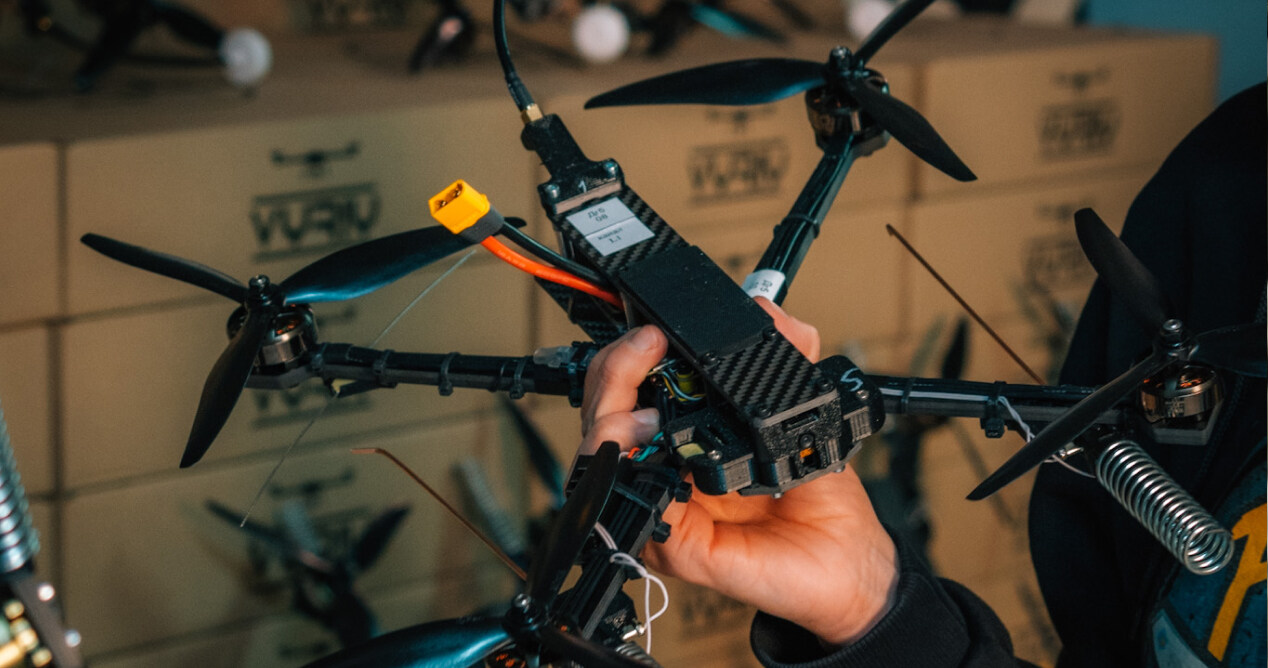
Flight to Recovery is a veteran reintegration initiative run by Dignitas Ukraine in partnership with United Help Ukraine. The program trains veterans in civilian drone operation and engineering — covering FPV drone assembly, component identification, soldering, and simulator piloting — while providing career placement support and a peer community designed specifically for those returning from service.
More than 360 veterans have graduated from the program since its launch, with courses operating across multiple locations in Ukraine.
What the training includes:
- Drone structure, types, and components
- FPV drone assembly and electronics fundamentals
- Soldering and hands-on engineering practice
- Simulator-based flight training
- Career guidance and employer introductions
From Abroad to the Front Lines: Serhii’s Service
Before russia’s full-scale invasion in 2022, Serhii was living abroad with his family and working in manufacturing. When the invasion began, he couldn’t stay on the sidelines. He came home.
Drawing on prior service as a border guard, he mobilized quickly — joining Ukraine’s 66th Separate Mechanized Brigade in April 2022 and serving in the Donetsk region. Four months into his deployment, he and his fellow defenders were captured.
Two and a Half Years in Captivity
Serhii spent nearly two and a half years detained — first in facilities on temporarily occupied Ukrainian territories, then in a pre-trial detention center in russia’s Altai region. He describes the experience as physically and psychologically devastating.
After his release in February 2025, recovery was slow. “Even a year later, I still feel that my health hasn’t fully recovered,” he says. Returning to active service wasn’t feasible, and he didn’t want to put his family through further uncertainty. But one thing remained unchanged: he still wanted to contribute.
Finding a New Direction After Military Service
In autumn 2025, Serhii began exploring civilian career options. Earlier attempts at standard civilian work hadn’t felt right.
“After military service and after captivity, reintegration is a complex process,” he reflects. “I tried civilian jobs, but understood that wasn’t for me. I wanted to bring value — to society and to defense.”
When he came across the Flight to Recovery program, he recognized the fit immediately: practical drone skills, a pathway into the miltech sector, and a peer environment built around shared experience.
Learning New Skills From Zero
Drones and electronics were entirely new territory for Serhii. He had real doubts about keeping up. “I didn’t know if I’d be able to do it,” he admits. “When it came to soldering and assembling small components, it seemed like it would be overwhelming. But everything was much better than I expected — good instructors who explain everything clearly, a warm and accessible atmosphere with no pressure.”
The program’s structure — combining technical instruction with hands-on practice from the start — makes the material approachable for participants with no prior background in electronics or unmanned systems.
Why the Peer Environment Matters in Veteran Reintegration
For many veterans, the social dimension of reintegration is as difficult as the practical one. Serhii found the peer environment at Flight to Recovery to be one of the most meaningful parts of the experience.
“Personally I feel more comfortable around people connected to the military and to defense,” he says. “When you come to these courses, everyone is from that same world. There are shared topics, a shared atmosphere.”
Over a month and a half of daily training, his confidence returned — and so did a clearer sense of perspective. “Everyone is dealing with related challenges — job searching, socialization, reconnecting. And you realize: you’re not the only one. That most people are going through the same thing, and that it’s normal.”
The program intentionally builds this environment, recognizing that reintegration is both a career challenge and a psychological one.
Employment Outcome: Hired Before Graduation
Shortly before completing the course, Serhii was hired by a miltech company — part of Ukraine’s growing defense technology ecosystem.
The technical preparation directly translated to interview performance. “During the interview, I already knew how to work with drones — their structure, the types, the components, how to assemble them. The theoretical and practical preparation from the course gave me the edge. I passed and was hired.”
The result — a career aligned with his values, skillset, and sense of purpose — is precisely the outcome the program is designed to create.
Serhii’s Message to Other Veterans
With experience from both the program and the sector it leads into, Serhii’s advice to veterans who are uncertain about retraining is direct.
“Don’t be afraid,” he says. “When you’re not yet working in a field, it can seem like others there have special skills you don’t. But that’s not how it is. It’s enough to go through training and start doing something — and you’ll start succeeding just as others do. Don’t be afraid. Sign up, come. And gradually, everything will work out.”
About Dignitas Ukraine’s Flight to Recovery Program
Flight to Recovery is a veteran reintegration initiative of Dignitas Ukraine, implemented in partnership with United Help Ukraine. The program helps defenders who have served Ukraine transition into civilian and defense-technology careers through structured drone training, community, and career placement support. As of 2026, more than 360 veterans have completed the program across multiple locations in Ukraine.
Learn more at dignitas.fund/flight-to-recovery
Frequently Asked Questions
What is the Flight to Recovery program? Flight to Recovery is a veteran reintegration initiative run by Dignitas Ukraine. It provides practical training in civilian drone operation and FPV drone engineering, helping veterans transition into new careers in Ukraine’s technology and defense sectors. The program also includes career placement support and a structured peer community of fellow veterans.
Who is eligible for the Flight to Recovery program? The program is open to veterans who have served in Ukraine’s defense and are navigating the transition to civilian life. No prior experience with drones or electronics is required — the curriculum is structured to develop skills from the ground up.
Where does Flight to Recovery operate? The program operates across multiple locations in Ukraine, including Kyiv, Lviv, and the Bucha region, with new enrollment cycles launching on a rolling basis.
What careers do Flight to Recovery graduates pursue? Graduates have gone on to work in miltech companies, drone manufacturing and maintenance, and other technology-adjacent sectors. Technical skills and hands-on practice gained through the program have directly supported participants in job interviews and career transitions, as Serhii’s case demonstrates.
How does drone training support veteran mental health and reintegration? Beyond the technical curriculum, the program creates a structured peer environment where veterans share common challenges and build connections. Participants consistently identify the community component — working alongside others with similar backgrounds and experiences — as a significant factor in rebuilding confidence and reducing the isolation that often accompanies the transition out of service.