Skip to content


Ukrainian interceptor drones help protect Ukrainian civilians and American security interests alike.
Holding Cards on the Ground, Exposed From Above
On June 15, 2026, a Russian Shahed drone deliberately struck the Kyiv Pechersk Lavra, one of Ukraine’s most sacred religious sites, as part of a broader barrage that killed civilians and cut power to 140,000 households. On August 21, a Russian “double-tap” Shahed strike on a shopping center in Kryvyi Rih killed at least 16 civilians and wounded more than 130, including 22 children.
Ukraine has found recent momentum: Russia’s frontline advances have all but halted, and Kyiv has struck deep at key enablers of Moscow’s war machine. Despite this, Ukrainian civilian casualties continue to rise in attacks like those mentioned above. Compounding the issue, Ukraine faces a serious missile interceptor shortage that will worsen this trend. An August 5 barrage on Kyiv, in which no missiles were intercepted and 17 people were killed, shows how completely Ukraine’s stockpile has been depleted.
No Such Thing as Collateral Damage
Moscow’s pattern of intentionally targeting civilians is part of its terror campaign, not incidental to it. Russia’s bombardments of Ukrainian cities aim to grind down Ukrainian resolve as its military efforts stagnate. Such attacks have become more frequent and deadly, with Ukrainian civilian casualties reaching their highest level in July since the earliest weeks of the invasion, according to the UN.
A primary instrument of this campaign is the Shahed, an Iranian-designed kamikaze drone that Russia now mass-produces as the Geran. Shaheds are launched around the clock in waves of often hundreds and frequently aimed at power and water infrastructure, hospitals, and residential areas. The Institute for Science and International Security (ISIS) estimates that Russia launched between 4,800 and 5,300 Shahed and Geran drones against Ukraine in August 2026 alone.
Russia’s loss of momentum, while promising, will not decrease civilian casualties alone. In fact, rather than seek a negotiated end to the war, Russian president Vladimir Putin will almost certainly double down on his terror campaign. Moscow is likely to repeat its strategy of intensifying attacks on populated areas and energy infrastructure as winter approaches to break morale. Shaheds will be at the core of this effort.

The Economics of Saturation
Shaheds saturate Ukrainian airspace and overwhelm air defenses, and Russia keeps upgrading them to stay ahead. By August 2026, jet-powered Geran-4 and Geran-5 drones made up a majority of Russia’s Shahed/Geran attacks, according to ISIS analysis. The Ukrainian Air Force says it intercepts only about 60% of these, compared with 90-95% of the older, slower models. Shaheds fly in increasingly large swarms; even when nine in ten overall are stopped, the volume means hundreds still hit their targets every month.
Their use also presents a critical economic dilemma. Through conventional air defense methods, Ukrainian interception is far more expensive than the cost of Shahed production. For instance, a Shahed drone can be built for around $20–$50k, while a Patriot interceptor missile averages $1-3M+. Compounding this issue is the dire Patriot shortage, which remains the only reliable system in Kyiv’s arsenal that can intercept Russian ballistic and hypersonic missiles. Averaging around $1-3k per unit and effective at stopping Shaheds, Ukrainian interceptors offer a glimmer of hope.
Flipping the Calculus
Ukraine’s answer to the Shahed threat is a fleet of small, fast interceptor drones that can be churned out in mass quantities. These do the job of an expensive missile at a fraction of the cost, negating the Shaheds’ economic advantage. In fact, Ukrainian interceptors accounted for more than 70% of Shaheds downed over Kyiv and its outskirts in February 2026.
The flagship Sting interceptor stands out among other platforms by providing an outstanding cost-performance ratio. Its hit rate falls between 80-90%, according to its maker, Wild Hornets, and it costs roughly $1k for the lowest spec models and $2.5k for standard models. While 30% more expensive than the standard version, the newest iteration, Sting 2.0, is being built to close the speed gap against jet-powered Shaheds that previous models have struggled to catch. Wild Hornets says the current Sting already accounts for an estimated 70% of verified jet-powered Shahed kills among interceptors of its kind.
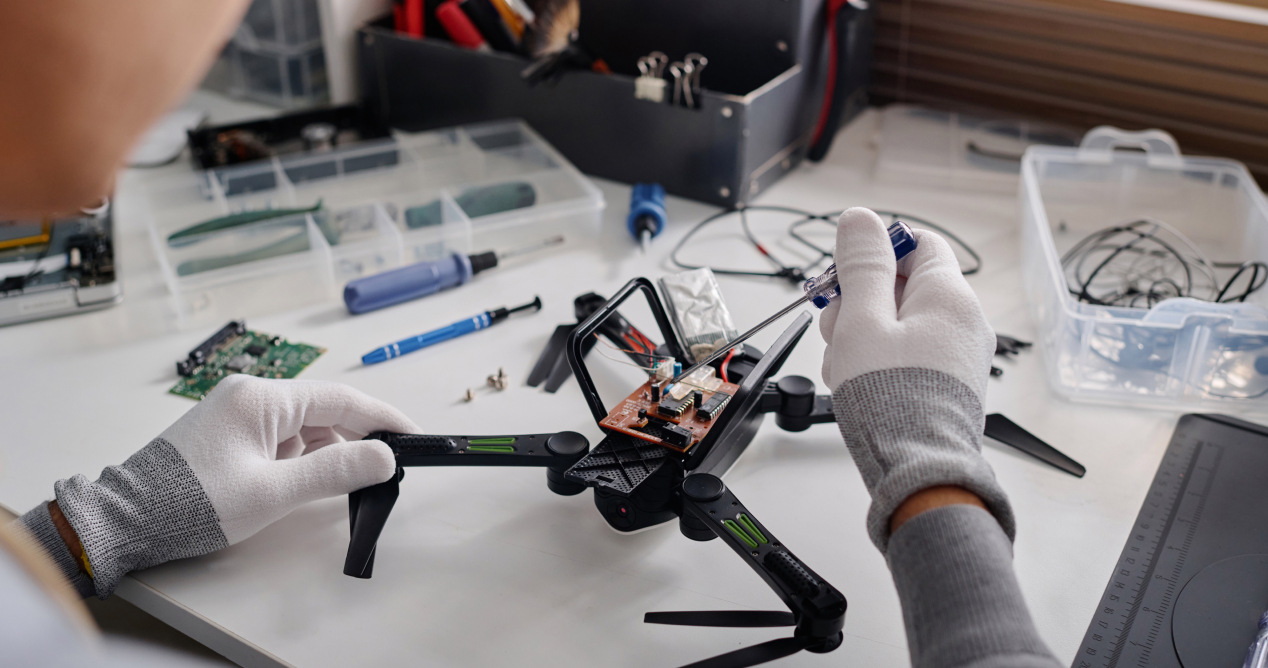
Ukraine is uniquely positioned for success in interceptor development. Its startups are more agile than large defense contractors and benefit from an iterative manufacturing culture that allows them to outpace others on speed and cost.Furthermore, designing interceptors around commercial off-the-shelf parts and 3D-printed structural elements means quick and cheap procurement.
A Strategic Partner
Ukraine has established itself as a strategic defense partner, exporting battle-tested and regularly improving interceptors that partners urgently need. After all, the ever-changing unmanned systems environment requires constant adaptation that is difficult to replicate outside a war zone. Ukraine is now a global interceptor hub, with France, Britain, and Germany launching co-development schemes. Meanwhile, Kyiv has signed decade-long military-tech agreements with Gulf countries, as they brace for a continued Iranian drone threat.
The U.S. is also beginning to buy in. Co-developed Merops interceptor drones tested on Ukrainian front lines have been deployed to protect American forces during Iranian Shahed attacks in the Middle East. A closer partnership on interceptors may also help the U.S. address gaps in its drone warfare preparedness. A recent U.S.-Ukraine exercise, for example, showed American troops were badly outmatched when pitted against experienced Ukrainian drone operators.
U.S. drone supply chain security may also benefit from a careful study of Ukraine’s interceptor production. American drone systems, including interceptors, remain heavily reliant on Chinese-made components that Congress has spent years trying to address. Ukrainian drones faced the same issue at the start of the invasion, yet Ukraine was able to reduce the share of Chinese-made components in its drones from near-total in 2022 to roughly 38% of its drone import value by 2025. Cooperation on this front won’t eliminate dependence, but will provide a valuable record of which components can be localized during wartime, and which cannot.
Ukraine is already providing significant security value that far exceeds what it costs to sustain. Interceptors are an investment that protects Ukrainian civilians and Kyiv’s partners alike.
Keeping the Lights On
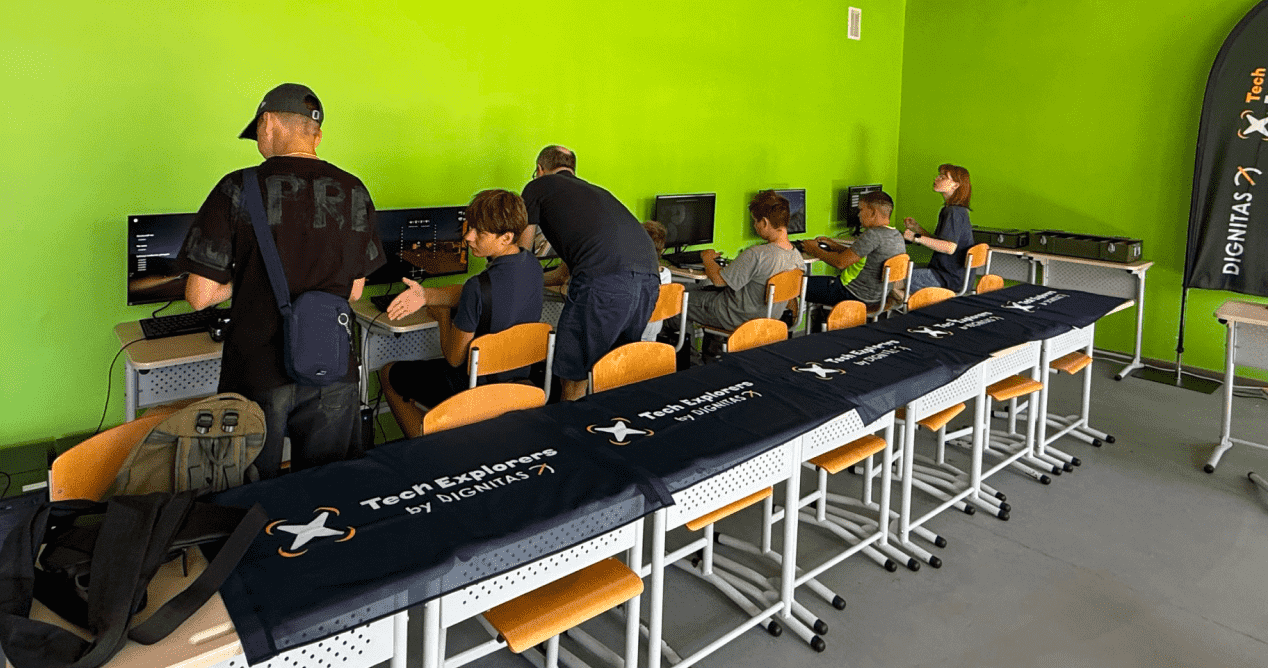
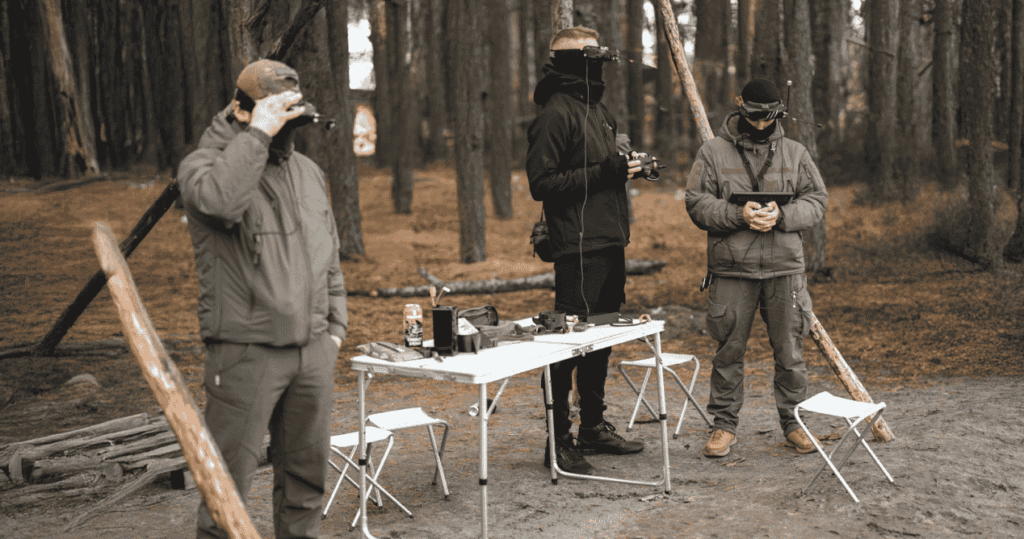
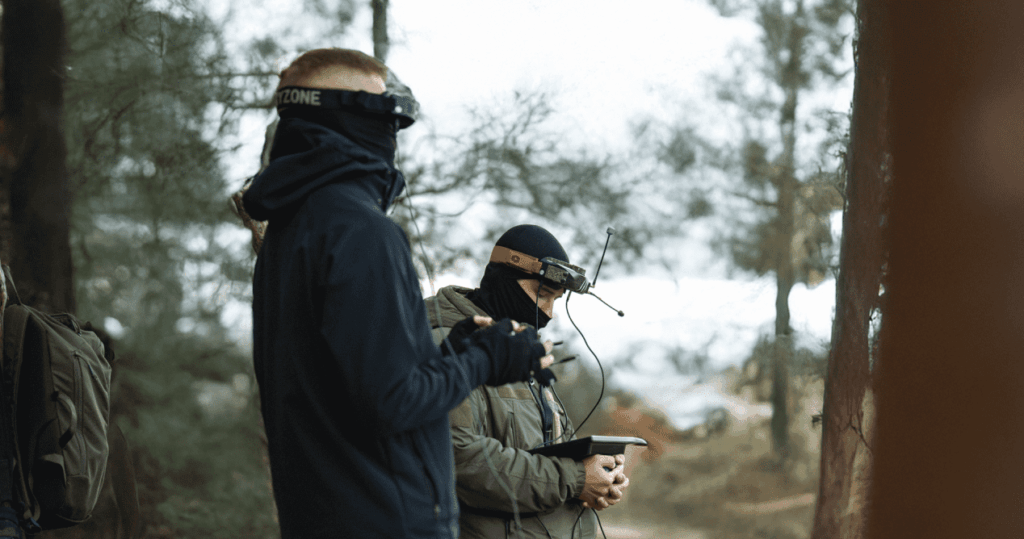
Dignitas Ukraine’s Freedom Sky initiative is a leading force in Ukraine’s interceptor defense. It trains operators to track, disrupt, and destroy incoming Shaheds before they reach civilian areas, while supplying teams with advanced interceptor technology. This enhances the effectiveness of the low-tier layer of Ukraine’s air defense system, downing Shaheds while preserving expensive interceptor missiles for ballistic and hypersonic threats. Dignitas Ukraine combines specialized training with technology integration support, connecting frontline operators with engineers. This ensures solutions are optimized before implementation within the Ukrainian military.
Since launching in 2025, Freedom Sky has trained over 1,000 operators to pilot multiple interceptor types as part of coordinated air-defense teams. The initiative also recently handed over, alongside the Protect Ukraine foundation, 23 mobile interceptor command posts worth around $1.8 million. About 420 active interceptor crews that either exist because of Freedom Sky or were reinforced by it now carry out daily anti-Shahed defense. More is coming. Through this winter and beyond, Dignitas Ukraine is committed to blunting Russia’s terror campaign, keeping the lights on, the water running, and civilians safe.