Skip to content

For generations, military medicine has operated around a core principle: get a wounded soldier to advanced care within sixty minutes of injury. That window — the “golden hour” — has defined trauma protocols, evacuation doctrine, and medical training across modern armies.
In Ukraine today, that hour no longer exists.
A June 2026 analysis published in The National Interest by David Kirichenko and Douglas Davis documents what Ukraine’s defenders and medics have known for some time: the proliferation of drones on the modern battlefield has made fast casualty evacuation not just difficult, but often impossible. The implications reach far beyond Ukraine — they are already rewriting the fundamentals of military medicine worldwide.
A New Kind of Kill Zone
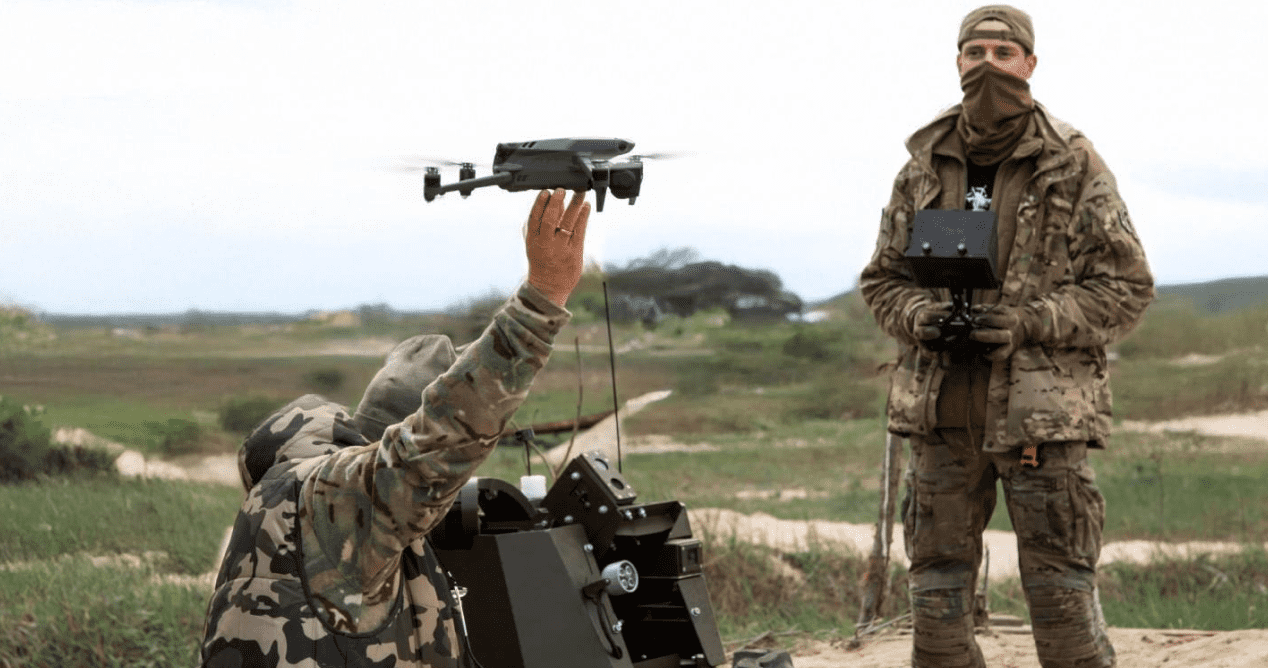
The front line in eastern Ukraine is not a static trench. It is a surveillance environment. Both russian and Ukrainian forces maintain persistent aerial coverage using FPV drones, reconnaissance UAVs, and loitering munitions. Movement — any movement — can be detected within minutes and acted upon within seconds.
Senior Lieutenant Ihor Ivanov of Ukraine’s 80th Air Assault Brigade described the stakes directly to the authors. In October 2025, a group of new recruits entered a frontline dugout near Vyiakivka in Donetsk Oblast without proper camouflage or movement discipline. A Russian FPV drone struck the position within sixty seconds.
This is the environment in which Ukrainian medics now operate. FPV drones and loitering munitions are responsible for up to 90 percent of casualties in some sectors. The injuries they produce — blast trauma, fragmentation wounds, severe limb damage — require rapid intervention. But the same technology creating those wounds is preventing the evacuation that would normally follow.
The “Lethal Triad”: Injury, Delay, and Deterioration
The National Interest analysis introduces a concept that Ukrainian medics have been confronting in practice: a “lethal triad” driven by drone warfare. Drone-caused injuries are severe. Evacuation is delayed by persistent drone surveillance. And prolonged exposure in the field before treatment causes conditions — infection, blood loss, shock — that may prove fatal even when wounds are survivable.
Kyrylo Matros, senior combat medic of the 1st Separate Assault Regiment, told the authors that blast and mine-related injuries are now the most common wounds medics encounter. These require immediate intervention that is simply unavailable when a soldier cannot be moved.
In one documented case, a defender remained at a frontline position for five months after being wounded in the leg, because every evacuation attempt was blocked by drone activity. That is not an outlier. It is a pattern.
Adaptation Under Fire: Ukraine’s Medical Innovations
Ukraine has not accepted these constraints passively. Medics, engineers, and organizations working at the intersection of defense technology and humanitarian protection have developed a range of improvised and systematic responses.
Drone-delivered medical supplies. When evacuation is impossible, aerial drones can deliver what wounded soldiers need to survive: IV kits, whole blood for transfusions, wound care materials. By late 2025, some Ukrainian units were already using this approach in active operations. A medic with the Azov Brigade described a soldier wounded in the neck by shrapnel who survived because a drone delivered blood for a trench transfusion. “We have dozens of casualties whose limbs were saved by drone-blood delivery,” the medic said.
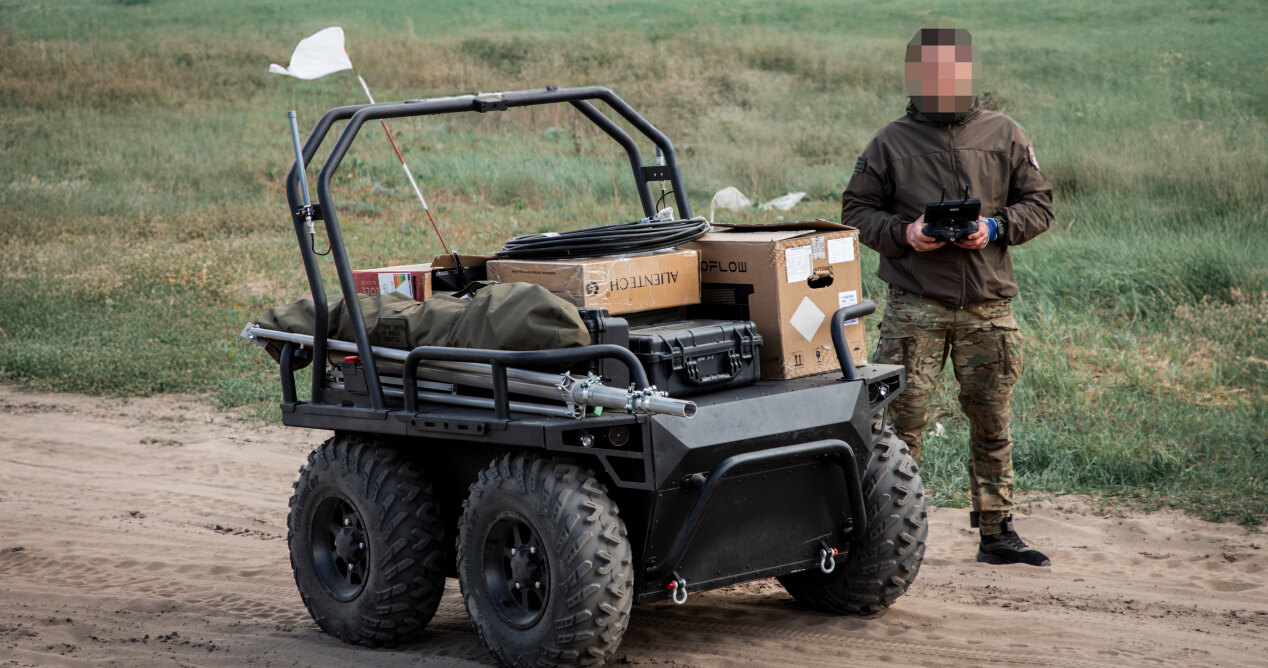
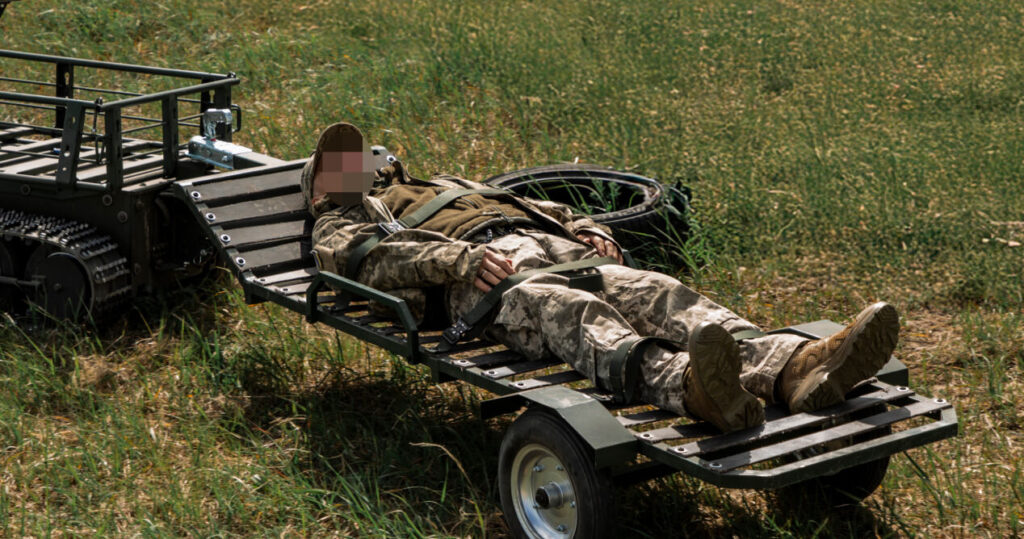
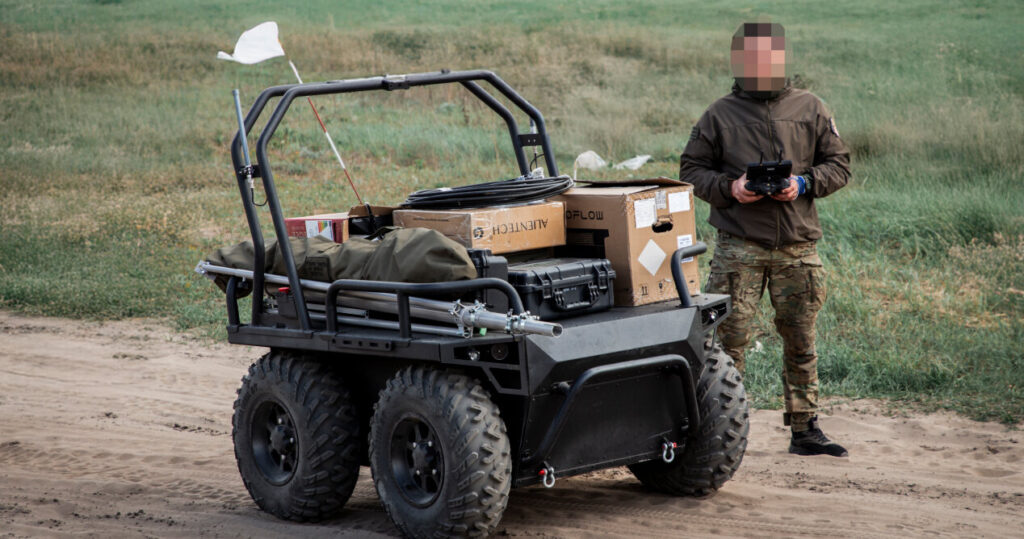
Unmanned ground vehicles for evacuation. Ground robots — UGVs — are increasingly being used to extract wounded soldiers from positions where human medics cannot safely reach them. Dignitas Ukraine’s Victory Robots program trains operators in exactly this capability. One documented mission involved a 19-year-old operator on her first deployment guiding a ground drone through snow and freezing temperatures across more than 30 kilometers of terrain to evacuate a severely wounded soldier. The soldier survived.
Prolonged field care. American veteran Ben Wiselogle, a former combat medic with Azov, told the authors that medics are now expected to manage wounded soldiers for extended periods — administering blood transfusions, IV fluids, pain management, and infection control — using skills once reserved for higher levels of care. The expectation of rapid evacuation has been replaced by an expectation of survival under sustained frontline conditions.
Underground stabilization points and drone-cooled blood banks. Medics are relocating treatment facilities underground and adapting cold-chain logistics to maintain blood supplies in field conditions. Some units have repurposed vehicles as armored evacuation platforms designed to move faster than drone response times.
What This Means for the Future
The National Interest analysis is clear on one point: Ukraine is not just adapting to a new threat. It is generating knowledge that will shape military medicine for decades.
Aeromedical evacuation — the helicopter-based CASEVAC approach central to American battlefield medicine since Vietnam — is not viable in a drone-saturated environment. The doctrines, equipment, and training assumptions built around it require revision. Ukraine, operating at the frontier of this challenge, is developing the empirical evidence base that other militaries will need.
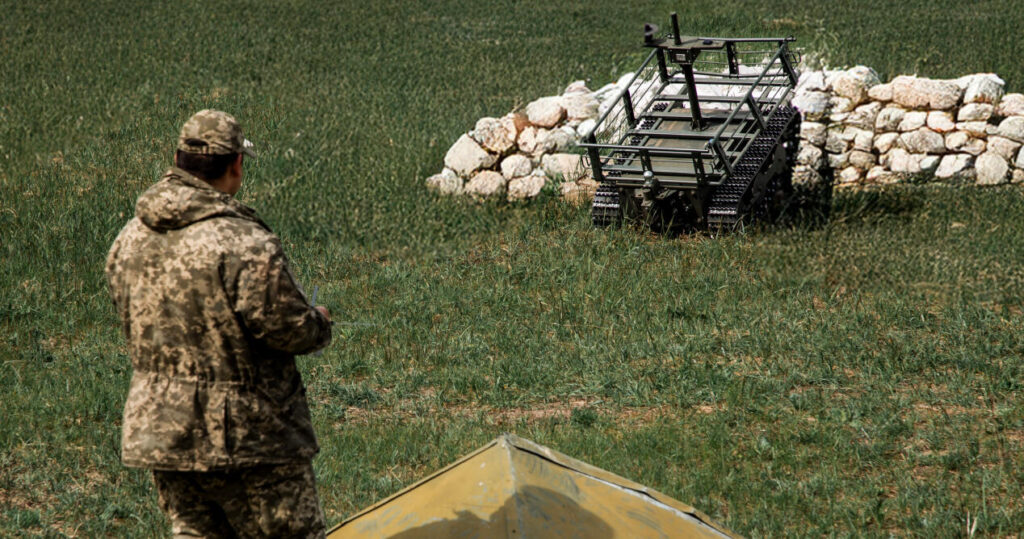
Several directions are already emerging. Future trench systems may need purpose-built covered routes for UGV movement, allowing ground robots to evacuate wounded soldiers, deliver supplies, and move ammunition while remaining concealed. UGVs will also require greater autonomous capability to complete missions when operator connectivity is interrupted.
Lyuba Shipovich, co-founder of Dignitas Ukraine, told the authors that connectivity constraints are among the most pressing challenges for UGV-based evacuation. The systems work. The infrastructure around them — both physical and electronic — needs to catch up.
The Human Dimension
Statistics and doctrinal analysis can obscure what is ultimately a story about people. About medics making decisions under fire with tools that were not designed for this situation. About operators guiding robots through terrain they cannot see, toward soldiers they have never met. About defenders waiting — sometimes for days, sometimes for months — in damaged positions, sustained by supplies delivered from above, hoping that the next attempt to bring them out will succeed.
Dignitas Ukraine’s programs — Victory Robots, Freedom Sky, Flight to Recovery — operate directly within this reality. Training operators, developing technology, and supporting the defenders who use it are not abstract contributions. They are part of a system that determines whether wounded soldiers survive.
The golden hour may be gone. What replaces it is still being built, in real time, by the people on the ground.
This article is based on “How Ukraine’s Drone Warfare Is Changing Battlefield Medicine” by David Kirichenko and Douglas Davis, published in The National Interest on June 9, 2026. Original article: nationalinterest.org