Skip to content

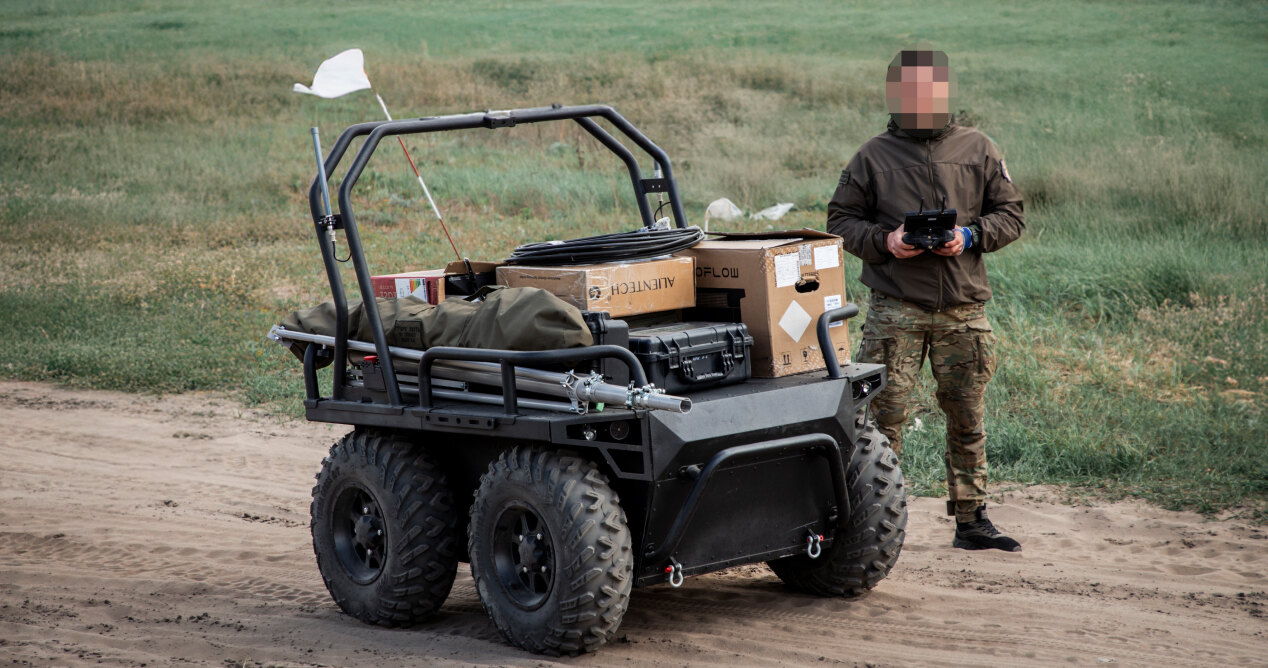
How AI-assisted drone technology, operator skill, and adaptive thinking are reshaping the battlefield – insights from Dignitas Ukraine’s UAV instructor Pavlo Horiachev.
The global conversation about drone technology often focuses on two extremes: fully autonomous combat systems on one side, and individual operators piloting remotely on the other. The reality on Ukraine’s battlefield is far more nuanced and the people who understand it best are the engineers and trainers working inside it every day.
Pavlo Horiachev is one of them. A UAV and UGV instructor, engineer, and defense-technology analyst with Dignitas Ukraine, Horiachev brings three decades of IT experience in software, analytics, big data, and systems architecture to his work training soldiers in drone operations under real combat conditions. In a recent interview published by The Good Men Project, he shared insights that challenge some of the most common assumptions about where drone technology is heading and why.
The Automation Paradox: Why Repeating Yourself Leaves You Vulnerable
One of Horiachev’s most striking observations concerns the limits of automation itself.
“Automation is about repeating things,” he explains. “If your enemy observes your behaviour repeated many times, he can create effective countermeasures. Then this behaviour stops working.”
This isn’t a theoretical concern, it’s a pattern Horiachev has watched play out across multiple systems. When a new weapon arrives in Ukraine and proves highly effective, the opposing side begins developing countermeasures within weeks or months. Those countermeasures aren’t always technical. Sometimes they’re organizational: changing behavior, repositioning resources, adapting tactics.
The Bayraktar TB2 is one example he references. Once a significant tactical asset, its effectiveness declined as countermeasures caught up. HIMARS followed a similar arc. The lesson isn’t that these systems are failures – it’s that any system relying on predictable, repeatable behavior eventually becomes easier to neutralize.
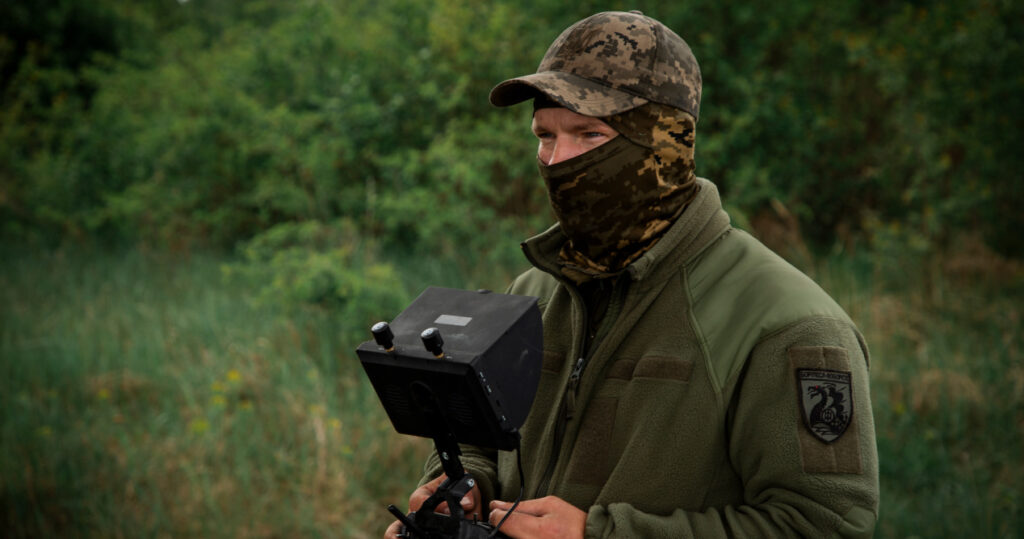
The Battlefield Is Shifting: Drones Fighting Drones
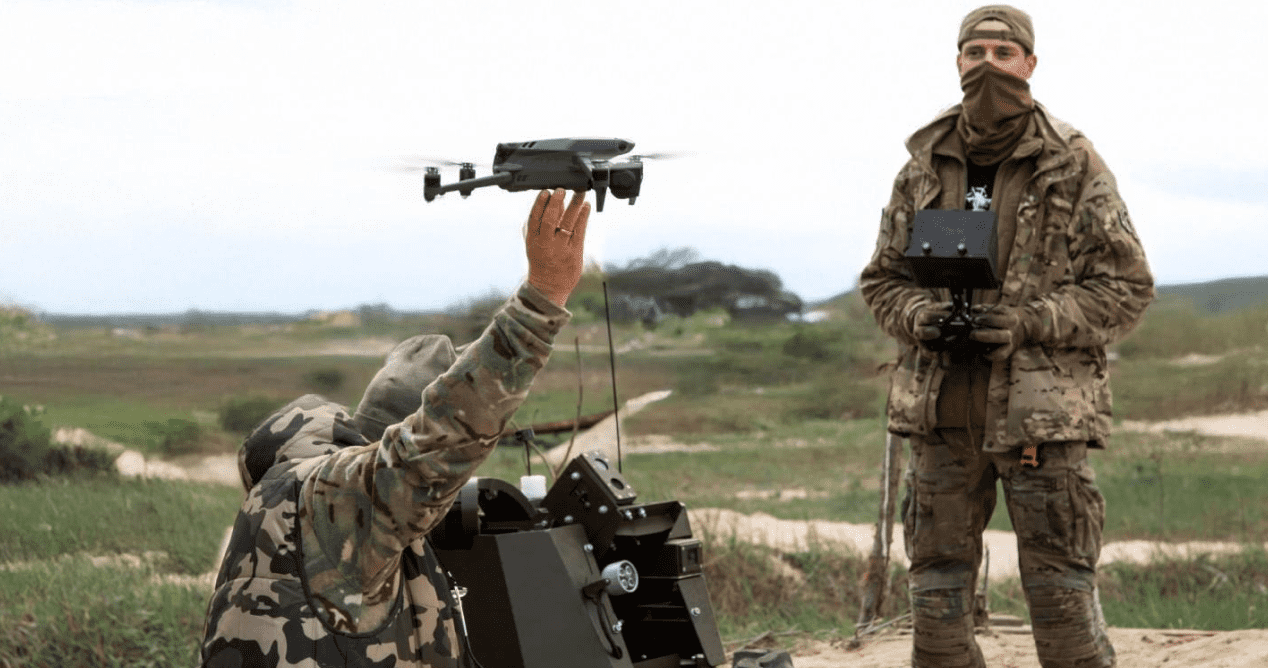
One of the more significant shifts Horiachev describes is the growing role of drone-on-drone combat. As both sides recognize how central drone operators are to modern battlefield effectiveness, those operators have become priority targets.
“People on the opposing side are not fools,” he notes. “They do not want to die. They use drones to stop our drones, and they deploy electronic warfare systems.”
Ukraine’s drone interceptors now regularly engage aerial threats at speeds approaching 200 km/h. Footage of these intercepts, often shared online and appearing controlled and almost choreographed, is typically shown in slow motion. The real-time operations require extraordinary skill and precision from human operators – skill that computer vision systems are still working to replicate reliably.
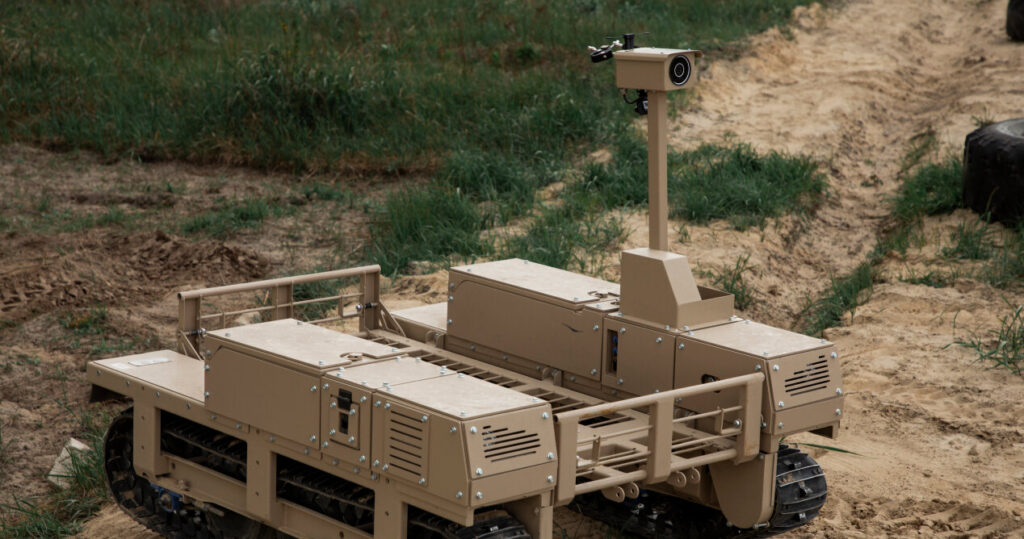
Ground drones are shifting roles too. Unmanned ground vehicles (UGVs) are increasingly taking on logistics and reconnaissance tasks, reducing the exposure of infantry in some areas. The trajectory, as Horiachev describes it, is toward an “automated battlefield” — but one where human adaptability remains the decisive variable.
This matters deeply for the future of AI-controlled drone missions. Training AI requires large datasets collected through repeated, consistent actions. But those same repeated actions are precisely what make a system predictable and vulnerable.
“I do not believe fully automated missions against people will work very well,” Horiachev says. “They may work, but not as effectively as people imagine now.”
What Computer Vision Actually Requires in the Field
One area where Horiachev pushes back against simplistic narratives is in the development of AI and computer vision for military drones.
“A lot of people think it is very easy to make these computer-vision models. It is not easy.”
The challenge isn’t primarily algorithmic. It’s environmental. Reliable military-grade computer vision requires testing across different terrains, weather conditions, times of day, and seasons. A model trained in summer conditions may fail in winter. Temperature changes can weaken antennas, make cables brittle, and cause ground-control systems to behave unpredictably.
“To have reliable military equipment, you need at least a year,” he says, “because summer and winter environments are very different.”
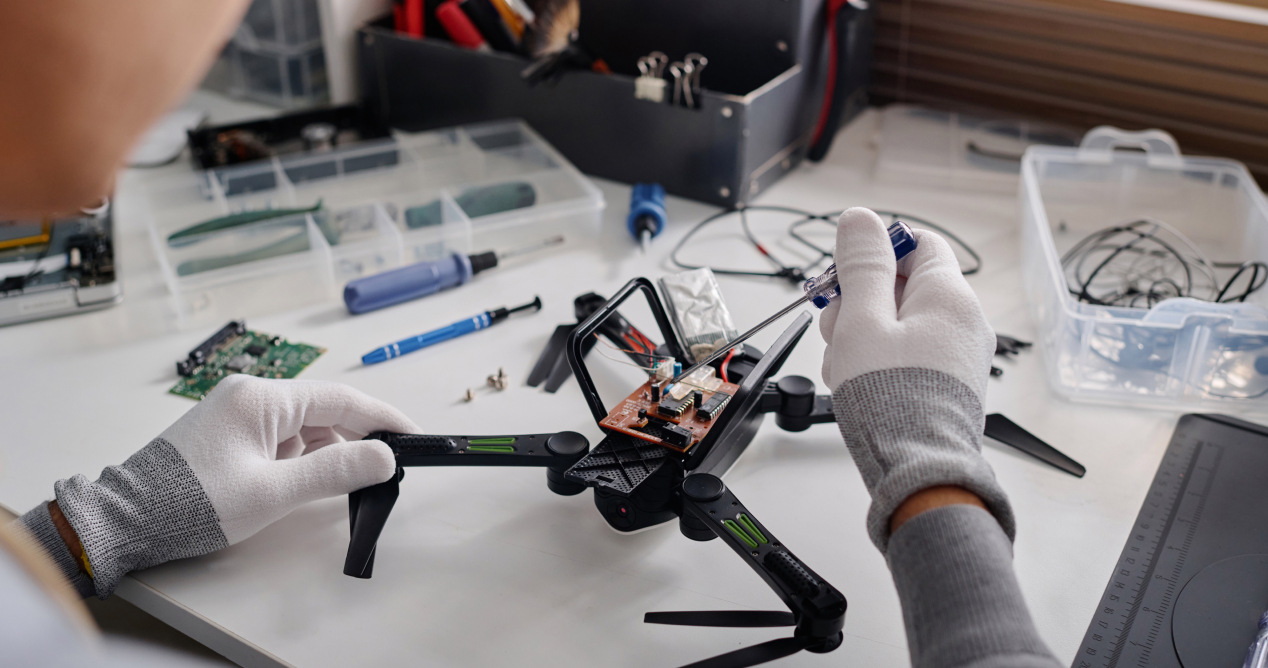
For developers working in this space, Horiachev’s message is direct: flexibility and speed of adaptation matter more than theoretical elegance. Soldiers in the field cannot pause a mission to troubleshoot hardware failures. Developers have to anticipate failure modes in advance and build systems that can be quickly reconfigured or be replaced entirely on short notice.
The Strategic Value of Drones for Ukraine
Beyond the technical dimensions, Horiachev and interviewer Scott Douglas Jacobsen examine what drone superiority actually means for a country fighting with fewer personnel and less institutional manufacturing capacity than its opponent.
Three advantages emerge clearly:
Cost-effectiveness. Ukraine’s drone ecosystem – much of it developed by civilian engineers and startups in response to real operational needs – produces capable systems at a fraction of what conventional defense procurement would cost. This allows Ukraine to sustain operations that would otherwise be resource-prohibitive.
Force multiplication and force protection. Drones reduce the exposure of Ukrainian personnel in high-risk scenarios. Logistics runs, reconnaissance, and certain strike missions that would previously have required human operators in dangerous positions can now be managed remotely. As Dignitas Ukraine’s Victory Robots program demonstrates, ground robots are already being used for casualty evacuation – saving lives that would otherwise be lost.
Degrading opponent logistics. “Logistics is the blood of any operation,” Horiachev notes. Sustained drone pressure on supply lines, vehicle convoys, and equipment has cumulative strategic effects that go beyond individual engagements. The goal is attrition at a scale that outpaces the opponent’s capacity to regenerate – destroying more forces than the other side can recruit each month.
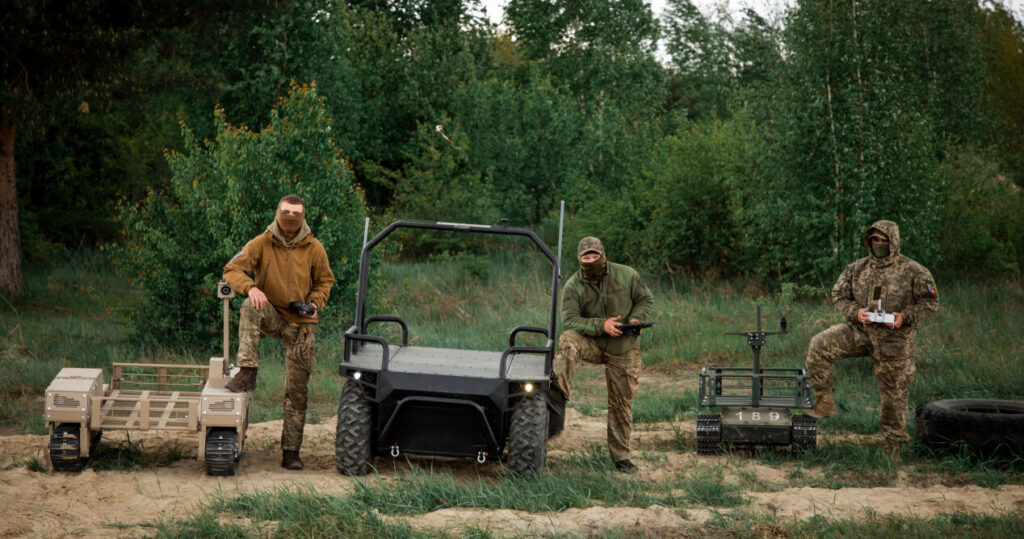
Human Judgment Remains the Irreplaceable Element
Perhaps the most important theme running through Horiachev’s perspective is the irreplaceable role of human judgment in complex, adaptive operations.
International humanitarian law – distinction, proportionality, precaution, accountability – sets the ethical framework for decisions involving the use of lethal force. Those principles require the kind of contextual judgment that current AI systems, however capable in controlled environments, cannot reliably exercise in the ambiguous, rapidly shifting conditions of real combat.
Horiachev doesn’t dismiss automation. He works on it every day. But he sees it clearly as a tool to support human operators, not to replace the judgment call at the critical moment.
“Semi-autonomous missions are where we are now,” he explains. “Fully autonomous missions where AI plans everything and does all the tasks. I do not think this is close. In the short term, I do not think we will have that.”
Dignitas Ukraine: Building the Human Infrastructure Behind the Technology
The insights Horiachev shares aren’t abstract. They reflect the daily work of Dignitas Ukraine’s training programs – Victory Robots, Freedom Sky, and Flight to Recovery – which have trained tens of thousands of Ukrainians in drone operations, ground robotics, and anti-drone defense.
The 2025 Impact Report shows the scale of that work: over 44,320 individuals trained in drone operations through Victory Drones alone; 2,023 trained in ground robotic systems through Victory Robots; 476 anti-Shahed interceptor operators prepared through Freedom Sky.
Behind every number is a person like Horiachev: someone who brings deep technical expertise, hard-won battlefield experience, and a clear-eyed understanding of what technology can and cannot do.
Ukraine’s edge in drone technology isn’t just hardware. It’s the adaptive culture – the engineers who file bug reports at midnight, the instructors who train operators for conditions they’ll actually face, the veterans who bring operational knowledge back into the development cycle.
That culture is what Dignitas Ukraine exists to build and sustain.