Skip to content

1. When a Former Congressman Drove a Truck Into Ukraine
Glenn Nye is a former Member of Congress from Virginia. He is also President and CEO of the Center for the Study of the Presidency and Congress — a nonpartisan American institution that has shaped U.S. policy thinking for decades.
In August 2026, Nye did something unusual for a Washington policy leader: he personally drove a donated 4×4 vehicle from western Ukraine to Kyiv, handing it over to a counter-drone training unit defending Ukrainian civilians from Shahed drone attacks. The trip was organized with Mission Ukraine UK and with support from Dignitas Ukraine.
What he witnessed during those four days became the basis for a detailed policy essay published by his institution: “How Closer Alignment with Ukraine Bolsters America’s Interests.”
The essay is worth reading in full. What follows is our summary — and the story of why the work Dignitas Ukraine does sits at the heart of its argument.
Primary source: Glenn Nye, Center for the Study of the Presidency and Congress — “How Closer Alignment with Ukraine Bolsters America’s Interests”
2. The War Is in the Cities: Civilians Under Fire
Nye describes the disorienting contrast of a country that refuses to stop living. Kyiv’s roads are busy, restaurants are full, and people are conducting business meetings over coffee. But sleepless nights are fractured by air raid alarms. In Odesa, Nye reports alarms came every two hours — day and night.
During his stay in Kyiv, Russian missiles struck a warehouse and a children’s hospital in his neighborhood. These were not accidents of war. They were deliberate strikes against life-support infrastructure: power plants, water treatment facilities, hospitals, food storage, and housing. The goal, as Nye documents, is to break civilian will through exhaustion and terror.
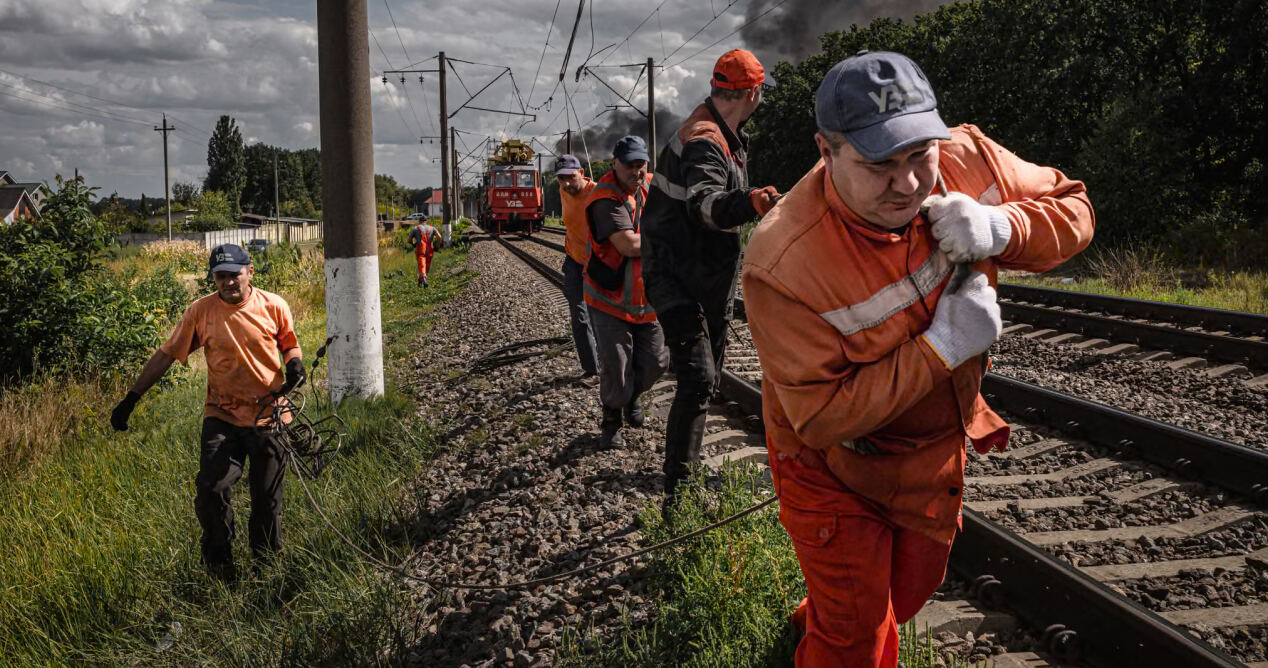
He also describes something less covered in Western media: in some occupied regions, Russian drone operators have deliberately targeted individual civilians — cyclists, market vendors, people walking home. In the east, gas stations have become high-priority strike targets, cutting off fuel supplies to communities.
Shahed drones — Iranian-designed, Russian-deployed, mass-produced — are central to this campaign. They are cheap enough to flood Ukrainian skies in waves, triggering city-wide air raid alarms before striking civilian targets.
This is the threat that Dignitas Ukraine’s Freedom Sky program is built to counter.

3. The Air Defense Race: Why Interceptors Save Lives
Ukraine has developed what Nye describes as a persistent adaptive learning loop in air defense. Operators are not just using Western-provided systems as instructed — they are pushing those systems beyond their designed parameters, developing new tactics in real time, and sharing those lessons systematically across units.
The layered architecture Ukraine has built — integrating Patriot batteries, NASAMS, IRIS-T systems, and modified Soviet-era platforms — is, by independent assessment, among the most effective operational air defense ecosystems in the world today. (See our related article on Ukraine’s air defense capabilities and what NATO is learning from them.)
But the threat is evolving too. Newer jet-powered Shahed variants are faster and harder to intercept. Russia is also deploying ballistic missiles, which arrive with little warning and require expensive Patriot-class interceptors. Ukraine currently faces a critical shortage in this category.
Nye’s conclusion is direct: helping Ukraine close its interceptor gap is not charity — it is a strategic investment in an ally that has already proven its ability to out-innovate its adversary.
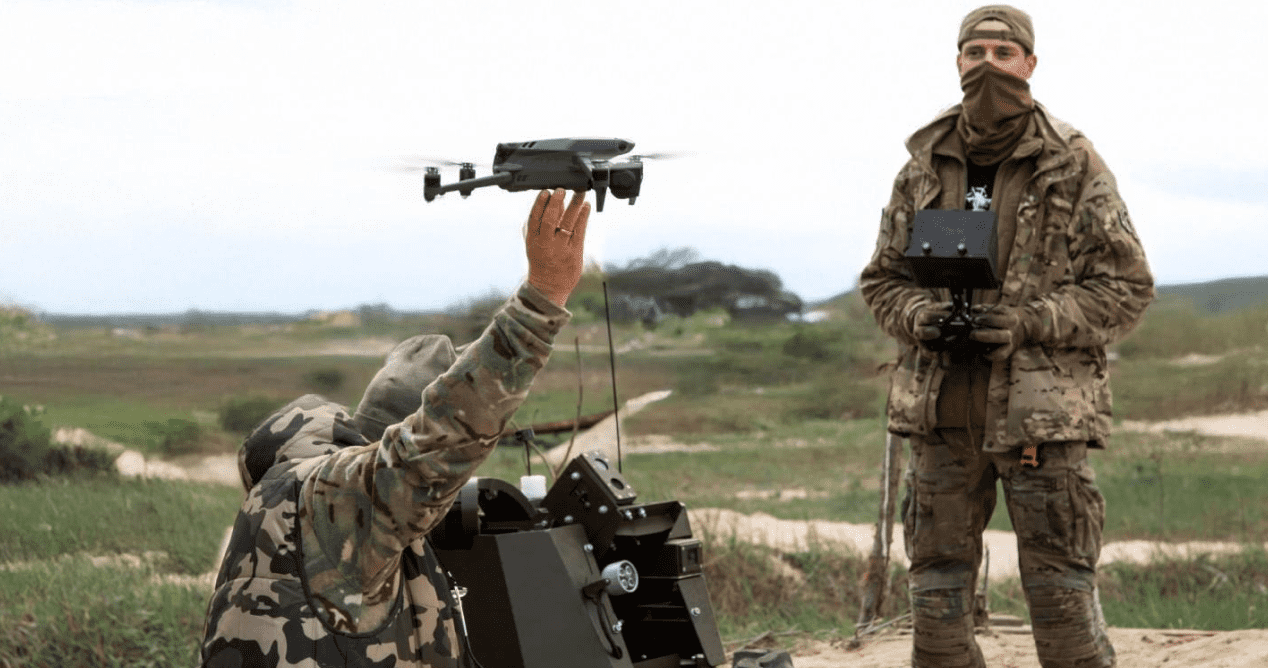
The vehicle Nye and his colleague donated went to a counter-drone training unit — the exact kind of unit that Dignitas Ukraine’s Freedom Sky program equips and trains. Since launching in 2025, Freedom Sky has trained 476 operators of Shahed interceptor systems in 2025, reaching a cumulative milestone of 1,000 trained by June 2026.
4. U.S. Support for Ukraine Fuels the World’s Most Advanced Drone Warfare Laboratory
Nye’s essay makes a point that is obvious to anyone who has followed Ukraine’s defense technology evolution — but still underappreciated in American policy circles: Ukraine is now the world’s most experienced real-time laboratory for drone warfare.
This happened by necessity. Unable to match Russia in troop numbers, Ukraine rapidly developed unmanned and remote-controlled systems to substitute for manpower and protect its defenders’ lives. What emerged is a decentralized, highly adaptive production ecosystem: hundreds of small manufacturers competing to refine products based on direct battlefield feedback, with iteration cycles measured in weeks rather than years.
Ukraine’s government-run Brave1 cluster connects manufacturers with military units through an online marketplace, allowing brigades to purchase drones and equipment themselves, test them in real conditions, and feed lessons back into the next production run. The result is a pace of innovation that Western defense establishments — built around multi-year procurement cycles — are only beginning to understand.
Nye is direct about the strategic implication: Ukrainian drone units have outperformed U.S. forces in drone-based military exercises. The knowledge asymmetry runs in Ukraine’s favor. And the United States has every interest in affiliating more closely with the institutions building and transmitting that knowledge.
5. What America Gains from Aligning with Ukraine
Nye identifies concrete, near-term advantages that U.S. policy is currently underutilizing:
Drone warfare expertise. Ukraine’s operators have accumulated more real-time unmanned systems experience than any force on earth. Affiliating with Ukrainian training organizations gives American planners access to lessons no simulation can replicate.
Air defense innovation. Ukraine has solved interoperability problems — integrating NATO-standard and Soviet-era systems in real time — that American engineers have theorized about for decades. The adaptive tactics developed under fire are directly applicable to U.S. and allied air defense planning.
Electromagnetic resistance testing. Ukraine offers live testing environments for military hardware that cannot be replicated in peacetime exercises.
Industrial adaptability. Ukraine’s decentralized, rapid-iteration production model offers a case study for how democratic nations can accelerate defense manufacturing without sacrificing quality.
Cognitive warfare lessons. Ukraine’s experience in managing information, civilian resilience, and public communication under sustained attack carries lessons for U.S. and allied strategic communications.
Nye’s core argument is not that America should support Ukraine out of moral obligation alone — though that case is strong. It is that support for Ukraine generates strategic returns in knowledge, capacity, and alliance value that make the investment self-evidently worthwhile.
6. Veterans, Reintegration, and a Two-Way Knowledge Exchange
At a veterans’ rehabilitation clinic in Odesa, Nye observed something that will be deeply familiar to anyone who has worked with American veterans of Iraq and Afghanistan: the pattern of traumatic brain injuries requiring physical treatment before psychological therapy can begin. The conditions are different; the underlying challenge is recognizable.
Nye argues that this should be a two-way exchange. America has hard-won expertise in veterans’ care from two decades of sustained conflict. Ukraine needs that knowledge as it builds a reintegration system for tens of thousands of wounded defenders — in parallel with an ongoing conflict, with no pause in between.
But the exchange runs in both directions. Ukrainian medical professionals and caregivers have accumulated the world’s most current expertise in treating casualties under high-intensity, drone-saturated conditions. The American military would be wise to learn from them.
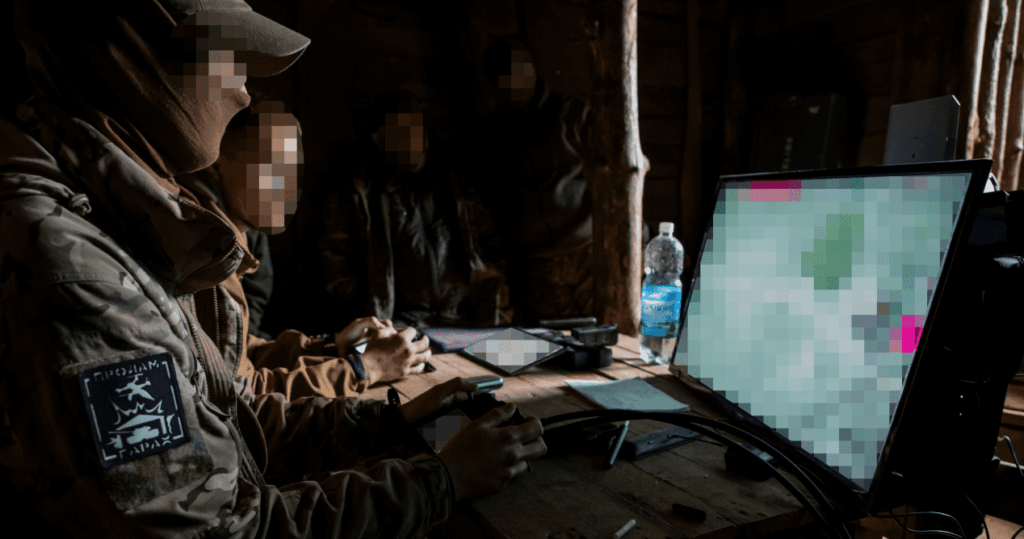
Dignitas Ukraine’s Flight to Recovery program exists precisely in this space: helping wounded veterans rebuild their lives through technology training, drone simulation, and community reintegration. In 2025, 220 veterans completed training through the program — gaining not just skills, but renewed purpose and a path back to contributing to Ukraine’s future.
7. Training the Next Generation of Defenders
One of the most striking passages in Nye’s essay concerns the long arc of Ukrainian resilience. He notes that the country is simultaneously waging a defense against Russia’s full-scale invasion, training injured defenders to return to service as drone operators, and preparing children and teenagers with the technical skills that will define both Ukraine’s military capacity and its postwar economy.
He links directly to Dignitas Ukraine’s TechExplorers program as an example of this forward-looking investment.
TechExplorers provides free STEM and drone education to children aged 7 to 17 — with priority access for the children of defenders and veterans. Tracks include FPV piloting, robotics and UGV operation, 3D modeling, and engineering fundamentals. In 2025, the program enabled 100 children to participate in STEM education across 7 locations, organizing 4 competitions to build skills and engagement.
In the context of Nye’s argument, this is not just educational programming. It is national resilience infrastructure — building the human capital base that Ukraine will need both to sustain its defense and to rebuild once the conflict ends.
8. The Bigger Picture: Great Power Competition
Nye closes with an argument that extends beyond Ukraine’s borders. A Russia that succeeds in subjugating Ukraine would open the door for deeper Chinese influence in Europe. But even a scenario short of Russian victory — an exhausted Ukraine left without definitive American and European commitment — could produce a country that turns to Chinese investment to fill the gap left by ambivalent Western partners.
The implication for American policy is clear: incremental, tentative support does not produce the alignment that generates strategic returns. Only robust commitment creates a genuine partner — and genuine partners are the foundation of durable security architecture.
This is the frame in which Nye visited Ukraine. It is the frame in which the vehicle he donated joined a counter-drone training unit. And it is the frame in which Dignitas Ukraine’s programs — from interceptor operator training to youth STEM education — represent not just humanitarian work, but concrete investments in a partnership that matters for American interests.
9. How Dignitas Ukraine Is Part of This Story
Dignitas Ukraine is a U.S.-registered 501(c)(3) nonprofit (EIN: 92-3194330) based in Cranford, New Jersey. We train defenders, support veterans, and prepare the next generation of Ukrainian innovators — with American donors and partners at the center of that effort.
Glenn Nye’s visit to Ukraine — and his decision to partner with Dignitas Ukraine in supporting a counter-drone training unit — reflects something we hear often from American supporters who engage closely with Ukraine: the closer you look, the clearer the case becomes.
If you want to be part of that story, here is where we work:
- Freedom Sky — Training interceptor drone operators to defend Ukrainian cities from Shahed attacks
- Flight to Recovery — Helping wounded veterans rebuild through technology training and community
- TechExplorers — Free STEM and drone education for children of Ukraine’s defenders
Your support doesn’t just fund programs. It funds the knowledge, the people, and the resilience that Glenn Nye drove a truck across Ukraine to be part of.
Frequently Asked Questions
Why is U.S. support for Ukraine in America’s strategic interest?
Ukraine has become the world’s most advanced real-time laboratory for drone warfare, air defense adaptation, and decentralized defense manufacturing. Closer alignment with Ukraine gives the United States direct access to operational knowledge — from unmanned systems tactics to veterans care — that cannot be replicated in peacetime exercises. A former U.S. Congressman who visited Ukraine in 2026 documented this case in detail for the Center for the Study of the Presidency and Congress.
What are Shahed drones, and why do they matter for U.S. policy?
Shahed drones are Iranian-designed unmanned aircraft deployed by Russia in mass waves against Ukrainian cities and civilian infrastructure. Ukraine’s experience intercepting them has produced tactics and technology that the U.S. military — which has also faced Iranian drone threats in the Persian Gulf — has a direct interest in understanding and affiliating with.
How does Dignitas Ukraine contribute to Ukraine’s defense technology ecosystem?
Dignitas Ukraine trains drone operators, UGV (unmanned ground vehicle) operators, interceptor specialists, and veterans transitioning to technology roles. With over 44,320 individuals trained in drone operations, 2,023 in ground robotics, and a cumulative total of 1,000 interceptor operators trained through Freedom Sky, Dignitas Ukraine is one of the leading training organizations in Ukraine’s defense technology ecosystem.
What is the Freedom Sky program?
Freedom Sky is Dignitas Ukraine’s initiative to train anti-Shahed interceptor drone operators — the defenders who protect Ukrainian cities, hospitals, and power infrastructure from Russian drone attacks. Since launching in 2025, the program has trained 476 operators in its first year, reaching a cumulative milestone of 1,000 trained by June 2026.
How can Americans support Ukraine’s defense technology training?
Donations to Dignitas Ukraine (a U.S.-registered 501(c)(3)) directly fund training programs for drone operators, ground robotics specialists, interceptor crews, veterans, and the next generation of Ukrainian engineers. Visit dignitas.fund to learn more.
What is TechExplorers?
TechExplorers is Dignitas Ukraine’s free STEM and drone education program for children aged 7 to 17, with priority access for children of defenders and veterans. It operates across 7 locations in Ukraine, offering tracks in FPV piloting, robotics, 3D modeling, and engineering. As noted by former U.S. Congressman Glenn Nye, programs like TechExplorers represent Ukraine’s long-term investment in the human capital needed for both defense and postwar reconstruction.