Skip to content

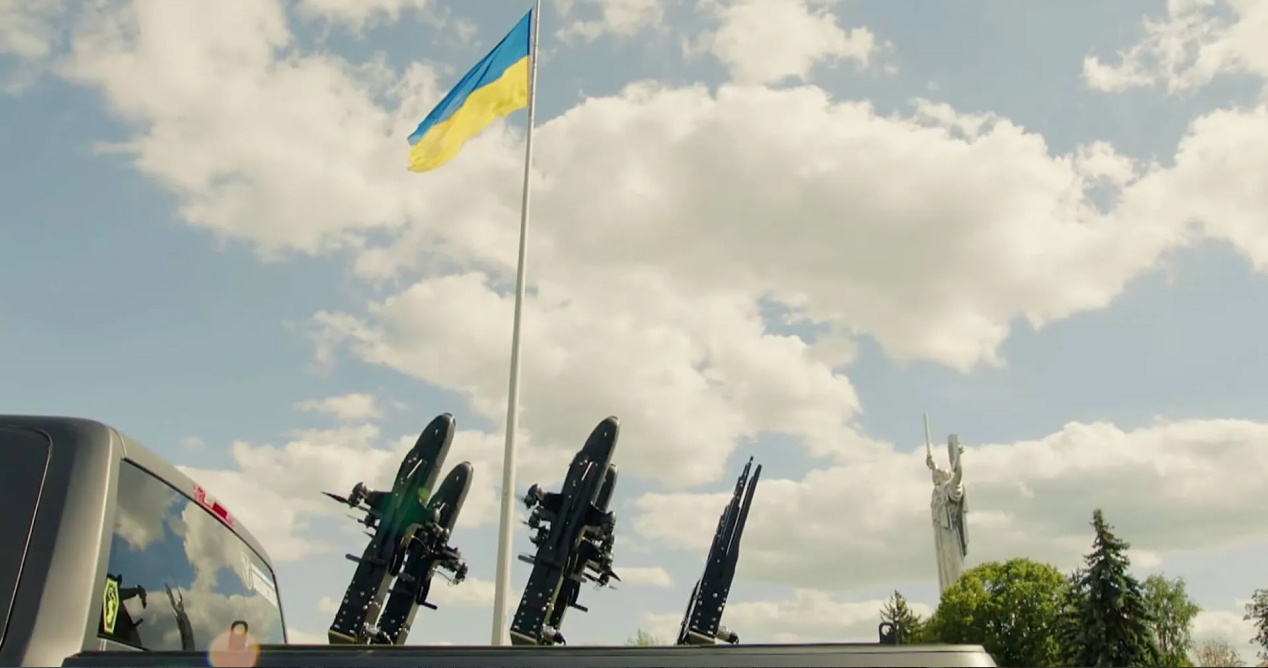
On August 24, 2026, Ukraine marked the 35th anniversary of its independence with a military display that stopped observers around the world. There were no marching formations, no battle tanks, no columns of armored vehicles. In their place, columns of unmanned ground robots rolled down Kyiv’s central boulevard Khreshchatyk, drone boats sailed the Dnipro River, and squadrons of aerial drones — including the interceptor systems that protect Ukrainian cities every night — crossed the skies above the capital.
Euronews described it as a glimpse of the future of warfare. The Atlantic Council called it a demonstration of Ukraine’s remarkable military transformation. Australia’s ABC News cited defense experts who called it a showcase of an emerging multi-domain unmanned force.
We at Dignitas Ukraine see it as something more personal: a public confirmation of what our instructors, veterans, and operators have known for years. The technology that defended Ukraine’s skies and evacuated its wounded defenders was not born in a laboratory. It was built through thousands of hours of training, iteration, and human determination — the kind of work our programs support every day.
A Parade Unlike Any Before
No country had ever staged a military parade composed entirely of unmanned systems across all three domains — land, sea, and air — before Ukraine did on August 24, 2026. The event, broadcast live and covered by major international media from Euronews to ABC News Australia to the Atlantic Council’s UkraineAlert, marked a symbolic inflection point in how the world understands modern defense.
Since the full-scale invasion began in February 2022, Ukraine has not held a conventional military parade. In previous years, Khreshchatyk became better known for a very different display: destroyed Russian equipment captured on the battlefield — a grim but powerful symbol of resistance. This year, the symbolism shifted from what Ukraine has endured to what Ukraine has built.
Nearly 100 pieces of Ukrainian-produced weaponry were showcased across three domains. The event was, as President Zelenskyy noted, evidence that Ukraine has built an almost entirely new defense industry — one that meets the demands of a twenty-first century conflict.
What Rolled, Sailed, and Flew Over Kyiv
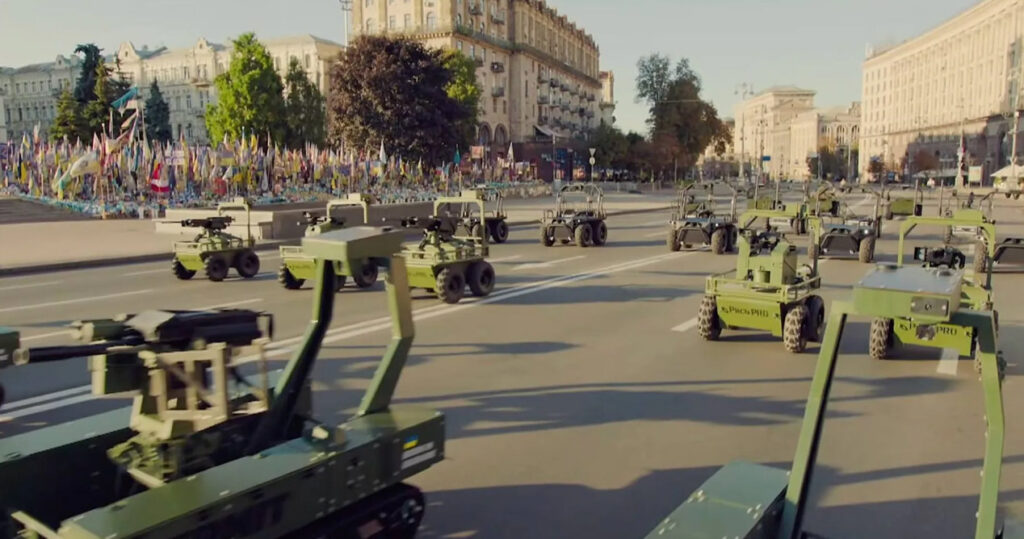
On the Ground
Thirty unmanned ground vehicles (UGVs) moved in formation down Khreshchatyk. These were not prototypes. The systems on display — including the Rys Pro and TerMIT platforms — are the same robots currently operating on Ukraine’s front lines, performing reconnaissance, mine clearing, ammunition delivery, and the evacuation of wounded defenders from the battlefield.
Some were equipped with heavy machine guns. All of them represent a fundamental shift in how Ukraine protects its people: by putting technology between danger and the humans who would otherwise face it.

On the Water
Nine unmanned surface vessels navigated the Dnipro during the parade, including variants of the Magura and Sea Baby families of naval drones. These systems have been instrumental in challenging Russia’s naval dominance in the Black Sea — allowing Ukraine to contest an adversary with a conventional fleet by deploying systems that require no crew aboard.
The naval drone fleet on display included reconnaissance platforms, strike-configured vessels, and variants equipped with air defense missiles — demonstrating how the role of unmanned naval systems has expanded far beyond their original design parameters.
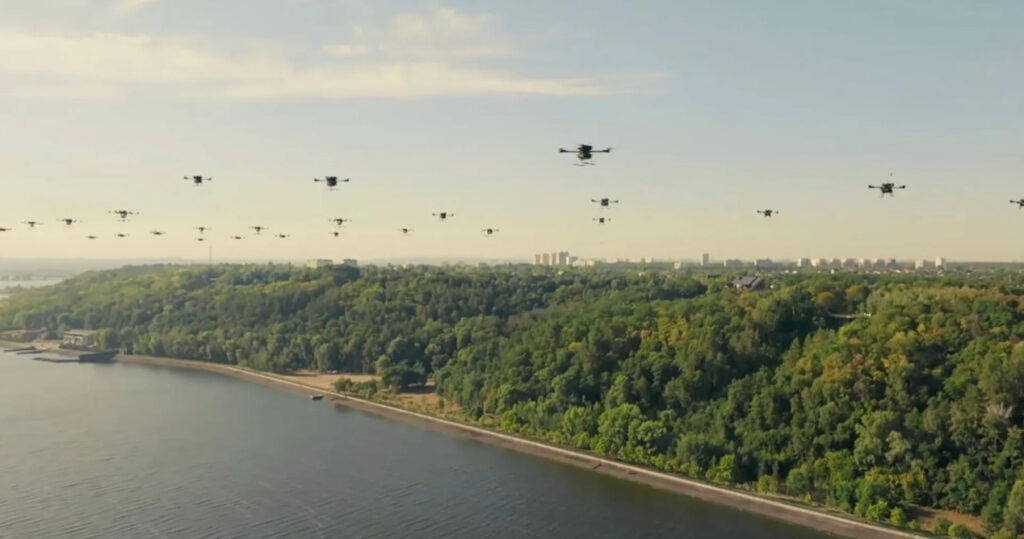
In the Air
Above the capital, the skies carried the full breadth of Ukraine’s aerial unmanned arsenal. Interceptor drones — systems designed specifically to detect and neutralize incoming aerial threats, including the Iranian-designed Shahed drones used to strike Ukrainian cities — flew alongside reconnaissance UAVs and bomber drones. The P1-Sun, Litavr, and Sting interceptors were joined by the SHARK and LF-400 reconnaissance systems, and by long-range drone platforms. French Mirage 2000 and American F-16 fighter jets completed the aerial segment.
The Scale of Ukraine’s Unmanned Systems Revolution
The parade was not just a display of hardware. It was a demonstration backed by operational data that is difficult to fully absorb.
According to the Ukrainian President’s Office, UGVs completed more than 66,000 combat support missions in the first half of 2026 alone — a figure that rose from approximately 7,500 in January to nearly 17,000 in June, as more units gained operational experience. Ukraine’s defense procurement agencies contracted more than 22,000 domestically produced UGVs for delivery this year, twice the 2025 total.
The aerial dimension is equally striking. As analyst Mykola Bielieskov wrote for the Atlantic Council, Ukraine’s annual drone production has grown from roughly one million units in 2024 to approximately seven million in 2026. At the onset of the full-scale invasion, the country had only a handful of drone manufacturers. Today, there are hundreds of Ukrainian companies producing unmanned systems.
Surveillance and strike drones now account for more than three-quarters of documented Russian equipment losses on the battlefield, according to the Atlantic Council’s analysis. The proliferation of precision drone-based firepower has fundamentally altered battlefield dynamics — dispersing concentrations of equipment, complicating large-scale offensive operations, and enabling Ukraine to defend extended sections of the front with substantially reduced troop exposure.
For defenders, this is not an abstract strategic concept. It means fewer people in danger. That is exactly what technology-enabled defense looks like in practice.
The People Behind the Machines: Training as the Critical Link
Every system on display in Kyiv on August 24 requires skilled operators. Interceptor drone crews must identify, track, and neutralize incoming aerial threats — often at night, often under pressure, often with seconds to act. UGV operators must navigate complex terrain, make split-second decisions, and execute missions that would otherwise put human lives at risk.
Hardware without trained people is not a defense capability. It is machinery.
This is the gap that Dignitas Ukraine was built to close.
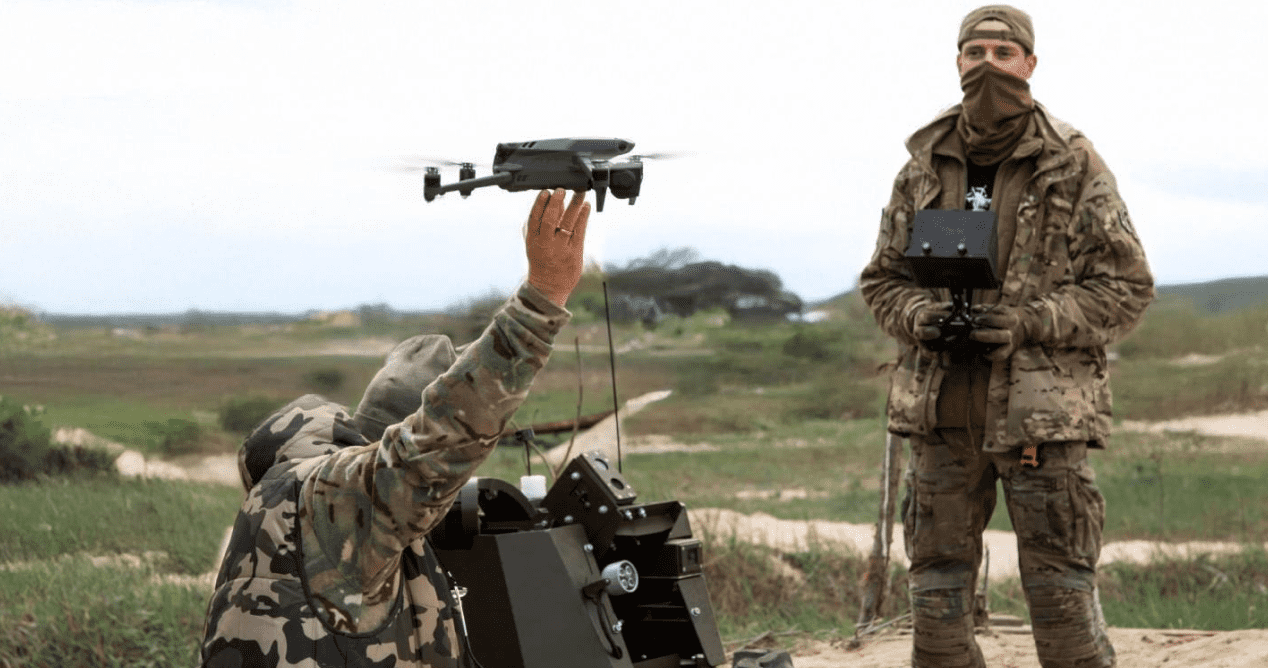
Through our Freedom Sky program, we train operators of Shahed interceptor drones — the aerial defenders whose work protects Ukrainian cities from the waves of Iranian-designed drones launched regularly against civilian infrastructure. Since the program launched in 2025, we have trained 476 interceptor operators. The systems that flew over Kyiv’s skies on Independence Day represent the technology these defenders use to protect lives every night.
Through our Victory Robots program, we train the operators of unmanned ground vehicle systems — the platforms that conducted over 66,000 missions in the first half of 2026. We have trained 2,023 individuals in the operation of ground robotic systems. These are the operators who guide robots through snowfields to evacuate wounded defenders, who deliver ammunition under fire without putting another life at risk, who are slowly shifting the balance between human exposure and technological capability on Ukraine’s front lines.
The parade showed the world what these systems look like. Our programs are how the people who operate them are prepared to use them.
Ukraine’s Drone Innovation and What It Means for Global Security
Ukraine’s emergence as a global leader in unmanned systems technology is not going unnoticed beyond its borders.
The Atlantic Council’s analysis notes that NATO member states are now working directly with Ukrainian instructors to develop their own drone warfare training capabilities. Following the outbreak of hostilities between the United States and Iran in early 2026, countries across the Middle East began seeking Ukrainian expertise to help defend against aerial drone threats — the same category of threat that Ukraine has spent four years learning to counter at scale.
Dr. Oleksandra Molloy, a senior aviation lecturer at the University of New South Wales who was interviewed by ABC News following the parade, emphasized that the event sent a clear message to Ukraine’s international partners: that Ukraine is not simply a recipient of defense support, but an active contributor of knowledge, operational experience, and tested technology that no other country in the world currently possesses in this form.
Ukraine formalized this status when it established the Unmanned Systems Forces as an independent military branch in 2024 — the first country in the world to create a separate branch of its armed forces organized entirely around unmanned systems. The drone parade on August 24 was that branch’s first major public moment on a global stage.
The broader implications reach into NATO planning, European security architecture, and the geopolitics of defense technology investment. Countries that previously reduced their ground-based air defense and anti-drone capabilities are now reassessing. The operational lessons Ukraine has generated — under real conditions, at real scale, against a real peer-level threat — are the most valuable body of unmanned warfare knowledge that exists anywhere in the world today.
FAQ: Ukraine’s Drone Parade and Unmanned Systems
What was Ukraine’s drone parade on Independence Day 2026? On August 24, 2026, Ukraine marked its 35th Independence Day with the world’s first military parade composed entirely of unmanned systems. Unmanned ground vehicles rolled down Kyiv’s main boulevard, naval drones sailed the Dnipro River, and aerial drones — including interceptors, reconnaissance platforms, and strike systems — flew over the capital. No soldiers marched and no conventional military vehicles were included.
Why did Ukraine hold a drone parade instead of a traditional military parade? Ukraine has not held a conventional military parade since February 2022. The drone parade reflected both practical reality and strategic message: Ukraine has developed unmanned systems as a core element of its defense, and the parade showcased the scope of that development to an international audience.
What types of drones and robots were shown at the Kyiv Independence Day parade? The parade featured unmanned ground vehicles (UGVs) including Rys Pro and TerMIT platforms; naval drones including the Magura and Sea Baby families; aerial interceptor drones such as the P1-Sun, Litavr, and Sting; reconnaissance UAVs including the SHARK and LF-400; bomber drones; and long-range systems. Mirage 2000 and F-16 fighter jets also participated in the aerial segment.
How many missions have Ukrainian ground robots completed? According to the Ukrainian President’s Office, UGVs completed more than 66,000 combat support missions in the first half of 2026 alone. For the full year, the Atlantic Council reports that figure exceeded 100,000. Ukraine contracted more than 22,000 domestically produced UGVs for delivery in 2026.
What is Freedom Sky and how does it connect to the parade? Freedom Sky is a Dignitas Ukraine program that trains operators of anti-Shahed interceptor drones — the systems designed to detect and neutralize the aerial drones used to strike Ukrainian cities. The interceptor drones that appeared at the Independence Day parade are the technology Freedom Sky operators are trained to use. Since launching in 2025, the program has trained 476 operators.
What is Victory Robots and how does it relate to the UGVs at the parade? Victory Robots is a Dignitas Ukraine program training operators of unmanned ground vehicles — the robots used for reconnaissance, logistics, mine clearing, and battlefield evacuation. The UGVs that rolled down Khreshchatyk on August 24 represent the technology Victory Robots operators are trained to deploy. We have trained 2,023 individuals in ground robotic systems operation.
How has Ukraine’s drone industry grown since 2022? At the start of Russia’s full-scale invasion, Ukraine had only a handful of drone manufacturers. By 2026, hundreds of Ukrainian companies are producing unmanned systems, with annual output growing from roughly one million drones in 2024 to approximately seven million in 2026, according to Atlantic Council analysis.
Is Ukraine sharing its drone expertise with other countries? Yes. NATO member states are working with Ukrainian instructors on drone warfare training. Countries in the Middle East have also sought Ukrainian expertise following the escalation of aerial drone threats in their region in 2026. Ukraine is increasingly recognized not only as a recipient of international defense support, but as a contributor of battlefield-tested knowledge and technology.
Dignitas Ukraine is a US-registered 501(c)(3) nonprofit organization (EIN: 92-3194330) based in Cranford, New Jersey, focused on defense technology training, veteran reintegration, and youth STEM education in Ukraine. To support the Freedom Sky and Victory Robots programs, visit dignitas.fund.
Sources:
- Sasha Vakulina, “Ukraine’s robot and drone parade offers a glimpse of the future of war,” Euronews, August 24, 2026. euronews.com
- Annabel Bowles, “Robots replace soldiers in Ukraine’s first drone parade,” ABC News Australia, August 25, 2026. abc.net.au
- Mykola Bielieskov, “Drone parade showcases Ukraine’s remarkable military transformation,” Atlantic Council / UkraineAlert, August 27, 2026. atlanticcouncil.org