Skip to content

When analysts study Ukraine’s success in defending its cities from aerial attacks, they focus on the technology — the interceptor drones, the sensors, the layered architecture. But drone training in Ukraine tells a different story. The hardware is only as effective as the people behind it. And Ukraine has built something the world is only beginning to understand: a human infrastructure that may be just as important as the machines themselves.
Dignitas Ukraine’s Freedom Sky initiative has trained more than 1,000 people to operate interceptor drone systems, and what happened after that training is where the real impact begins.
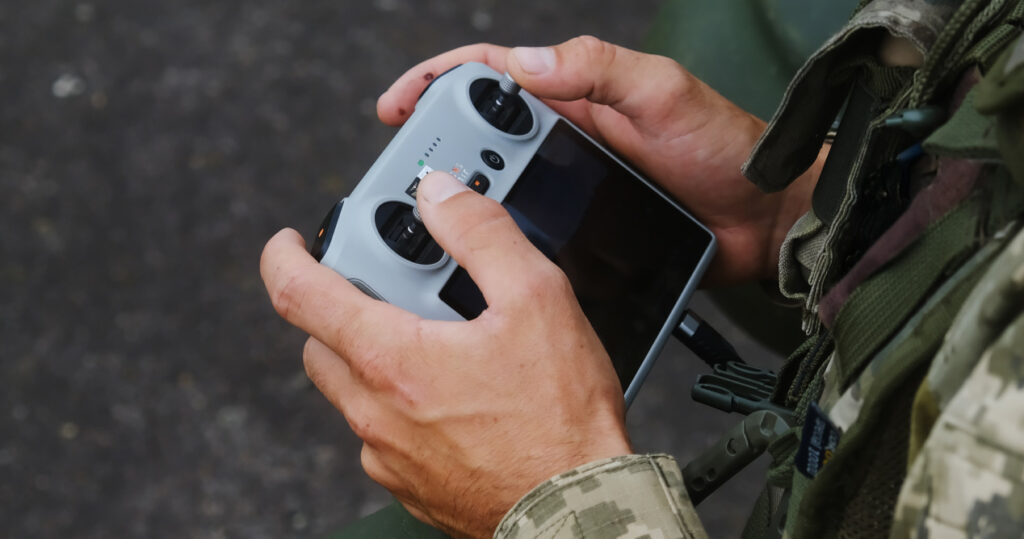
1. The Threat That Never Sleeps: Ukraine’s Nightly Air Defense Challenge
Every night, Iranian-designed Shahed drones are launched in waves toward Ukrainian cities and towns. Their targets are not only military — they are power stations, heating infrastructure, water treatment facilities, and hospitals. The goal is to destabilize civilian life, cut electricity in winter, and exhaust Ukraine’s air defense resources through sheer volume.
The numbers are staggering. Throughout 2025, Russia launched more than 54,000 Shahed-type drones against Ukraine — averaging over 170 per night. By early 2026, weekly launch volumes had surpassed 1,000, a fivefold increase from a year prior.
Conventional surface-to-air missiles — even the most advanced — were not designed for this problem. A Patriot interceptor costs over $4 million per launch. A Shahed costs between $20,000 and $50,000 to manufacture. Defending against hundreds of cheap drones with expensive missiles is a strategic and economic trap. Ukraine recognized this early, and its response reshaped how the world thinks about aerial defense.
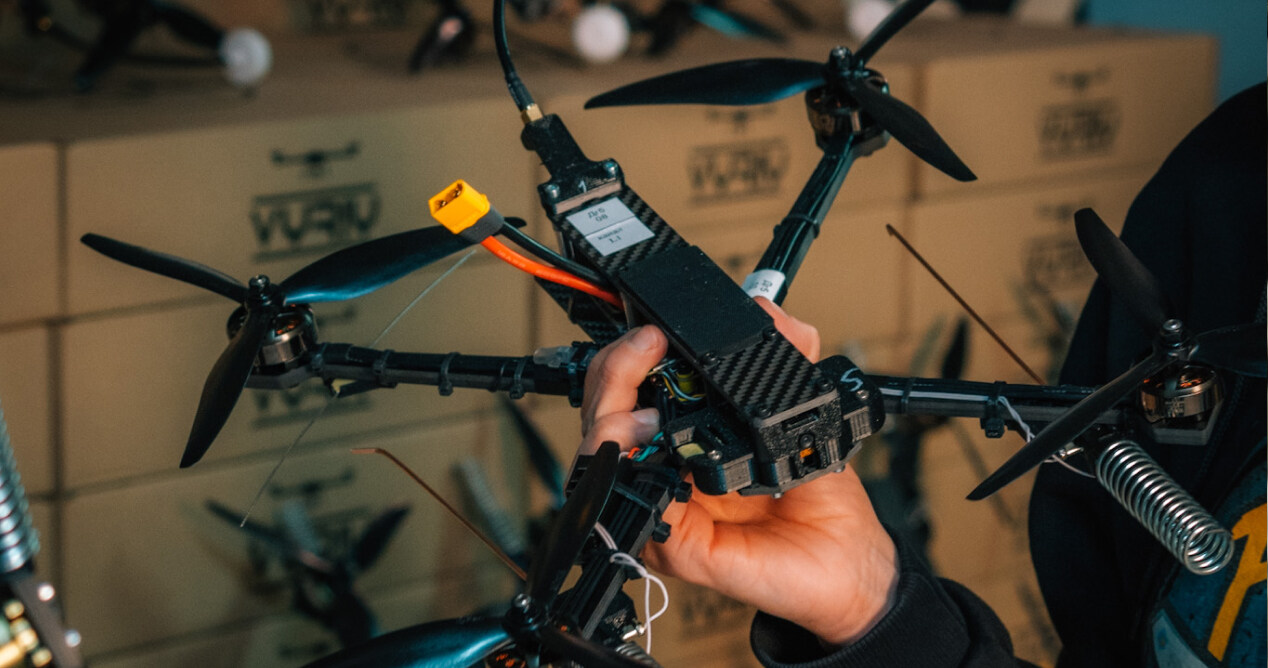
The answer was interceptor drones: purpose-built, low-cost unmanned systems designed specifically to hunt and neutralize incoming aerial threats. But interceptor drones, however capable, do not fly themselves. They need trained operators.
2. Why Technology Alone Cannot Win the Air War
Ukraine’s emergence as a global leader in drone warfare is frequently credited to its rapid technological innovation. The real advantage, however, may lie elsewhere.
As Forbes reported in March 2026, Ukraine’s true edge is not just the systems it builds — it is the people operating them. The Australian Army Research Centre, in a research project running through 2026 based on input from both Ukrainian and Australian defense experts, reached a similar conclusion: effective drone warfare depends on people, training, integration, and adaptation — not hardware alone.
This distinction matters enormously in the context of interceptor operations. Intercepting an incoming Shahed drone is a fundamentally different skill from flying a reconnaissance or strike drone. Operators must track a moving aerial target at night, manage closure speed and altitude simultaneously, and make split-second decisions under extreme pressure — often as part of a distributed team coordinating across multiple sensor inputs.
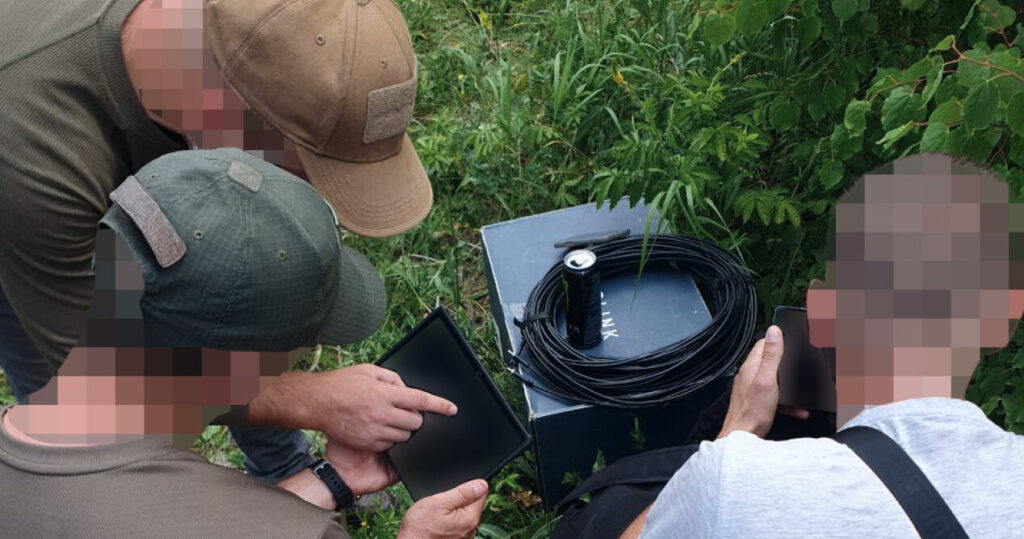
Lyuba Shipovich, CEO of Dignitas Ukraine, framed the challenge directly in a Forbes interview: during a mass strike involving hundreds of simultaneous aerial targets, there is simply no way to maintain a one-to-one ratio of operators to interceptors. Her answer was growing automation — AI-guided swarms capable of launching and tracking targets without a dedicated human behind every drone. Yet automation solves the scale problem, not the skill problem. The same reporting makes clear that even interceptor systems with significant autonomous capabilities still require real piloting judgment, tactical coordination, and human teamwork at every stage of an engagement. The conclusion is not that training matters less as automation grows — it is that trained operators must now work alongside automated systems, directing how those systems are deployed, corrected, and improved in real time.
Building that combined capacity — human skill integrated with emerging automation — is what drone training in Ukraine is now about.
3. How Ukraine Trains Interceptor Drone Operators
Ukraine’s approach to drone operator training is unlike anything seen in peacetime defense systems. Whereas standard Western drone training programs focus primarily on regulatory certification and controlled exercises, Ukraine has built a model driven by real operational feedback — where the requirements of the battlefield directly shape the curriculum.
Ukraine’s Ministry of Defense reported that more than 5,000 UAV operators were trained for the country’s defense forces in 2025, achieved through a network of both public and private certified training centers. By early 2026, 34 institutions had received official permits to train unmanned systems operators, with 19 centers specifically focused on UAVs. The deployment of this certified network was described by the Ministry as one of the key achievements of the year.
Dignitas Ukraine’s Freedom Sky initiative operates within this ecosystem as a specialized training program for interceptor drone operators — the defenders responsible for protecting Ukrainian cities from Shahed attacks.
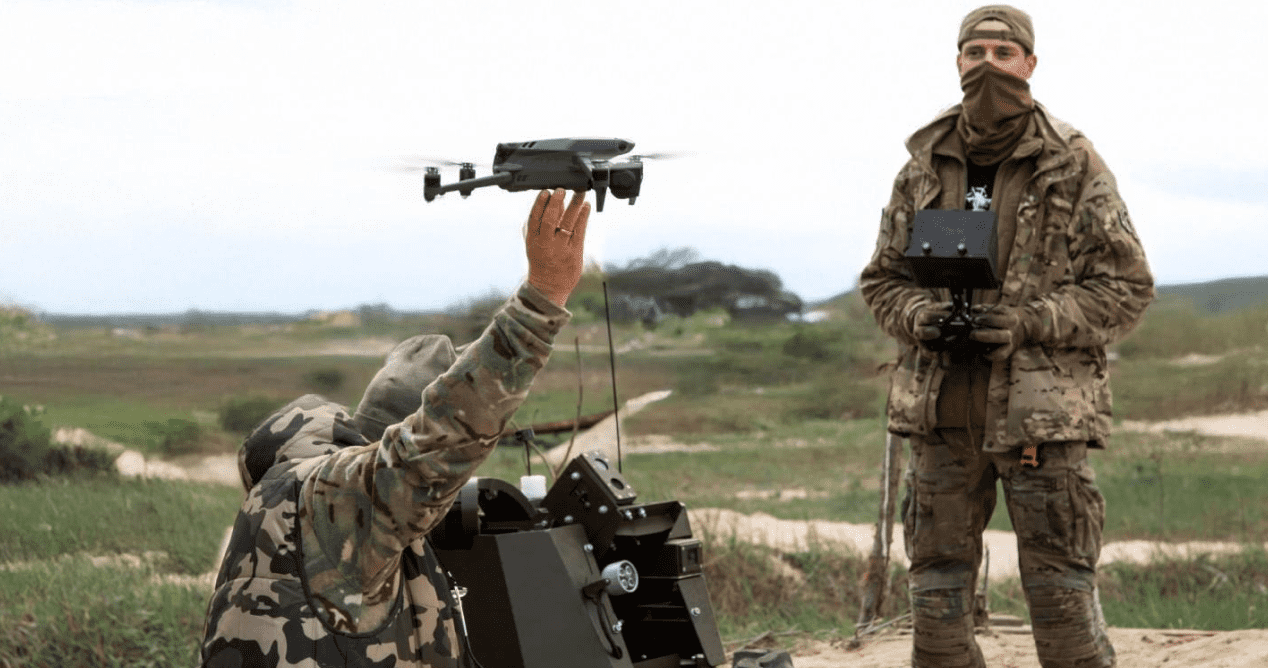
As of 2026, Freedom Sky has trained more than 1,000 defenders in the operation of multiple interceptor drone types. The program covers not only the technical skills of drone piloting, but the tactical integration required for effective interception: working with sensor networks, coordinating with radar and early-warning systems, operating at night, and functioning as part of a distributed air defense team rather than in isolation.
The program was recognized by Forbes as one of the initiatives directly addressing Ukraine’s need for trained interceptor operators at scale — at a time when that need has never been more urgent.
4. From Classroom to Combat: The Multiplier Effect
The impact of Freedom Sky’s training is best understood not through the number of people trained, but through what those people do next.
Of the 1,000 defenders who have completed the program:
- 31% joined already-active interceptor crews, directly strengthening units that were already protecting Ukrainian skies
- 51% formed entirely new crews — expanding Ukraine’s interceptor coverage into areas and units that previously lacked this capability
- 4% became instructors, and are now training the next generation of operators themselves
The result: approximately 420 active interceptor crews are now conducting daily combat duty — crews that either exist because of Freedom Sky, or were significantly strengthened by it.
This multiplier dynamic is the most important dimension of the program. Every instructor produced by Freedom Sky creates a self-sustaining cycle of capacity growth. The four percent who chose to become trainers are not just individuals — they are force multipliers, each capable of preparing dozens more operators over the coming months.
This is what it means to build a human infrastructure for defense. A drone without a trained operator is hardware. A trained operator who goes on to train ten more creates a system.
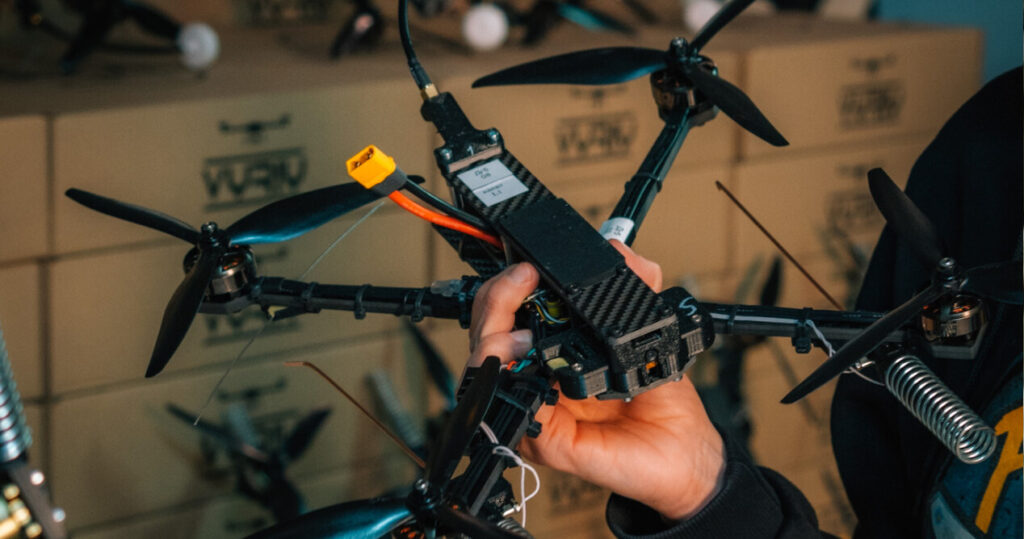
5. The Economics of Trained Defense
The economic argument for investing in drone training is as compelling as the strategic one.
Defense News reported in March 2026 that one in every three aerial targets destroyed over Ukraine is now brought down not by a missile — but by an interceptor drone costing a fraction of the price. Over the Ukrainian capital, interceptors accounted for more than 70 percent of Shahed drones neutralized in February 2026 alone.
The cost comparison is stark. A single Western-model air defense missile can cost upwards of over $3 million. Most Ukrainian interceptor platforms cost between $1,000 and $5,000 per unit. According to Ukraine’s National Security and Defense Council, neutralizing one Shahed with an interceptor drone costs more than 25 times less than using a conventional missile — making interceptors not just a tactical tool, but a strategic economic choice.
But these numbers only hold when operators are trained to execute. The NSDC reports a mission success rate exceeding 60 percent for interceptor operations — a figure that reflects the skill of trained crews as much as the capability of the hardware. An interceptor without a proficient operator is simply an expensive piece of equipment. With a trained crew, it becomes a cost-effective shield protecting thousands of civilians.
Investing in drone training in Ukraine, in this context, is not a humanitarian gesture. It is a strategically rational contribution to a defense system that is protecting civilian infrastructure at a fraction of the cost of alternative approaches.
6. A Model the World Is Watching
Ukraine’s drone training model has attracted serious attention far beyond its own borders.
The United States Army published an official analysis in May 2026 acknowledging that the widespread use of FPV drones in Ukraine had revealed why a fundamental shift in counter-unmanned systems training was necessary for US forces. The lessons from Ukraine, in other words, are now shaping how America prepares its own defenders.
CEPA — the Center for European Policy Analysis, one of Washington’s leading transatlantic security think tanks — published a comprehensive report in 2026 calling on NATO allies to build training pipelines oriented not only to Ukrainian requirements, but to a shared NATO and EU standard. The implication is clear: what Ukraine has developed in operator training is not just a wartime necessity. It is a template for modern air defense that the broader alliance is now racing to understand and adopt.
The demand for Ukrainian expertise extends further still. Multiple countries have sought Ukrainian interceptor technology and, crucially, the training knowledge that comes with it. What is being exported is not just hardware — it is the operational methodology, the training doctrine, and the human knowledge accumulated through years of real-world interception experience.
Dignitas Ukraine, through Freedom Sky, is a direct participant in building that knowledge base. The 1,000 operators trained, the 420 active crews, the 4 percent who became instructors — these are not simply program statistics. They are the human foundation of a defense model that the world is beginning to recognize as one of the most important military innovations of the modern era.
Frequently Asked Questions
What is drone training in Ukraine and why does it matter? Drone training in Ukraine refers to specialized programs that prepare military personnel to operate unmanned systems — particularly interceptor drones designed to neutralize incoming aerial threats like Shahed attack drones. It matters because technology alone cannot provide air defense: trained operators are what convert hardware capability into actual protection for civilians and infrastructure.
What is the Freedom Sky program? Freedom Sky is Dignitas Ukraine’s interceptor drone operator training initiative. It trains military personnel in the technical and tactical skills required to operate multiple types of interceptor drones as part of Ukraine’s layered air defense system, with a focus on protecting cities and civilian infrastructure from Shahed drone attacks.
How many operators has Freedom Sky trained? Freedom Sky has trained 1,000 military personnel in interceptor drone operations. These graduates have gone on to join existing crews, form new crews, and in some cases become instructors themselves — generating an ongoing multiplier effect across Ukraine’s air defense capacity.
What happens after completing Freedom Sky training? Of Freedom Sky graduates: 31 percent joined existing active interceptor crews, 51 percent formed entirely new crews, and 4 percent became instructors now training additional operators. Together, Freedom Sky graduates now form part of approximately 420 active interceptor crews conducting daily combat duty across Ukraine.
How cost-effective is interceptor drone defense compared to missiles? According to Ukraine’s National Security and Defense Council, neutralizing one Shahed drone with an interceptor costs more than 25 times less than using a conventional Western-model air defense missile. Defense News reported that interceptors now account for one in every three aerial targets destroyed over Ukraine, and over 70 percent of Shahed drones neutralized over Kyiv in early 2026.
Is Ukraine’s drone training model being studied internationally? Yes. The United States Army published an official analysis in 2026 citing Ukraine as the source of essential lessons for counter-drone training reform. The Center for European Policy Analysis has called on NATO allies to build training pipelines modeled in part on Ukrainian experience. Multiple countries have also sought Ukrainian operator expertise directly, recognizing that the training methodology is as valuable as the technology itself.
How can I support drone operator training in Ukraine? Dignitas Ukraine’s Freedom Sky initiative relies on donor support to continue training interceptor drone operators and equipping active crews. Every contribution directly funds training, equipment, and the ongoing operations of crews protecting Ukrainian cities. Learn more and support the program at dignitas.fund/freedomsky/.
Protect the Sky. Train the People Who Guard It.
Ukraine’s air defense is a team effort — between engineers who build the interceptors, commanders who deploy them, and the trained operators who fly them into harm’s way night after night.
Freedom Sky is how Dignitas Ukraine contributes to that team. With 1,000 trained operators and 420 active crews already in the field, the program has already changed what is possible. But the threat continues to grow, and so must the human infrastructure that stands against it.
Related reading: — Ukrainian Interceptor Drones: How Ukraine Is Redefining Aerial Defense — 2025 Impact Report