Skip to content

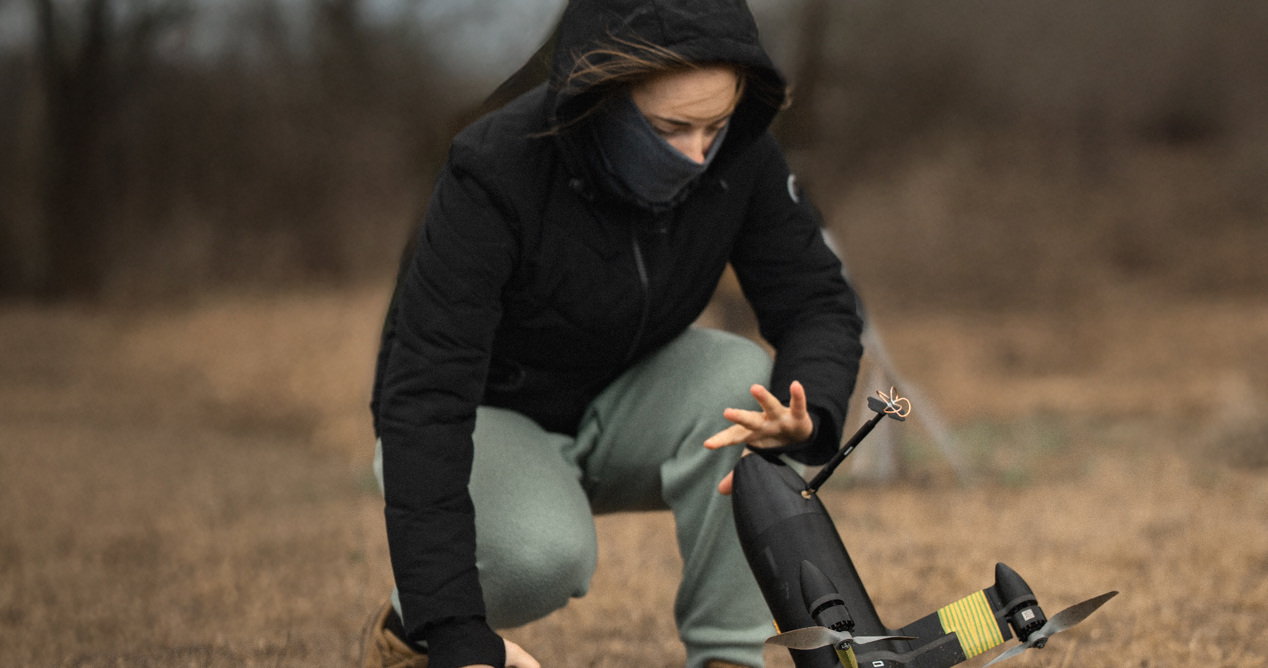
How are women participating in Ukrainian drone units, and what challenges do operators face on the modern battlefield? Drone instructor Oleksandr Korzh shares frontline realities.
By Scott Douglas Jacobsen · April 7, 2026 · Interview
About Oleksandr Korzh
Oleksandr Korzh is a Ukrainian defence technology instructor, drone pilot, and trainer with the volunteer organisation Dignitas Ukraine. Drawing on frontline experience, he focuses on the operational integration of unmanned systems, drone interception, and modern battlefield technologies. Korzh has trained military personnel in FPV drone operations, interceptor systems, and electronic warfare techniques, while linking technology developers with combat units to accelerate innovation cycles. He has also participated in international defence-technology workshops and hackathons across Europe.
From the Margins to the Cockpit: Women Entering Drone Operations
In democratic societies, military participation tends to broaden as those societies become more open. For Ukraine, a country fighting to defend its sovereignty while simultaneously modernising its institutions, the question of who serves — and in what capacity — carries profound significance.
Drone operations have emerged as one arena where the traditional gender divide in military roles is genuinely less relevant. Unlike Special Forces selection, which involves extreme physical demands that historically result in low female participation, drone piloting relies on precision, spatial awareness, and mental endurance — qualities that cross gender lines.
Question — Scott Douglas Jacobsen: What percentage of women are involved in drone operations? What is the trend? How is representation developing within drone units or battalions? How are women integrated into these roles within the current Ukrainian forces?
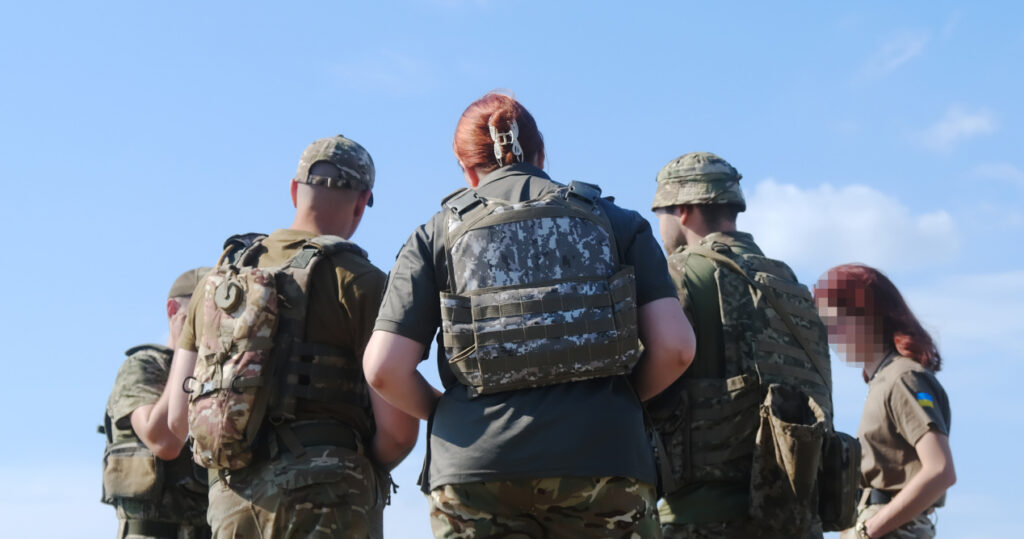
Answer — Oleksandr Korzh: Hundreds of young women have joined drone-related units across Ukraine’s armed forces. Two years ago, many began using drones primarily for reconnaissance missions — a gateway role that allowed greater female participation. A colleague of mine, a former competitive tennis player who nearly went professional, is now considering entering drone operations. She is young and has excellent eyesight.
However, the situation later became more dangerous. Russian forces began deliberately targeting drone crews — operators, pilots, and navigators — because drones play such a central role in modern battlefield reconnaissance and strike operations. Casualties among drone teams, including women, have been reported, and these losses have had a significant emotional and symbolic impact within Ukrainian military society, prompting public discussion and media coverage.
“Everyone understands that being a pilot or a drone operator, even in the rear, is not a safe role. As a result, fewer women wanted to join these divisions.” — Oleksandr Korzh, Dignitas Ukraine
The Physical Reality: Sleep, Cold, and Constant Concealment
Public perception of drone warfare often conjures images of operators in climate-controlled rooms, far from harm. The reality Korzh describes is starkly different. Drone crews near the front line routinely operate for multiple consecutive nights, sheltering in partially destroyed structures with no sanitation, unreliable food supplies, and intermittent access to water.
Question — Jacobsen: Is sleep deprivation a major part of that job?
Answer — Korzh: Yes. The constant fatigue is one of the hardest parts. But the most difficult task is remaining well hidden and avoiding detection. Russia uses guided aerial munitions — large ordnance equipped with wings and control systems that allow them to glide to a target from long distances. Many are older Soviet-era bombs modified with guidance kits.
If a Russian reconnaissance drone identifies the probable location of one of our drone crews — in a small building, a house, or an underground shelter — they may deploy several guided munitions from over 100 kilometres away. Each costs many thousands of dollars. They would not typically use such resources against a single infantry soldier. However, they may use them to eliminate a suspected drone team or deny the possibility of using that location in the future.
Key figures:
- ~200 — Russian vehicles estimated lost in a single day to drone operations
- 100+ km — Range of guided aerial munitions targeting drone crews
- #1 — Priority target status for Ukrainian drone operators among opposing forces
Cultural Context: Tradition, Strength, and Wartime Identity
Understanding why women’s participation in frontline drone roles remains limited requires more than a statistical lens. Korzh situates the phenomenon within Ukraine’s cultural and historical fabric — not as evidence of suppression, but as an expression of a distinct social identity under enormous pressure.
Answer — Korzh: Ukrainian society, including the military community, remains patriotic and somewhat traditional. Many soldiers think: “This is our country, this is our land, and we will defend it. Women can help us in the rear — raising children and helping them grow up healthy and educated — while we ensure security.”
This is not because the Ukrainian nation is at a low level of women’s liberation. It reflects traditions shaped by our history and social patterns. During wartime, it is still very difficult for women to carry all these responsibilities, and many men feel a strong desire to protect and care for them. This does not mean that women are weak. They are not weak. They are very strong.
Jacobsen offered a culturally resonant observation: more than one Ukrainian man, friend or colleague, has noted that the thing he fears most is an angry Slavic woman. The humour carries weight. It reflects not subordination but a deep, culturally embedded respect for female strength — strength that operates differently in Ukrainian society than it might in Oslo, New York, or Toronto. The external frameworks of Nordic-style gender politics or North American progressive culture can overlay some meaning, but they do not always capture the full Ukrainian picture.
“They are not weak. They are very strong.” — Oleksandr Korzh, on Ukrainian women in and around the armed forces
Drones as a Strategic Multiplier
Beyond the human dimension, the interview surfaces something of broader strategic significance: Ukraine has leveraged unmanned systems to create an asymmetric advantage in an attritional conflict. Drone units disrupt logistics — described by Korzh as “the blood of war” — degrading the opponent’s ability to resupply, rotate personnel, and maintain momentum.
Russia operates its own elite drone formation — Rubicon — active across aerial, maritime, and ground-based unmanned systems. Yet Ukraine fields a greater number of units, many operating at a high level of proficiency. The volume of opposing equipment destroyed in daily operations reflects not just tactical success but a deliberate strategy of sustained attrition.
Question — Jacobsen: When people hear a number like 200 destroyed vehicles, they may not realise it represents a whole system being disrupted — the full war machine: artillery, drones, missiles, soldiers, and drone teams.
Answer — Korzh: And logistics — it is the blood of war. If we destroy tactical logistics, we can slow or stop the occupation. From a strategic perspective, the goal is to destroy more forces than the other side can recruit each month.
The Bigger Picture: Reporting Gaps and Ground Realities
Korzh and Jacobsen also note the imbalance in how the conflict is reported internationally. Much Western media focuses on one side’s losses while underreporting the other’s — creating a skewed perception of the conflict’s scale and trajectory. Fewer foreign journalists operate in the field now than in earlier phases, even as the intensity of operations continues to rise.
For those seeking accurate understanding, primary sources and on-the-ground voices like Korzh’s remain invaluable. His work — training operators, linking developers with combat units, sharing lessons at international workshops — exemplifies the kind of practical, experience-driven knowledge that shapes how unmanned warfare evolves in real time.
Original interview: This article is adapted from an interview originally published on The Good Men Project by Scott Douglas Jacobsen. Source: goodmenproject.com — “Women, Drones, and the Frontline: Oleksandr Korzh on Ukraine’s Drone Warfare Evolution” (April 7, 2026).
Oleksandr Korzh is a Ukrainian defence technology instructor and drone trainer with Dignitas Ukraine (dignitas.fund). His work bridges frontline operational experience with technology innovation in unmanned systems.
Join Ukraine’s Defence Innovation Network
We invite you to cooperate with Dignitas Ukraine — connecting engineers, trainers, and institutions working at the frontier of unmanned systems and defence technology. Learn more at dignitas.fund