Skip to content

A Country That Builds as It Fights
When Ukraine’s defenders needed answers in 2022, they didn’t wait. Engineers, volunteers, and military personnel turned whatever they had — ingenuity, laptops, workshops, and determination — into technologies that are now studied by defense ministries around the world.
Three years later, that spirit hasn’t slowed. It has become a system.
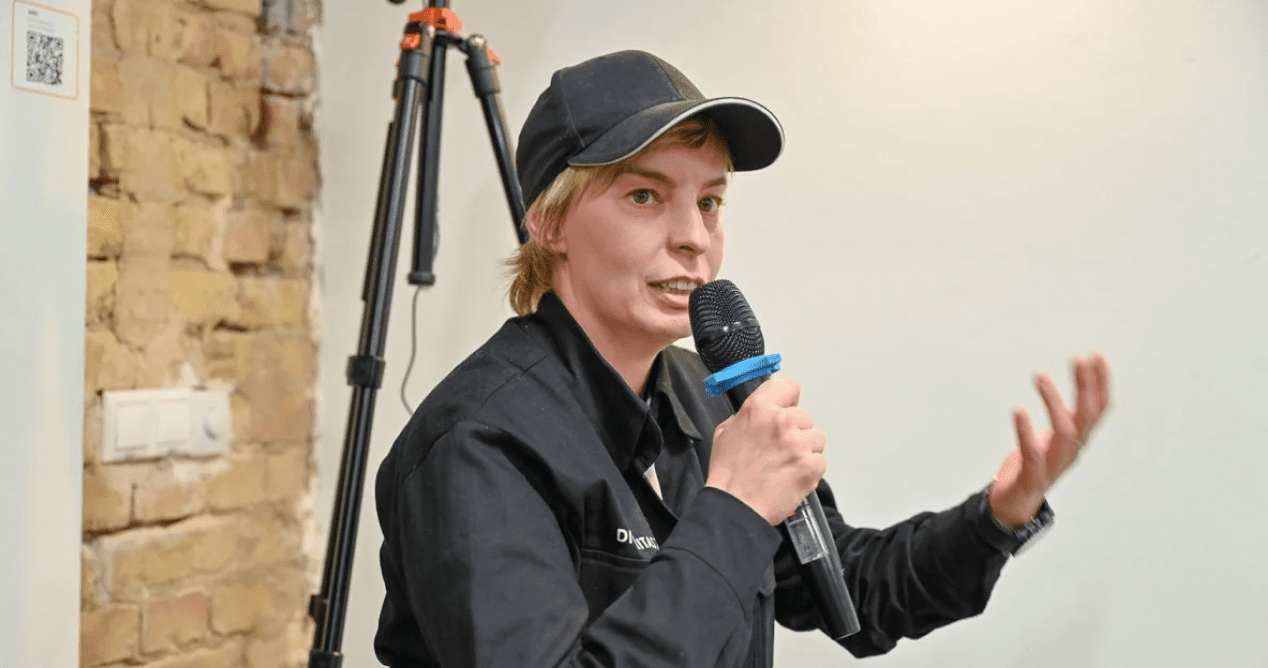
On November 5, Kyiv hosted LB.Talks: What to Fight With Tomorrow — a discussion on how Ukraine can sustain and extend its edge in the technology race. Among the speakers: Hanna Hvozdiar, Ukraine’s Deputy Minister of Defense; Maria Berlinska, co-founder of Dignitas and leader of Victory Drones; Lyuba Shipovich, Dignitas CEO and co-founder; and Stanislav Khutor, CEO of Ukrainian defense-tech company F-Drones. Their conversation surfaced something important: Ukraine’s technology advantage is real — and it is built on foundations that money alone cannot replicate.
What Ukraine Has Already Achieved
The numbers from the battlefield speak for themselves. In October 2026, Ukraine’s Defense Forces destroyed a record 49,000 pieces of enemy equipment in a single month. More than 80% of those were taken out by drones — an achievement that would have been unimaginable just a few years ago.
That same month, ground robots conducted over 30,000 missions, transporting supplies, evacuating wounded defenders, and clearing dangerous terrain so that people didn’t have to.
Ukraine’s layered air defense system — integrating Soviet-era platforms with modern Western systems through real-time data sharing — has earned recognition from analysts across NATO as one of the most effective and adaptive in the world. The country has not just used these systems. It has pushed them beyond their designed parameters, found new solutions under pressure, and shared those lessons with allies.
The world has taken notice. Ukraine’s Brave1 defense-tech marketplace — a platform connecting military innovation with procurement — is now being replicated by other countries. As Stanislav Khutor noted at the LB.Talks event, the world has decided to copy Ukraine’s model.

The Four Pillars of Ukraine’s Technology Advantage
Experts at the LB.Talks discussion identified four reasons why Ukraine can sustain — and extend — its edge:
1. Asymmetric Ingenuity
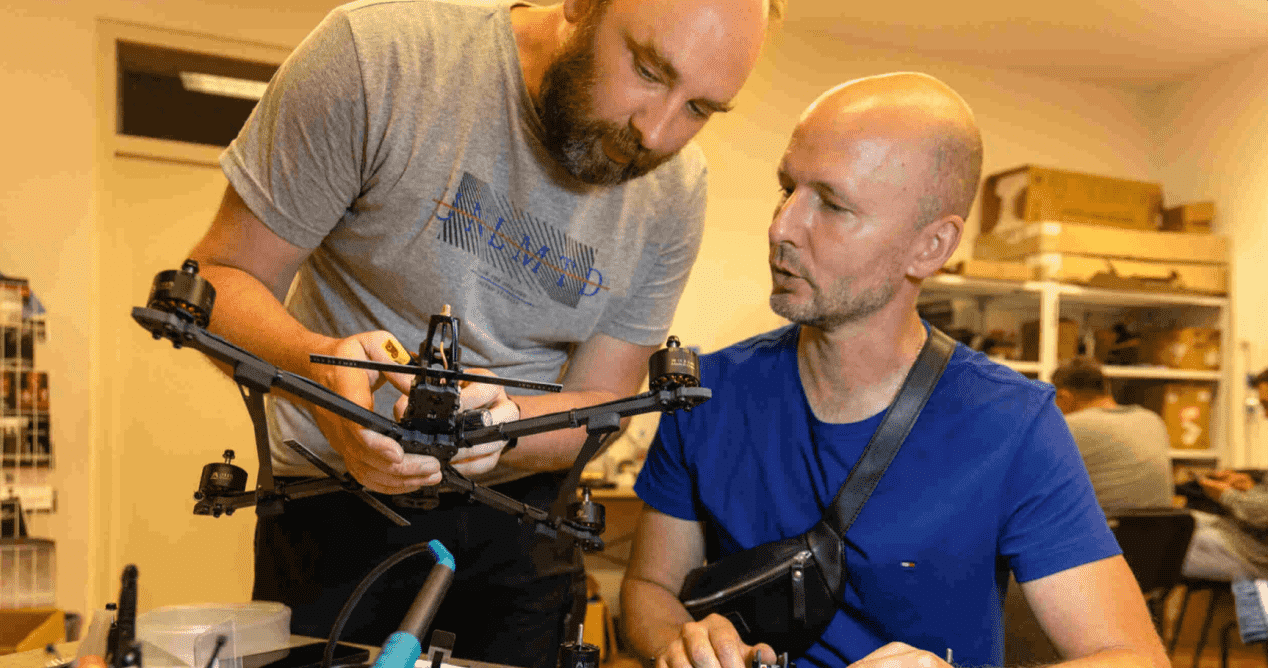
Ukraine’s miltech ecosystem was not built with unlimited budgets. It grew from simple materials, creative engineering, and the tight feedback loop between defenders in the field and the people building the tools they need. Maria Berlinska put it directly: that kind of advantage can be replicated — it comes from people and culture, not just capital.
A 19-year-old drone operator guiding a rescue mission through 30 kilometers of snow-covered terrain on her very first deployment. A former environmental official from Kyiv commanding unmanned ground systems. These are not edge cases. They are the norm in Ukraine’s defense-tech story.
2. Speed of Adaptation
Technology on today’s battlefield can become obsolete in weeks, not years. Ukraine has built a culture of continuous improvement in response. Stanislav Khutor described the dynamic as a chess match — a constant exchange between attack and defense, sword and shield — and said Ukraine’s recipe is straightforward: keep evolving, faster than the other side.
Ukrainian operators have consistently adapted systems beyond their original design specs. When one type of interceptor ran low, engineers found a way to make a different missile type work. When the threat shifted from expensive missiles to cheap drones, commanders developed protocols to conserve high-cost interceptors for the threats that truly required them.

3. Scaling What Works
Ukraine’s defense-tech community understands that individual breakthroughs are not enough. The goal is to take what works at the squad level and scale it across the entire force — building training infrastructure, supply chains, and institutional knowledge that make each innovation durable.
That is exactly what programs like Victory Drones and Victory Robots are designed to do: take cutting-edge unmanned-systems knowledge and train thousands of people to use it, maintain it, and improve it.
4. The Human Foundation
Lyuba Shipovich made a point at LB.Talks that deserves to be heard clearly: the state is what its people make it. Ukraine is not simply enduring — it is building. A generation that has known only a free, independent Ukraine is now defending it, and contributing to its technological future.
Cognitive resilience — the ability to stay clear-eyed, united, and forward-looking — is itself a form of defense. And it is one that training, education, and community support directly strengthen.
The Voices Behind the Strategy
What made the LB.Talks event remarkable was not just the analysis — it was who was in the room. Defenders, engineers, volunteer leaders, and government officials sat together, speaking from direct experience.
Maria Berlinska — who went from volunteer to leading one of Ukraine’s most consequential drone training programs — called for a dedicated team of engineers with intelligence access that could brief Ukraine’s leadership monthly on emerging threats, giving the innovation ecosystem a 6–12 month head start rather than reacting after threats reach the front line.
Serhii Sas, commander of a Kyiv volunteer unit, offered a grounding note: in his unit alone, 1,400 Kyiv residents have signed contracts since the full-scale conflict began — men and women of all ages. More than 500 of them defend Kyiv’s skies every night.

These are not abstract statistics. They are people who woke up one day, made a decision, and are now part of something that matters.
How Dignitas Ukraine Is Part of This
Dignitas Ukraine exists at the intersection of technology and humanity. Our programs don’t just train people — they build the infrastructure that makes Ukraine’s technological advantage sustainable.
Victory Drones has trained 44,320+ individuals in drone operations, UAV engineering, and FPV piloting — giving Ukraine’s defense forces a continuously renewed pool of skilled operators.
Victory Robots has trained 2,023 people in ground robotic systems — the same technology that evacuated a critically wounded defender across 30 kilometers of frozen terrain.
Flight to Recovery supports wounded veterans with technology training and professional development, finding new purpose and new skills in the country they fought to protect.
Tech Explorers brings STEM education to children across Ukraine — many of them children of military personnel. They are learning drones, robotics, and engineering today. They are Ukraine’s next generation of builders.
95% of every dollar donated to Dignitas Ukraine goes directly to programs. The rest is what keeps the lights on.
How You Can Help
Ukraine’s technology ecosystem runs on people, training, and equipment — and all three require sustained investment. Your support directly funds training for the next cohort of drone operators, the next ground robotics instructor, the next 14-year-old in a Tech Explorers workshop discovering that she can build something that matters.
The race isn’t won. But Ukraine is running it with everything it has — and the finish line is a future built on freedom and ingenuity.
Support Ukraine’s technology defenders at dignitas.fund →
FAQ
How is Ukraine able to build so much defense technology under such difficult conditions?
Ukraine’s defense-tech ecosystem grew from the ingenuity of engineers and defenders who worked together from the first days of the full-scale conflict. The tight feedback loop between people in the field and the people building their tools creates an adaptive speed that larger, more bureaucratic systems struggle to match.
What role do drones play in protecting Ukrainian civilians?
Counter-drone training equips operators to detect, track, and intercept aerial threats — protecting cities, hospitals, and critical infrastructure like power and water systems. Ground robots reduce the risk to human life in evacuation and logistics operations on the front line.
What is Dignitas Ukraine and where does my donation go?
Dignitas Ukraine is a U.S.-registered 501(c)(3) nonprofit. We train drone operators, ground robotics specialists, and educators — and support veterans in rebuilding their lives. 95 cents of every dollar goes directly to programs.
Can a grassroots organization really make a difference in a modern conflict?
Ukraine’s experience answers this definitively: yes. The majority of Ukraine’s defense-technology breakthroughs trace back to volunteer engineers, instructors, and community organizations. Dignitas Ukraine is part of that ecosystem — and your support makes it stronger.
Sources: LB.Talks “What to Fight With Tomorrow” discussion, November 5, 2026 (lb.ua); Dignitas Ukraine 2025 Impact Report; Center for European Policy Analysis — “Ukraine’s Air Defenses: World-Class and Improving.”