Skip to content

On the evening of April 2, 2025, Norwegian astronaut Jannicke Mikkelsen was orbiting Earth aboard the Fram2 spacecraft — the first crewed mission to complete a true polar orbit — when a small orange point of light caught her eye through the window. It moved differently from a meteor. She checked their position. The object had originated in Russia and was heading toward Ukraine.
“I sat on top of a rocket to get to space,” she later told UNITED24 Media. “But I’m looking at the same kind of rocket being launched to kill people in Ukraine.”
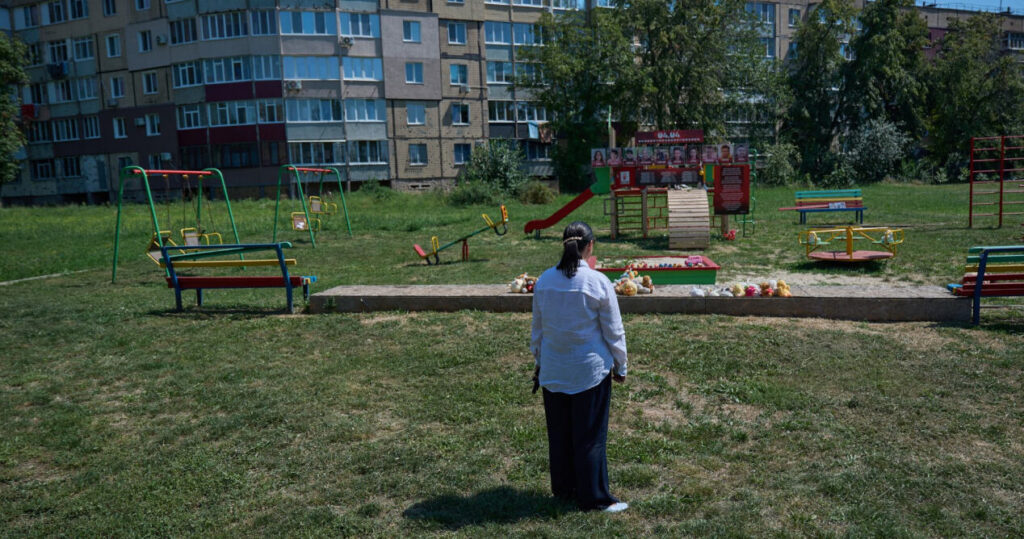
That missile struck Kryvyi Rih, an industrial city in central Ukraine, killing four people and injuring 17. Two days later, a second strike hit a residential neighborhood near a children’s playground in the same city. Twenty people were killed — nine of them children.
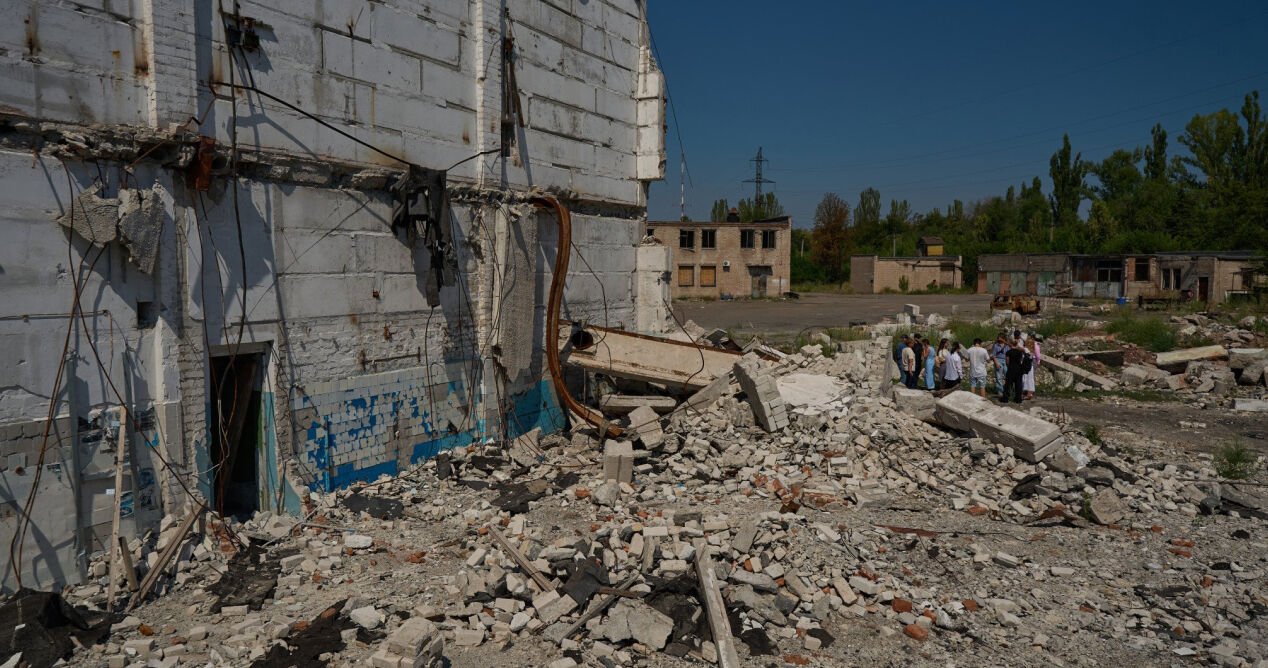
More than a year later, Mikkelsen traveled to Ukraine and walked the ground she had watched from 450 kilometers above Earth. What had been a distant flash was now a car wash where two women had worked their last shift. A playground. A resident named Mariia Cherviachenko, rebuilding 15 years of her life from rubble.
“We need anti-ballistic missiles here in Ukraine,” Mikkelsen said.
The data behind that sentence is devastating.
One in Six Gets Through — and Civilians Pay the Price
Ukraine’s layered air defense system is, by most expert assessments, one of the most adaptive and effective in the world. Its record against certain categories of aerial threats is genuinely remarkable.
But ballistic missiles are a different category entirely.
Ukraine’s Ministry of Defence confirmed in its official July 2026 air defense summary that defenders intercepted approximately 15% of incoming ballistic missiles that month — meaning five of every six reached their targets. On the night of July 2, defenders neutralized dozens of other aerial threats but stopped only 4 of 28 missiles traveling on ballistic trajectories. Four days later, on July 6, the intercept count for ballistic missiles was zero. At least 15 civilians were killed in Kyiv.
On July 30, an Iskander-M ballistic missile killed five members of a single family — a family of ten — in a village near Kryvyi Rih. That same night, a Kh-101 cruise missile from the same barrage crossed into Polish airspace and landed in a rural area of Lublin province — the first confirmed Russian munition to fall on NATO territory. Poland scrambled jets, an attack helicopter, and ground defenses in response. On August 1, a barrage of ballistic missiles and other munitions killed at least nine people and wounded 33 in Kyiv. On August 4, strikes on the Kyiv region killed 14 and injured 27 more.
The cumulative toll is staggering. The United Nations documented 1,396 Ukrainian civilians killed and 7,978 injured in the first six months of 2026 — a 37% increase from the same period in 2025, and nearly double the figure from 2024. The UN declared July 2026 the deadliest month for Ukrainian civilians since April 2022, pointing directly to the escalating use of ballistic missiles against populated areas far from the front lines.
This is not a distant military statistic. It is Kryvyi Rih. It is Kyiv. It is the playgrounds and the apartment buildings and the car washes.
Why Ukraine Cannot Stop What’s Coming
Ukraine’s primary defense against ballistic missiles is the Patriot missile system — a Western platform supplied by the United States and several European allies that, when operational and stocked, has demonstrated strong performance against ballistic threats.
The problem is that Ukraine is running out of what it needs to fire.
A global shortage of Patriot interceptor missiles has left Ukrainian air defense forces facing decisions no defender should have to make: which incoming missiles to engage, and which city to leave unprotected. The shortage has been compounded by reduced US military assistance to Ukraine and by competing demand from other conflict zones consuming the same interceptor supply chain. As CNN reported in August 2026, Russia has deliberately exploited this gap — intensifying its ballistic missile campaigns precisely because it knows Ukraine’s ability to respond is constrained.
Ukrainian President Volodymyr Zelenskyy has stated publicly and repeatedly that the lack of interceptors directly enables Russia to continue its attacks. He met with US President Trump in July 2026 partly to lobby for licenses allowing Ukraine to produce Patriot interceptors domestically — a necessary step toward long-term self-sufficiency, but not a solution to the immediate crisis.

What Cities Experience When the Interceptors Are Gone
The experience of living under ballistic missile attack without adequate interception capability is not abstract. CNN journalists in Kyiv reported that during the July 19 barrage — when Russia launched over 40 ballistic missiles and 120 other munitions in a single night — residents sheltered in subway stations for hours while the strikes concentrated on the city above them. A strong smell of smoke lingered over the capital by morning.
Lviv’s deputy mayor described the impact of a ballistic missile strike as “enormous” — not just in immediate deaths and injuries, but in the cascading effects: tens of millions in infrastructure damage, hundreds of residents displaced, thousands seeking emergency support from city services. Even those who survive uninjured can have their homes erased in seconds, and the psychological damage, as the city official noted, can persist for years.
The strikes are not random. Ballistic missiles have hit residential apartment blocks, a daytime arms exhibition in Kyiv that killed 10 people and injured more than 100, and civilian logistics infrastructure throughout the country. The UN’s human rights monitors have described this as a “disturbing escalation” in the character of attacks — a deliberate targeting pattern that has pushed civilian casualty rates to their highest levels since the opening months of Russia’s full-scale invasion.
What Has to Change
The path to protecting Ukrainian cities from ballistic missiles starts with one thing: supply.
Consistent, predictable resupply of Patriot interceptor missiles — from the United States, from European allies, from every partner with capacity to contribute — is not a strategic abstraction. It is the difference between a missile being stopped over a city and a missile landing in a playground. Ukraine’s commanders have been transparent about this equation for months. What they need is not condolences; it is interceptors.
And alongside supply, there is training. Organizations like Dignitas Ukraine are building the human infrastructure that makes every defensive system more effective — training defenders in the technical and operational skills required to protect Ukrainian cities from aerial attack. That work continues regardless of which interceptors are available, because the people behind the systems are what determine whether they actually protect lives.
Support Dignitas Ukraine’s mission →
Why This Matters Beyond Ukraine
When Natalia Golis, director of the Norwegian NGO Fritt Ukraina, stood in Kryvyi Rih alongside Mikkelsen, she spoke directly to the broader implications: “It’s actually up to us in Europe to fix this ballistic issue — not just for Ukraine, but also for ourselves.”
Ukraine’s experience under ballistic missile attack has already reshaped how European NATO members think about their own air defense. Prior to 2022, many European militaries had significantly reduced their ground-based air defense capacity on the assumption that peer-level threats were distant. Ukraine has comprehensively revised that assumption — at enormous cost to its own population.
The 15% intercept rate is not a Ukrainian failure. It is the predictable consequence of being supplied with less than what is needed to defend against the actual threat. Closing that gap — through sustained supply, accelerated domestic production, and political commitment from international partners — is one of the clearest, most direct ways to protect human life.
Mikkelsen saw the missile from space. The people in Kryvyi Rih saw it from the ground. What they both understand, in their different ways, is the same thing: a missile that is not intercepted kills someone.
Frequently Asked Questions
Why can’t Ukraine shoot down ballistic missiles? Ukraine can intercept ballistic missiles when it has Patriot interceptor munitions available. The current crisis is a supply problem, not a capability problem. Ukraine’s July 2026 official summary confirmed an intercept rate of approximately 15% for ballistic missiles — not because the system doesn’t work, but because defenders are rationing what little they have left.
What is the Patriot missile system and why does Ukraine need it? The Patriot is a US-developed surface-to-air missile system that has demonstrated strong performance against ballistic missile threats. It forms the centerpiece of Ukraine’s anti-ballistic missile defense. Without a sufficient supply of interceptor missiles for the system, it cannot protect cities.
What is Ukraine doing to address this gap? President Zelenskyy has pressed the United States and European partners for sustained interceptor resupply and sought licenses to manufacture Patriot missiles domestically. These are medium-to-long-term steps. The shortage is acute now, and the civilian toll reflects every week without a solution.
How many civilians have been killed in Ukraine in 2026? The UN Human Rights Monitoring Mission confirmed 1,396 civilians killed and 7,978 injured in the first six months of 2026 alone — a 37% increase from 2025 and nearly double the toll from 2024. The rising use of ballistic missiles against populated urban areas is cited as the primary driver.
What can people outside Ukraine do? Supporting organizations that train defenders, equip air defense units, and build Ukraine’s long-term defensive capacity is a direct contribution to civilian protection. Dignitas Ukraine works across this entire ecosystem — from training programs to advocacy for the resources Ukraine needs to defend its cities.
Primary news source: “An Astronaut Saw a Russian Missile Head for Ukraine From Space. Then She Went Where It Landed,” UNITED24 Media, August 2026. Read the full article →
Air defense statistics: Ukraine Ministry of Defence official July 2026 air defense summary, as reported by TechTimes (August 7, 2026)
Civilian casualty data: UN Human Rights Monitoring Mission in Ukraine; UN OCHA, July–August 2026
Additional reporting: CNN (August 7, 2026); ABC News; Al Jazeera
Program data: Dignitas Ukraine 2025 Impact Report