Skip to content

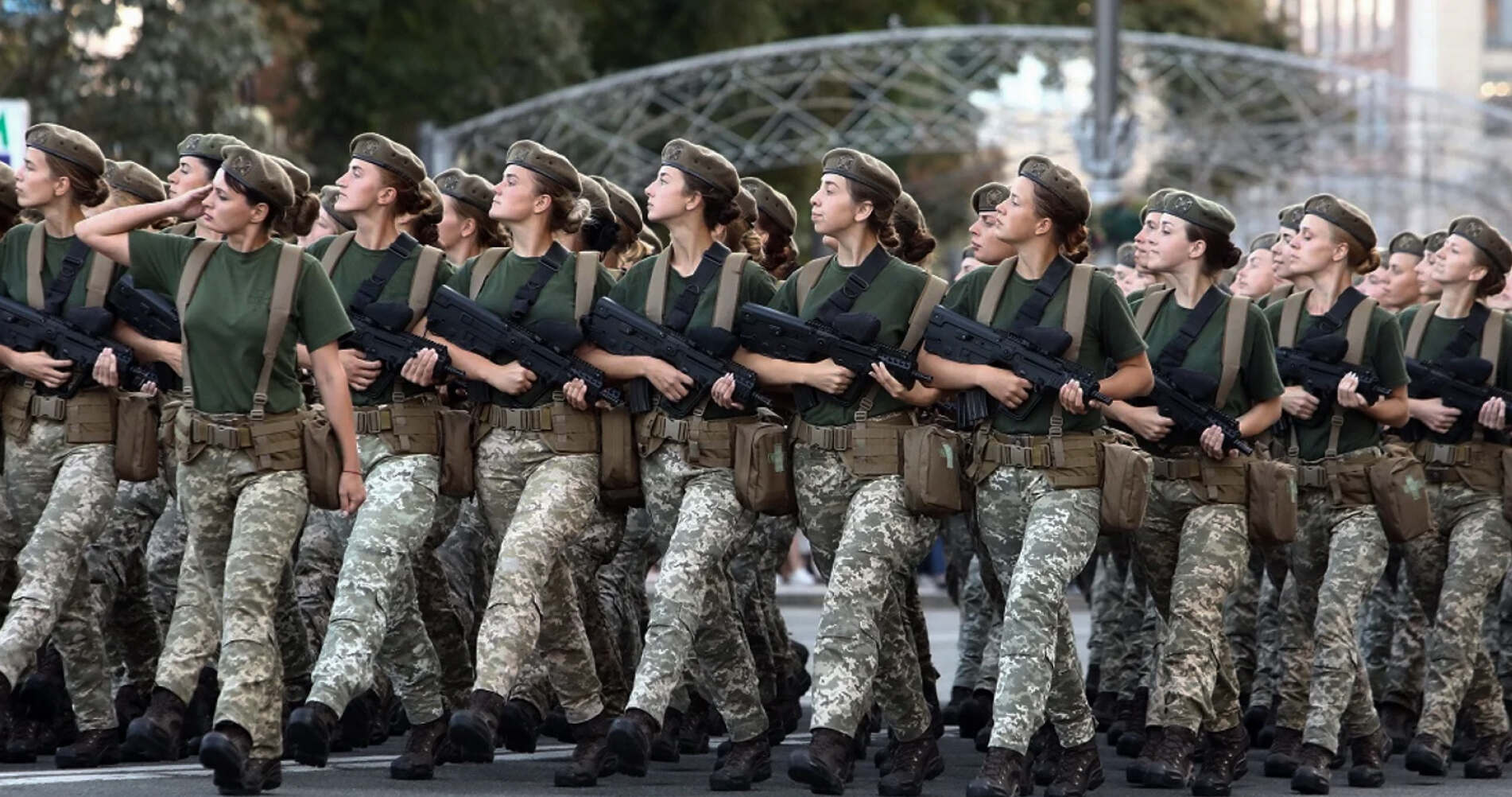
Since Russia’s full-scale invasion began in 2022, Ukraine’s defense landscape has transformed in ways few anticipated. One of the most significant — and least discussed — shifts is the expanding role of women in drone operations. From commanding FPV units to intercepting Shahed drones over civilian neighborhoods, Ukrainian women are proving that the future of technological defense is built on skill, precision, and purpose — regardless of gender.
This is no longer a marginal story. It is a central feature of how Ukraine defends its cities and protects civilian lives.
1. A Shift in Who Defends Ukraine’s Skies
Before 2022, the question of women in Ukrainian military roles was largely a matter of incremental policy debate. Russia’s full-scale invasion changed that conversation overnight.
A nationally representative survey conducted by KIIS in 2018 found that 53 percent of Ukrainians supported equal opportunities for women in the military. By 2022, according to research by InfoSapiens, that figure had risen to 80 percent — a direct reflection of how profoundly the national experience had shifted.
The data tracks the reality on the ground. Approximately 70,000 women are now serving in Ukraine’s armed forces, according to reporting by The National Interest (April 2026). Hundreds have joined drone-related units specifically — drawn in part by the nature of the work itself, which rewards technical skill, precision, and mental endurance over physical strength alone.
As The National Interest noted, public attitudes have followed the operational reality: Ukrainian society has increasingly come to see women not as auxiliary figures in the defense effort, but as essential participants in it.
2. Why Drone Operations Changed the Equation
Historically, gender integration in military roles has moved slowly in part because many frontline roles demanded extreme physical endurance — a domain where biological differences created real operational gaps. Drone operations present a fundamentally different profile.
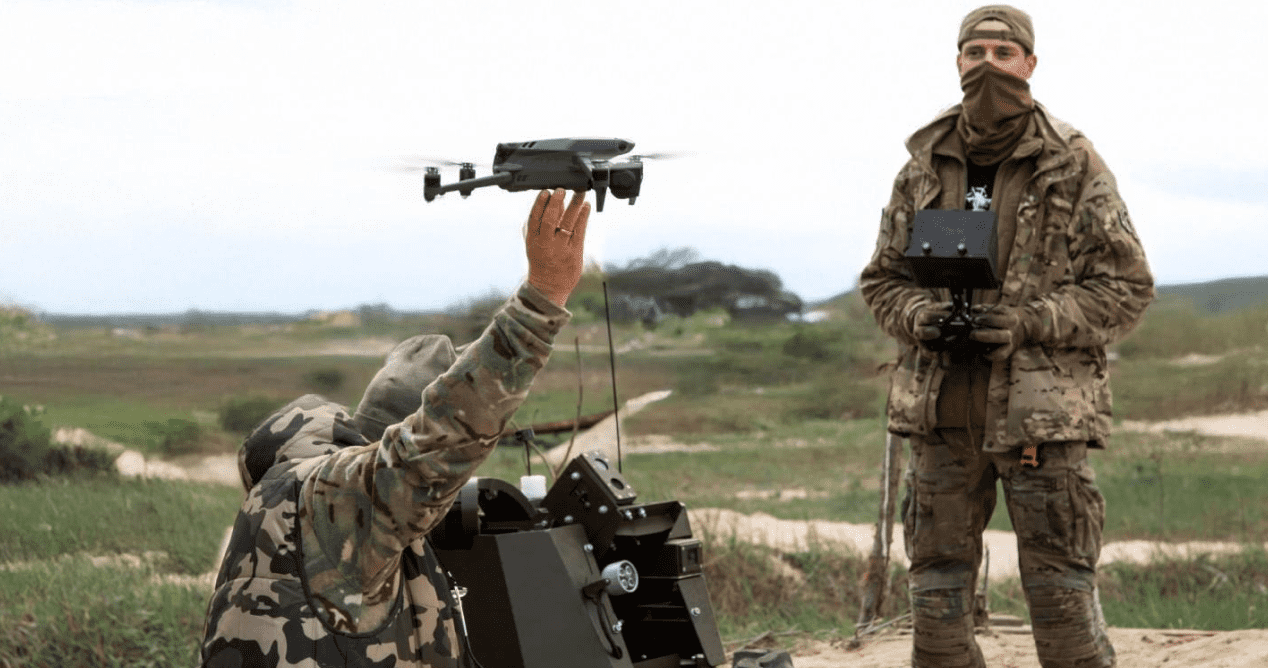
Operating an FPV drone, a reconnaissance UAV, or a Shahed interceptor requires precision, spatial awareness, sustained concentration, and the ability to perform under pressure — over hours, in difficult conditions, without margin for error. These are qualities that cross gender lines.
Oleksandr Korzh, a defense technology instructor and drone trainer with Dignitas Ukraine, described this shift in an interview published by the Good Men Project in April 2026. Korzh noted that two years ago, many women began entering drone-related roles through reconnaissance — a gateway that allowed female participation to take root. Over time, as their competence became undeniable, those roles expanded.
“Drone piloting relies on precision, spatial awareness, and mental endurance — qualities that cross gender lines,” Korzh observed, reflecting on the women he has trained.
He is also candid about a harder reality: as drone crews became priority targets — because of how central they are to real-time situational awareness — the risks of these roles increased significantly. Some women, weighing those risks against their personal circumstances, have stepped back from frontline drone positions. Others have stepped forward with full awareness of what the work entails. Both choices deserve respect.
What matters is that the door is now open, and growing numbers of women are walking through it.
3. Oksana Rubaniak: A Commander at 23
Among the most striking examples of what this shift looks like in practice is Oksana Rubaniak — a Victory Drones participant whose story appears in Dignitas Ukraine’s 2025 Impact Report.
Oksana joined the army at 19, leaving behind a civilian path that was taking her toward teaching. By the time she was 23, she commanded a drone unit of 64 people.
What defines her leadership is not its hardness, but its balance. She combines discipline with imagination and a quiet inner strength that inspires those around her. Even at the front, she continues to write poetry — holding onto creativity in conditions that do not encourage it.
“Even here, I choose to create,” she has said.
Her story reflects something important: the women stepping into these roles are not leaving themselves behind to do it. They bring everything they are — their precision, their care, their resilience — into environments that urgently need exactly those qualities.
Oksana represents a generation of Ukrainian women who are reshaping what it means to serve, to lead, and to protect.
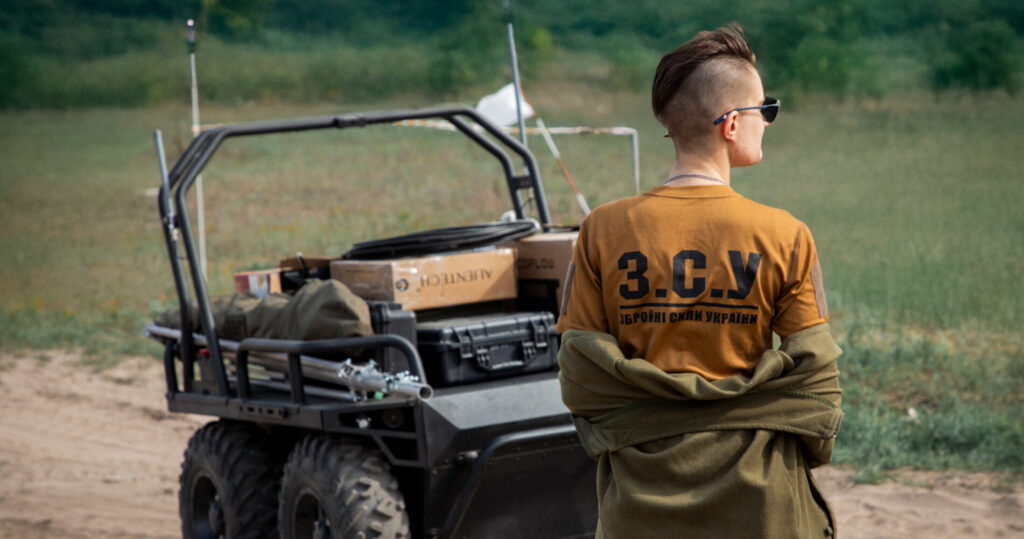
4. The Witches of Bucha: Civilian Women Defending Their Cities
Oksana is far from alone. One of the most striking examples of women’s expanding role in aerial defense is the volunteer unit near Kyiv known informally as the “Witches of Bucha.”
Reported by BBC News in October 2024 and subsequently covered by NPR and Al Jazeera, this almost entirely female unit trains to intercept Russian drones targeting civilian communities in the Kyiv region. Its roughly 100 members — ranging in age from 19 to 64 — hold ordinary civilian professions by day: teachers, doctors, veterinarians, real estate agents. When night falls and Russian drones become most active, they take up their defensive positions.
What drives them is not abstraction. The community of Bucha experienced some of the most severe harm inflicted on Ukrainian civilians in the early months of the invasion. For many of these women, defending the skies above their own neighborhoods is both deeply personal and practically necessary.
One member told BBC: “It’s scary, yes. But so’s giving birth, and I still did that three times.”
Their work reflects a pattern visible across Ukraine: the defense of civilian life from aerial threats has become a space where women are not only present but often leading.
5. Dignitas Ukraine’s Role: Training Female Operators at Scale
Dignitas Ukraine has worked directly to build the pipeline of trained female drone operators — at both the individual and institutional level.
The National Interest reported in April 2026 that Dignitas, co-founded by Lyuba Shipovich, partnered with major Ukrainian retailers to fund the full training and equipping of female drone operators, who are then deployed with their own operational drone kits. As the outlet noted, these women “break old ideas about who belongs on the battlefield.”
Through the Victory Drones program, Dignitas has trained 44,320+ individuals in drone operations — including UAV pilots, FPV pilots, engineers, and operators. Women have participated in these cohorts from the program’s earliest stages, including Oksana Rubaniak, who went from Victory Drones participant to commanding a 64-person unit.
The Freedom Sky program addresses a more targeted mission: protecting Ukrainian cities and critical infrastructure from Shahed drone attacks. Through specialized training in detection, tracking, and interception of aerial threats, Freedom Sky has trained 476 operators as of the 2025 Impact Report. This program — the one that helped Mykola Melnyk find a new way to serve after losing his leg — is precisely the kind of specialized, technology-driven role where female operators are increasingly active.
Both programs are built on the same principle: every person with the skill and the will to protect Ukrainian lives deserves a clear pathway to do so.
6. What Female Operators Are Protecting
It is worth being clear about what this work protects — because the stakes are easy to lose sight of in discussions about roles and representation.
Ukraine faces sustained aerial attacks targeting civilian infrastructure: power generation, water treatment facilities, heating systems, hospitals. A successful intercept means the lights stay on. A missed threat may mean a hospital loses power mid-surgery, or a city spends a winter night without heat.
The defenders trained by Dignitas Ukraine — women among them — are protecting exactly this: the daily conditions of civilian life that most people take for granted. Their work is not about military abstraction. It is about keeping people warm, keeping water flowing, and ensuring that Ukrainian families can live with something resembling normalcy under extraordinary pressure.
This protection framing matters because it reflects the actual mission of programs like Freedom Sky and Victory Drones. These are not offensive capabilities. They are shields — operated by people of all backgrounds, including growing numbers of women who have chosen to stand between their communities and the threats aimed at them.
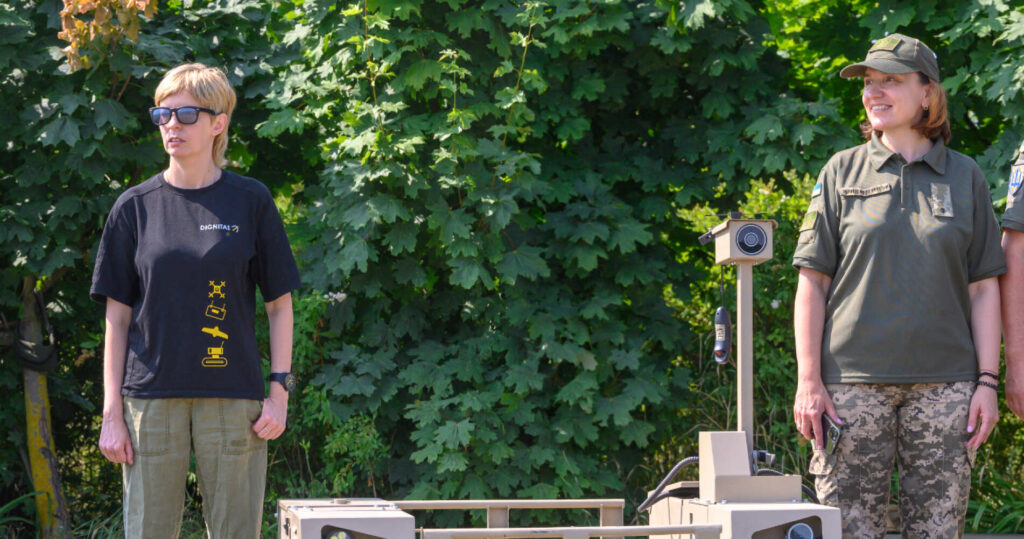
7. Challenges Still to Overcome
Progress is real. But challenges remain.
Some female operators and instructors describe the need to demonstrate their competence twice over — not because the technical work demands it, but because cultural baselines shift more slowly than operational realities. Ukraine’s military institutions are evolving rapidly; they carry institutional histories that take time to change.
Korzh has observed this directly. Female operators who demonstrate consistent competence earn the respect of their teams — but the path to earning that respect can involve extra steps that male counterparts do not face. He notes that this is changing, and that the pace of change is accelerating because the operational record speaks for itself.
There is also the psychological dimension — the sustained weight that all drone operators carry. Operating under pressure, with limited sleep, in physically difficult conditions and with genuine personal risk, takes a toll that requires acknowledgment and structured support. Dignitas Ukraine builds this awareness into its programs.
The Flight to Recovery program — which has supported 220 veterans through technology training and reintegration — offers a model for how recovery and purpose can be woven together. It is a model relevant to anyone who has given significantly of themselves in the service of protecting others.
8. The Future of Women in Ukrainian Defense Technology
The trajectory is clear.
As drone technology continues to evolve — toward longer range, greater autonomy, and deeper integration with electronic warfare systems — the cognitive and technical demands of operating these systems will only increase. That premium on technical skill, spatial reasoning, and sustained mental performance means the role of women in this ecosystem will continue to grow.
Ukraine is building something unprecedented: a national defense ecosystem shaped by the contributions of women at every level — as operators, instructors, commanders, and innovators. Their contributions are documented in impact reports, covered in international media, and recognized by institutions tracking technological integration in modern defense.
Dignitas Ukraine will continue to train and support them. Through Victory Drones, Freedom Sky, and the programs to come, we are committed to ensuring that every person with the skill and the will to contribute to Ukraine’s technological resilience has a clear pathway to do so.
If you want to support this work, your contribution goes directly toward training, equipment, and the infrastructure that makes it possible. Support Dignitas Ukraine today.
9. FAQ: Ukrainian Women in Drone Operations
How many women are currently serving in Ukraine’s armed forces? Approximately 70,000 women are serving in Ukraine’s military, according to reporting by The National Interest (April 2026). Hundreds have joined drone-related units specifically, with numbers growing as technical roles expand and public support for female military participation continues to rise.
What skills do drone operators need, and are they gender-neutral? Drone operations rely on precision, spatial awareness, concentration, and the ability to perform under sustained pressure — with no dependence on extreme physical endurance. Defense technology trainers, including Dignitas Ukraine’s own instructors, consistently describe these as skills that cross gender lines, making drone operations one of the most genuinely integrated areas of modern defense technology.
What is Dignitas Ukraine’s Victory Drones program? Victory Drones is Dignitas Ukraine’s flagship UAV training initiative, covering UAV engineering, FPV drone assembly, and piloting skills. As of the 2025 Impact Report, more than 44,320 individuals have trained through the program — including a significant proportion of women.
What is the Freedom Sky program, and how does it relate to anti-Shahed defense? Freedom Sky is Dignitas Ukraine’s program focused on protecting Ukrainian cities and critical infrastructure from Shahed drone attacks. It trains operators in detection, tracking, and interception of aerial threats. As of the 2025 Impact Report, 476 operators have completed the program.
Who are the “Witches of Bucha”? The “Witches of Bucha” is a volunteer air defense unit near Kyiv composed almost entirely of women — many of them teachers, healthcare workers, and other civilians. The group trains to intercept Russian drones targeting civilian communities in the Kyiv region and has been reported extensively by BBC, NPR, and Al Jazeera.
How is Dignitas Ukraine specifically supporting female drone operators? Dignitas Ukraine trains female operators through Victory Drones and Freedom Sky, and has partnered with Ukrainian retailers to fund the full training and equipping of female operator cohorts who deploy with their own operational drone kits. Co-founder Lyuba Shipovich has been recognized internationally for this work, including in The National Interest’s April 2026 profile.
How can I support female defenders in Ukraine? You can contribute directly to Dignitas Ukraine’s programs at dignitas.fund. Every contribution supports training, equipment, and the infrastructure that protects Ukrainian civilian lives.