Skip to content

When the World Reset the Conversation
In recent days, a rapid sequence of strikes and retaliatory actions between major state actors compressed years of strategic assumption into a matter of days. Air defense networks were tested at scale. Drone and missile salvos probed response times and interception capacities simultaneously across multiple theaters. Electronic warfare created new ambiguities about who controls what airspace and when.
For many defense analysts, the speed and complexity of that escalation was jarring. For those who had been watching Ukraine closely, it was familiar.
Ukraine has spent four years operating at exactly this tempo not as a case study, but as a live environment where every tactical failure has immediate consequences and every innovation is stress-tested in real time. As the world now enters its own accelerated cycle of technological adaptation, Ukraine’s accumulated experience is not just relevant. It may be the most valuable operational dataset on the planet.
A Living Laboratory for Innovation
Ukraine has become one of the most closely observed arenas for applied defense innovation in modern history. What was once theoretical – drone swarms, AI-assisted targeting, satellite communication resilience, electronic countermeasures – has been rapidly stress-tested in real operational conditions. Ukraine is not merely a recipient of Western military aid; it has emerged as an active co-developer and validator of the next generation of security technologies.
Defense engineers and analysts from across NATO member states have noted that the pace of iteration on the Ukrainian front is unlike anything seen in peacetime R&D cycles. Technologies that would typically take years to refine have gone through multiple generations of improvement within months, reshaping how allied nations think about procurement, field adaptation, and the feedback loop between developers and operators.

Key Themes in Ukraine’s Defense Cooperation
Allied partners and defense analysts have converged on several critical themes that define the current phase of international security collaboration:
- Speed of adaptation is now recognized as a core military capability, not a logistical afterthought
- Ukraine’s engineering community has been formally acknowledged as a strategic asset within NATO’s innovation ecosystem
- Co-development frameworks are replacing one-directional aid models, with structured agreements covering joint R&D, testing, and production
- Electronic warfare and drone technology were identified as areas where Ukrainian field experience directly informs allied procurement decisions
- Long-term industrial cooperation — not just emergency supply — was confirmed as the foundation of the US–Ukraine security partnership going forward
Dignitas Ukraine Technology Initiatives
Dignitas Ukraine actively supports Ukraine’s role in this innovation ecosystem through a range of targeted programs:
- ANTI-SHAHED — Freedom Sky — a three-tier frontline defense system delivering interceptor UAVs, air-defense command hubs, resilient communications, and crew training to stop strike drones before they reach Ukrainian cities
- Drones for Ukraine — a coalition effort across 20 partner organizations focused on purchasing and delivering drones to Ukraine’s defenders
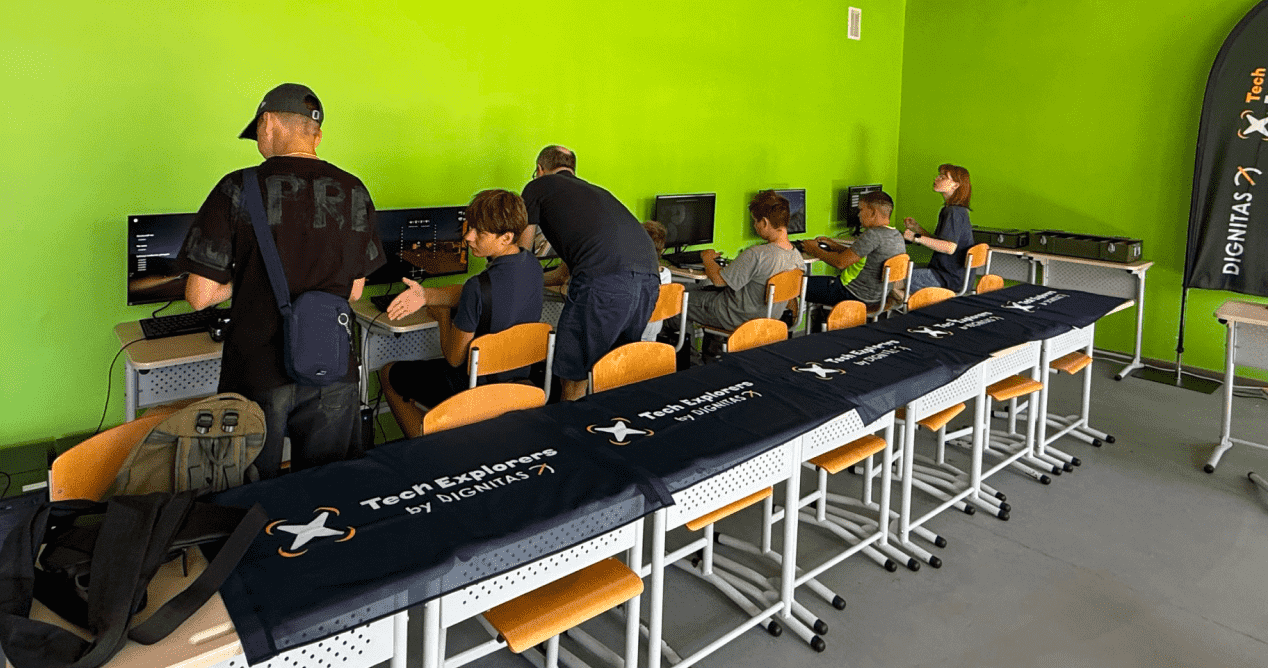
- Victory Drones — a system for training UAV operators and supplying the Armed Forces of Ukraine with a variety of technologies, developed in cooperation with the General Staff
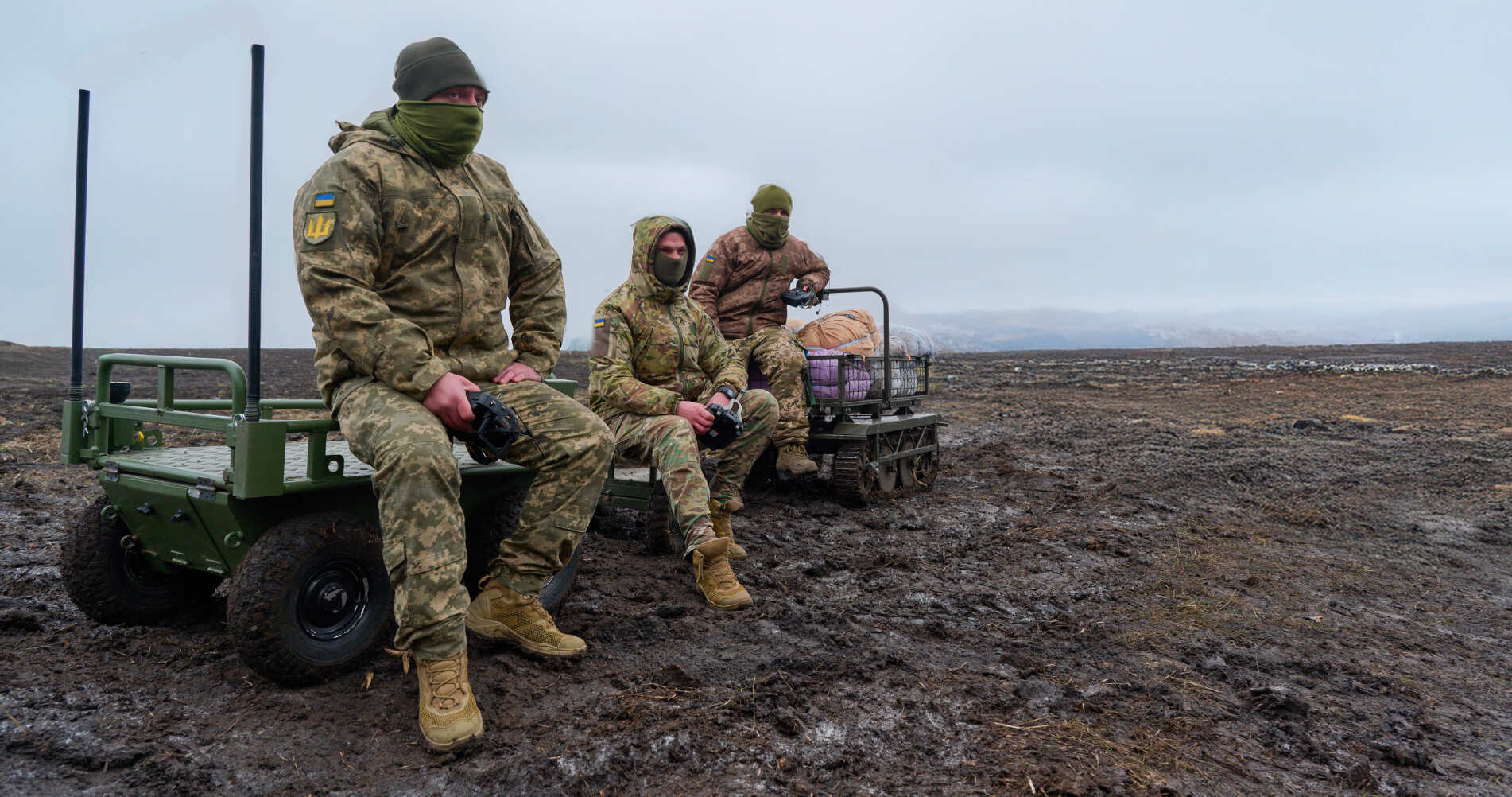
- Victory Robots — integrating ground-based autonomous systems into Ukraine’s defense, enabling evacuation of the wounded and supply delivery in high-risk zones
The Role of International Partnerships
Defense cooperation frameworks have matured significantly, moving beyond emergency aid packages toward structured co-development agreements. American, British, and European defense companies are increasingly engaging Ukrainian counterparts not just as end-users but as genuine partners in refining product specifications.
Ukraine’s battlefield feedback has already influenced the design of artillery systems, armored vehicles, communication platforms, and unmanned aerial systems. The country has become an indispensable node in the global defense innovation network.

Q&A: Ukraine’s Role in Global Defense Innovation
Q: Why is Ukraine’s technological experience considered unique? A: No other country has sustained such an intensive, multi-domain operational environment over this period of time. Ukrainian engineers have been forced to innovate under real constraints — limited supply chains, active electronic jamming, and rapid enemy adaptation — producing solutions that laboratory settings simply cannot replicate. This experience is genuinely irreplaceable.
Q: How does this benefit Ukraine’s long-term development? A: The defense sector has historically been a catalyst for broader industrial and technological growth. Countries that build strong defense-industrial bases tend to develop competitive capabilities in electronics, software, manufacturing, and logistics. Ukraine is positioned to leverage its current experience into a thriving technology sector that extends well beyond security applications.
Q: What role do international partners play? A: Partners contribute manufacturing depth, research infrastructure, and long-term investment. Ukraine contributes operational knowledge, rapid prototyping, and proven systems. This is a genuinely bilateral exchange — and the most effective partnerships treat it as such.
Q: How can organizations engage with Ukraine’s defense innovation ecosystem? A: Through structured cooperation frameworks, co-investment in R&D, participation in defense procurement programs, and partnerships with organizations like Dignitas Ukraine that facilitate these connections. We warmly invite researchers, industry leaders, and institutions to explore what meaningful collaboration looks like in practice.